250TH ANNIVERSARY/ IMPORTANT GOOD READS

Page through gordonsgoodreads.com and find numerous titles relevant to the founding of America including books on the Revolutionary War, the founding fathers and the Constitutional Conventions. There are three titles among many others that I have found most enlightening.

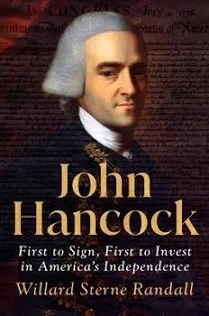
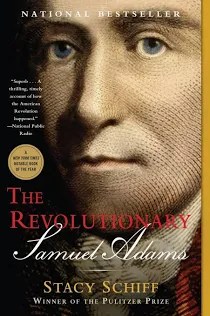
Two of these titles highlight the contributions of individuals whose participation have in some quarters been more obscure. John Hancock is of course contemporarily most famous for his signature! However, John Hancock by historian Willard Randall reveals the enormous contributions of this founding father leading up to the Revolution, during the war and his participation in the great debate creating the Constitution. It is an eye-opening read. Samuel Adams by historian Stacy Schiff is another revealing biography. in which she places this Adams ( second cousin of John Adams) in his rightful place in history. Separation from the British Empire by a united American Colonies may never have happened without the efforts of Samuel Adams, the first of the pamphleteers! A firebrand indeed.

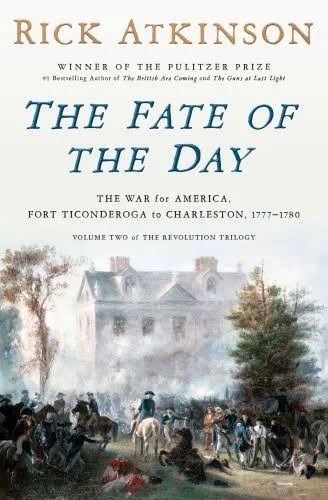
In my view, Rick Atkins ranks alongside Ken Burns in depth understanding of America’s march toward independence. Two books by Atkins, The British are Coming, and Fate of The Day are first rate historical works. A third volume of the trilogy is due later this year.

There are many other titles worthy of your time, many of which are reviewed at gordonsgoodreads.com including Joseph Ellis’ new volume The GREAT CONTRADICTION, The TRAGIC SIDE of the AMERICAN FOUNDING.

Eye opening! Search gordonsgoodreads.com for more on this subject.

THE GREAT CONTRADICTION/JOSEPH ELLIS

The sub title of Joseph J. Ellis‘ latest book is most descriptive of this work of non-fiction: THE TRAGIC SIDE of the AMERICAN FOUNDING.

During this current period when America Celebrates the 250th Anniversary of independence historian Ellis uncovers the deeply flawed creation on the US Constitution and the inability of the founding fathers to deal with the new nations greatest issues, slavery and the displacement of its Native Americans.

Ellis spares no detail in the conflicts and flaws among the founding fathers. He writes: This, then, is a story about failure. Next to the failure to end slavery, or at least put it on the road to extinction, the inability to reach a just accommodation with the Native Americans was the greatest failure of the revolutionary generation.

This is the story of how and why the founders failed in these two critical areas and how these unresolved critical matters have negatively resonated throughout the nation’s history. Fans of Thomas Jefferson will not be pleased Ellis’ through examination of his duplicity and hypocrisy in both the areas of slavery and Native American dispossession.

Ellis’s ending paragraph is emphatic. As for Jefferson, he will forever be remembered for his iconic eloquence in the Declaration of Independence, but his failure to live up to his own words ended in tragedy for him. his black and white families, and decades of decline for the Commonwealth he so loved.

You will meet many other historic figures in THE GREAT CONTRADICTION : George Washington, of course. Henry Knox and his role in support of Native Americans, Alexander McGillivray the consequential Creek Indian Chief and of course Madison and Monroe.

Enlightening

is an understatement!

THE INDIFFERENT STARS ABOVE/DONNER PARTY

Manifest Destiny. A new life in the great unknown expanse of the American West. Hearts and minds full of anticipation as the Donner Party left Saint Louis, Missouri in 1846. All ages, senior citizens to newborns, on board covered wagons filled with life’s possessions, pulled by teams of oxen. After a perilous journey the promised land beckoned.

Daniel James Brown tells the story of the Donner Party in a page turning narrative THE INDIFFERENT STARS ABOVE. The heavens looked down upon the greatest human tragedy of the pioneering westward movement. Meet Lansford Hastings a swashbuckling promotor who had a plan to divert the pioneers from heading to Oregon on the more established Oregon Trail to take the now infamous Hastings Cutoff to a promised land in Northern California. The Donner party after successfully traversing hundreds of miles from St. Louis made the fatal mistake of believing Hastings’s far fetched promises and took the Hastings Cutoff.

The result is a harrowing true story of a fight for survival under the most dreadful circumstances in the snow bound Sierra Nevada Mountains. Eighty seven souls left St Louis and less than half survived. How they survived is at the heart of Brown’s research and storytelling. The word pictures are unimaginable.

Daniel James Brown is also the author of The Boys in the Boat, a far more uplifting story. He also wrote of another tragedy, The Great Hinkley Firestorm of 1894.

THE SECRET OF SECRETS/DAN BROWN

This is the latest from the author of The Da Vinci Code. Dan Brown’s Robert Langdon ( Brown fans have have met him before) once again is on the hunt, this time in Prague to track down a diabolical scheme to transform human minds into weapons of war. The Nature of human consciousness is explored in a ground breaking manuscript by noetic scientist Katherine Solomon. Both the manuscript and Katherine turn up missing and the quintessential Dan Brown (Landon) search begins through a labyrinth of science, exotic locations and ancient mythology. Get out your science terminology dictionary.

A little slower start than much of Brown’s work but well worth the trek. The romantic relationship helps. The NY Times correctly calls it a breathless chase.

Enjoy

FREEDOM SHIP/MARCUS REDIKER

Much has been written about the Underground Railroad, the incredible network that led many in bondage in the south to freedom in the northern free states. FREEDON SHIP by Marcus Rediker tells of a different story of a route to freedom.

FREEDOM SHIP reveals how crew members, dock workers and even some merchant ship operators collaborated to board and hide salves on merchant ships plying the US Atlantic Coast from South Carolina to Boston. This is the very metrhod taken by Frederick Douglass in his espape from Baltimore.

Thousands of slaves embarked on the treacherous journey over land and local waterways to reach local Atlantic harbors and with stealth find friendlies who would hide them aboard a ship heading north. It was a risky business, so much so that in South Carolina laws were past that crews of merchant ships from the North would be impounded while in the local harbor to prevent them from assisting runaways. Many merchant crews were made up of free blacks from the northern states.

The high risk did not end upon boarding and setting sail. Slave catchers awaited incoming ships from the south at harbors in New York, Boston and New Bedford. However. abolitionists successfully set up dozens of safe houses for escaped slaves, providing food, clothing and in some cases help in moving north to Canada. Some successfully blended into northern society. Others who landed in New Bedford signed up as crew on whaling ships to avoid capture.

A fascinating story of teamwork among like minds that for some successfully thwarted the Fugitive Slave Act and the brutal slave culture.

THE IDEA OF AMERICA/DARREN WALKER

I have not read a more incisive overview of inequality in all of its forms than in Darren Walker’s THE IDEA OF AMERICA.

The book is a series of speeches and essays written and delivered by Walker during his tenure as president of the Ford Foundation. It is the embodiment of his work in transforming the foundation’s mission from grant making to addressing the issues of inequality and social justice in America.

In many ways THE IDEA OF AMERICA is a history lesson based upon the premise that the founding father’s, however flawed, enshrined a fluid document of promise and hope for democracy’s future. That even, “All men are created equal,” allowed for a promise for a better future, even though codified by all white men over half of which were slaveholders and all women were excluded. Of the founders Walker adds, “They initiated a grand, complicated experiment in self-government. It led to abolition and suffrage and worker’s rights and women’s rights-however slowly, however unevenly.”

The book is not an optimistic treatise. Many thoughts are foreboding. Walker sees an America diminished by division in a climate worsening daily. ” As certain democratic norms fall away it becomes harder to motivate oneself to act. We get exhausted by, even acclimated to, the daily onslaught.”

Walker is cautious about America’s future. ” In the not-too-distant past the American people would turn to their elected leader’s the president- for guidance and moral clarity. Today, in a vacuum of such moral leadership, fear temps many Americans to hunker down , protect themselves and their interests and withdraw for the purposes of safety and self-preservation .”

Walter Isaacson casts an optimistic note in his praise for THE IDEA OF AMERICA. “Darren Walker summons us, on the 250th anniversary of our founding, to remember our higher calling.”

I commend to you this very important read on the 250th anniversary of our nation’s founding.

“`

THE BOYS IN THE LIGHT/NINA WILLNER

Nina Willner writes of her father Eddie Willner in this wonderfully crafted and researched narrative of non-fiction set in the height of WWII and the Holocaust. She merges the stories of two groups of young men one from across America the other including her father rounded up by Hitler’s SS and sent to forced labor concentration camps. Somehow fate brought them together as US Army Armored Division Company D and two Jewish teens, the author’s father and his best friend Mike met at the Battle of the Bulge.

He was just 18 when they found him, half dead after surviving five years in the camps, where both of his parents were killed. Eddie and Dutch friend Mike managed to flee their SS Guards while on a death march. With no one else left to help them Company D did.

Who were these men of Company D, what had they lived through and how was it possible that they would ultimately save the lives of two young Jewish teens who themselves defied all odds and survived?

Nina Willner tells this t story with passion as only a daughter’s love for her Dad could accomplish.

An important read during the 80th Anniversary year of the end of WWII.

JOHN HANCOCK/WILLARD RANDALL

If you thought you knew John Hancock you are in for a great awakening!

Willard Sterne Randall’s John Hancock is most timely during this 250th year of the American Revolution. Hancock is so much more than his signature of great renown. Randall places Hancock’s importance to the American quest for democracy , the Revolution and the Continental Congresses along side Dr. Joseph Warren, Samuel Adams, John Adams and Paul Revere.

The book is far beyond a biography of Hancock but a through study of all of the critical events that led to the American Revolution. Hancock the rebel, the revolutionary, adroit politician, and incredibly successful businessman, among the wealthiest in the colony.

The son of a poor preacher sent to live with his wealthy uncle who prepared him to take over the family enterprise. He became the first governor of Massachusetts and throughout his life was an extraprdinary philanthropist during a period in which the Colonists had few resources due to British occupancy, trade restrictions, embargoes, and the war itself. The colony’s wealthiest person found food and fuel for those who had none.

A wonderful eye openming addition to your reading list of the American Revolution.

CARELESS PEOPLE/SARAH WYNN WILLIAMS

Followers of Gordon’s Good Reads know that I am not a big fan of tell all memoirs, political or otherwise. However, if you are not a fan of Mark Zuckerberg, Sara Wynn -Williams Careless People will likely confirm your feelings about the man and his company.

Here is one of the most revealing takeaways from William’s front row seat as Director of Global Public Policy for Facebook.

Facebook basically handed the election to Donald Trump. It’s pretty ( expletive) convincing and pretty( expletive) concerning Facebook embedded staff in Trump’s campaign team in San Antiono for months along side Trump campaign programmers, ad copywriters,media buyersd and data scientists. A Trump operative named Brad Parscale ran the operation together with the embedded Facebook staff, and he basically invented a new way for a political campaign.

THERE’S MORE:

Now I’m consumed by the worst of it. How facebook is helping some of the worst people in the world do terrible things. How its an astonishingly effective machine to turn people against each other and monitor people on a scale that was never possible before.

That’s what this company is and I was part of it. I failed when I tried to change it, and I carry that with me. (Williams)

It is no surprise Facebook tried to prevent publication. For what it is worth, this blogger cancelled his Facebook account several years ago.

THE FATE OF THE DAY/ATKINSON

So much more to understand! That is my takeaway from Rick Atkinson’s THE FATE OF THE DAY. This is volume two of his THE REVOLUTION TRILOGY, the first being THE BRITISH ARE COMING. ( see gordons goodreads).

Volume two traces the Revolutionary War action from Fort Ticonderoga to Charleston, hardly a triumphant period for the Patriots and the Continental Army. With the exception of the astounding success at Saratoga the reader witnesses a war of attrition with insights into obscure battles, the intrigue within the British Parliament and the Crown, and the absolute inadequacy of political generals under Washington’s command.

Atkinson reveals the abject tragedy of the prolonged war. It is the very detail of Atkinson’s brilliant research that comes alive in this 618 page narrative that demands A Trilogy to tell the truth of the tale.

This reader came away with a previously unknown dimension of the Revolutionary War and volume two only builds a desire to reach for the conclusion and to understand how close we came to having no democracy at all.

The timing of THE FATE 0F THE DAY is perfect as we approach the 250th Anniversary of the Declaration of Independence. However, this volume is not a one off and is much more meaningful and relevant following THE BRITISH ARE COMING !

Reading these pages gives understanding the to enormity of the sacrifices made by those who preserved our democracy.