JOHN HANCOCK/WILLARD RANDALL

If you thought you knew John Hancock you are in for a great awakening!

Willard Sterne Randall’s John Hancock is most timely during this 250th year of the American Revolution. Hancock is so much more than his signature of great renown. Randall places Hancock’s importance to the American quest for democracy , the Revolution and the Continental Congresses along side Dr. Joseph Warren, Samuel Adams, John Adams and Paul Revere.

The book is far beyond a biography of Hancock but a through study of all of the critical events that led to the American Revolution. Hancock the rebel, the revolutionary, adroit politician, and incredibly successful businessman, among the wealthiest in the colony.

The son of a poor preacher sent to live with his wealthy uncle who prepared him to take over the family enterprise. He became the first governor of Massachusetts and throughout his life was an extraprdinary philanthropist during a period in which the Colonists had few resources due to British occupancy, trade restrictions, embargoes, and the war itself. The colony’s wealthiest person found food and fuel for those who had none.

A wonderful eye openming addition to your reading list of the American Revolution.

JUNETEENTH/TWO IMPORTANT TITLES

John Swanson Jacobs, son of Harriet Jacobs both of whom escaped slavery, is now available in a rediscovered narrative titled A TRUE STORY OF SLAVERY THE UNITED STATES GOVERNED BY SIX HUNDRED THOUSAND DESPOTS.

The book goes far beyond Jacob’s bondage and escape there from to crystallize his views on the very government and the US Constitution that allowed the institution to continue and thrive through the end of the Civil War. Jacob’s SIX HUNDRED THOUSAND DESPOTS are clearly defined by his narrative as the white American oligarchy that that allowed and supported slavery’s existence. In his own words, Jacobs holds all American citizens, North and South accountable for writing -absolute rule over an unfree people- into the democratic charter. Jacob’s narrative is one of the very few first hand accounts of slavery that survive, including his mother’s Harriet Jacob’s INCIDENTS IN THE LIFE OF A SLAVE GIRL and also the NARRATIVE OF THE LIFE OF FREDERICK DOUGLASS, AN AMErICAN SLAVE. Before leaving America for Australia and then a life at sea he briefly joined the lecture circuit with Frederick Douglas. The book also includes a biography of Jacobs by Jonathan Schroeder titled NO LONGER YOURS.

Another important Juneteenth volume is Matthew Stewart’s AN EMANCIPATION OF THE MIND RADICAL PHILOSOPHY, THE WAR OVER SLAVERY, AND THE REFOUNDING OF AMERICA.

This volume is a highly charged analysis of how government, the white oligarchy, American’s prominent religious denominations and the economics of the plantation/cotton economy forced and kept four million human beings in bondage. In the effort to dominate the national political system the slaveholders were able to count on the antidemocratic aspects of the US Constitution: The overrepresentation of the small states in the Senate and the Electoral College; the growing power of the unelected judiciary: and the absence on meaningful checks on the corruption of state governments.

Of great interest to this reader was the influence of German revolutionaries, progressives and intellectuals upon the American abolitionist movement. They called themselves the 48ERS, having been among the some 10,000 Germans emigrating to America during that period. They included Friedrich Knapp, Ludwig Feuerbach, journalist Ottilie Assign, August Willich, Carl Schurz and many others. There were some 10,000 German immigrants living in the Ohio Valley by the start of the Civil War whose abolitionist views were made well known to President Lincoln.

Two volumes written over 250 years apart, one by an escaped slave the other by a modern day historian zero in on the same underlying issues that allowed slavery to exist and in some cases remain a threat to American democracy to this very day. I can think of two more timely reads.

AMERICAN PROMETHEUS/J.ROBERT OPPENHEIMER

Without hesitation, this superb work by Kai Bird and Martin J. Sherwin is among the very best biographies I have read in recent years. I place the writing and research on a level with Robert Caro and Jon Meacham.

The wonder of this book is the understanding of Oppenheimer and his time and place in American History. The story of the Atomic Bomb is well known to many. However, the complexity and passages of Oppenheimer himself amid the social and political atmosphere in which he lived and worked is a revelation. The beauty of Bird’s and Sherwin’s writing is that you need not be a physicist to wrap yourself around the life and story of this complex scientist, intellectual and iconic American figure. The dimension of the book is enormous, foremost in its content, but also in size!

I am confident that reading THE TRIUMPH AND TRAGEDY of J. ROBERT OPPENHEIMER is a plus before seeing OPPENHEIMER the movie.

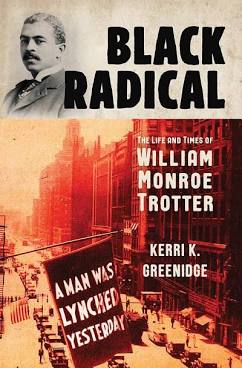
BLACK RADICAL/WILLIAM MONROE TROTTER

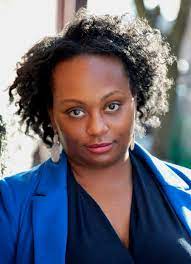
Kerri K. Greenidge in her book BLACK RADICAL THE LIFE AND TIMES OF WILLIAM MONROE TROTTER isa bold revelation of civil rights history in America. The insight into this heretofore obscure figure in the civil rights movement is a great historical contribution. The research and careful narrative evolve into a tableau of the life of this early activist who followed in the Boston tradition of William Lloyd Garrison’s Liberator with his own publication The Guardian.

F

Trotter turned Boston and New England civil rights activism on its head taking a no holds barred approach at his overflow rallies at Faneuil Hall and his in-your-face challenges to Teddy Roosevelt, Woodrow Wilson and Booker T. Washington. No Tuskegee philosophy for Monroe Trotter as his demands for equality were absolute. So strong were his protestations that even staunch advocates such as W.E.B. Dubois and Frederick Douglas stood back.

Unlike other members od Du Bois’s ‘talented tenth’ (mostly light-skinned black elites) Monroe Trotter would never confine his civil rights activism to the circle of black elite on Martha’s Vineyard, or the coterie of fellow light skinned northern born professionals with whom he socialized in Washington D.C., and Brooklyn.  Despite his New England upbringing and Victorian sensibilities, Trotter provided a voice for thousands of disenchanted, politically marginalized black working people for whom neither the National Negro Business League nor the NAACP had much relevance.”

Follow this Harvard man’s radical fight for a Federal antilynching bill and the enforcement of the Thirteenth, Fourteenth and Fifteenth Amendments as he defiantly confronted the white power brokers of the time.

I am thankful to Kerri Greenidge for telling this story.

FREDERICK DOUGLASS/ PROPHET OF FREEDOM

FREDERICK DOUGLASS/ Prophet of Freedom by Yale University Professor David W. Blight is a definitive insight into slavery, the abolitionist movement, The Civil War, Reconstruction and Jim Crow.  Moreover, this essential biography delivers a remarkable look into the personal life and character of Frederick Douglass, the remarkable man and his devotion to humanity.  This in depth work by Blight is an education, and as I have previously referenced in other great works of biography, every single word printed upon the 764 pages counts. There is little wonder that The New York Times honored this work as one of the Ten Best Books of the Year.  I wholeheartedly agree.


Frederick Douglass followed William Lloyd Garrison to become the single most important voice of the abolitionist movement. Douglass, the self educated escaped slave was among the greatest writers and the unequaled orator of his time. He wrote three autobiographies, edited two newspapers and delivered hundreds of lectures in small and large communities throughout the country.   Blight captures the enormity of Douglass’s impact on a segregated slave holding nation during the mid-eighteenth century and throughout the Civil War. Following the war, Blight unveils Douglass’s sense of extreme urgency over the fate of his people throughout the tragedy of Reconstruction, and the coming of Jim Crow. Blight leaves no doubt that Frederick Douglass was a revolutionary in his time.

‘’For it is not light that Is needed, but fire; it is not the gentle shower but thunder. We need the storm, the whirlwind and the earthquake. The feeling of the nation must be quickened….the hypocrisy of the nation must be exposed.”   Frederick Douglass, July 4th 1850,  Corinthian Hall, Rochester New York. Douglass could move an audience at will.

FREDERICK DOUGLASS/Prophet of Freedom, a biography of the most important African American of the 19th Century.

This book is an excellent companion read for anyone following The New York Times Podcast 1619.

CHURCHILL/ WALKING WITH DESTINY

Critics have acclaimed Andrew Robert’s CHURCHILL WALKING WITH DESTINY as the best single volume biography of the iconic world figure. Having completed the 982 pages, read in sequence, I add my voice to the acclaim.  It is a masterwork by the   celebrated British historian. His commitment to exacting detail refreshes the landscape of history, while at the same time his prose is not at all cumbersome.

Churchill’s life and his personality is indeed complicated but Roberts misses nothing. History lovers will wrap their minds around the voluminous Churchill quotations and Roberts places them in exacting context. From Winston’s  birth through the Boer War, WW I, the “Wilderness Years,” and then of course the lead-up and fighting of WW II, Roberts introduces the reader to every professional and personal influence on Churchill.  Yes, Winston’s personality, lifestyle and his varying demeanor is splendidly portrayed. (I can cite a typical Churchill breakfast menu and the exact proportions of Whiskey and water.)

The portrait of the Second World War is profoundly complete in great detail of the successes and failures, both militarily and diplomatically. CHURCHILL, is without a doubt, a book for students of history.  Reading CHURCHILL makes one wish that the knowledge within  of war, leadership, politics and diplomacy  could be universal. So many lessons and a plethora of wisdom. ” Expert knowledge, however indispensable, is no substitute for a generous and comprehending outlook upon the human story, with all its sadness and with all its unquenchable hope.” (Churchill, February 26, 1946 University of Miami)

In the bleak years of 1939-1940 when England stood alone against Hitler, Winston Churchill made one of his many inspirational speeches.
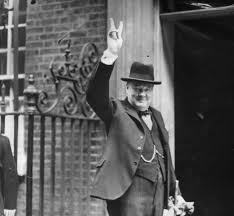
“Come then, let us to the task, to the battle, to the toil-each to our part, each to our station. Fill the armies, rule the air, pour out the munitions, strangle the U-boats, sweep the mines, plough the land, build the ships, guard the streets, succor the wounded, uplift the downcast, honor the brave. Lets us go forward together, there is not a week or a day or hour to lose.”    Little wonder it was said of Churchill, ” He weaponized the English language.”  Roberts allows the reader to captivate the famous Churchill intonation.

Another prodigious biography of Churchill is CHURCHILL by Roy Jenkins. An impeccable  companion read to CHURCHILL WALKING WITH DESTINY is THE STORM OF WAR, also by Andrew Roberts. (See gordonsgoodreads.com April 2012.)

Engage, absorb,  enjoy!  GHH


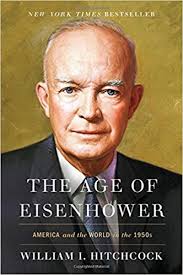
THE AGE OF EISENHOWER/WILLIAM HITCHCOCK

I chose THE AGE OF EISENHOWER, a discussion of his presidential years 1952-1960, primarily because of the timeliness of  the comparison of leadership and policy with the present administration. Historian William Hitchcock has  accomplished  a scholarly milestone with this objective retrospective of the nostalgic 1950s and Ike himself.

The  triumphs and failings of the Eisenhower presidential years  are expertly chronicled. However, it is Hitchcock’s insight into Eisenhower’s  presidential leadership style, personality  and his transformation from the military leader of the free world to the presidency, that is most compelling.

We think of the 1950s of a period of peace and prosperity which was true. It was also a decade of international and domestic turmoil including the beginning of the Cold War.The decade also produced the arms race, the missile gap, the U-2 disaster, the Suez Canal crisis and the Castro takeover of Cuba. The Eisenhower years gave us the beginnings of the battle over desegregation of public schools, Little Rock, McCarthyism, Nixon and the creation of the CIA and NASA. How Ike handled and sometimes mishandled these critical developments is given microscopic analysis.

THE AGE OF EISENHOWER is for lovers of  American History. This biography of Eisenhower’s presidency is deserving of its high praise.

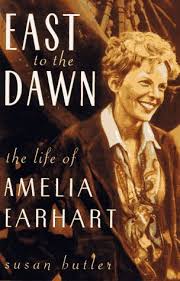
EAST TO THE DAWN/ AMELIA EARHART BIOGRAPHY/A VERY DIFFERENT STORY

Forget for a moment the doomed 1937 round the world flight and all of the continuing speculation that continues to this day.  Set aside temporarily that Earhart was the first woman to solo across the Atlantic. Put in perspective all of her pioneering accomplishments as the world’s most prominent woman in aviation. Then settle in to read this marvelous perspective of a truly remarkable person.

Biographer Susan Butler got the Amelia Earhart story right in 1997 when she completed ten years of research and published EAST to the Dawn, The Life of Amelia Earhart. It was the sixtieth anniversary of Earhart’s fateful last flight. Of course the aviation story is extremely well told but the real story is how Amelia Earhart used her celebrity and incredible energy to universally advance the cause of women during the 1920s and 1930s.

Amelia the social worker, the world-wide lecturer on behalf of women’s rights and the establishment at Perdue University of a permanent foundation designed to advance women in the profession of aviation engineering and development.   One can only imagine her further impact had not her life ended in tragedy somewhere in the Pacific trying desperately to find tiny Howland Island  on the next to last leg of her round the world flight.

Amelia Earhart’s  celebrity was earned.  She came from Atkinson Kansas, the daughter of an alcoholic father  whose many jobs took the family east and west.  Her formal education was thwarted but she persisted, became a social worker and by sheer chance became exposed to aviation. Once hooked she never looked back. All along her rise to unimaginable celebrity she never once forgot that she represented professional career opportunities for all women.

Amelia earned her just celebrity and acclaim as an aviator but had she lived, understanding her as Butler’s book reflects, her contributions to society and women’s advancement would have been far greater than being the first woman to fly around the globe.   Having read Butler’s book I am convinced Amelia Earhart would have  unquestionably made that her lasting legacy.

In 1932 the American Women’s Association presented Margaret Sanger its first annual award.  A year later the second annual award was presented to Amelia. The presentation to Amelia was made by Dr. Lillian Gilbreth, the renowned industrial psychologist.  In her closing remarks, Gilbreth chose these words: Miss Earhart has shown us that all God’s chillun got wings.

This is the 80th anniversary of Amelia Earhart’s last flight.


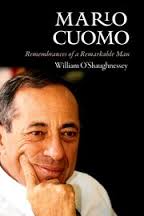
MARIO CUOMO/ NEW FROM WILLIAM O’SHAUGHNESSY/ A TIMELY LOOK BACK

Mario Cuomo called him “Brother Bill.”  Therefore, who better than William O’Shaughnessy to publish MARIO CUOMO, Remembrances of  a Remarkable Man.  The book captures their personal relationship  and the unique openness between them. The author shares countless previously unpublished interviews with Mario Cuomo both before and after his  governorship. The author peels back the pages of many of Cuomo’s most remarkable speeches,  delivered by the person who is deemed the best political orator of his day. O’Shaughnessy bares personal witness to Mario Cuomo’s interactions with the famous and less famous.

imgres-1

O’Shaughnessy has always possessed an impeccable sense of timing. After all he is a radio guy, a medium that lives in the present.  We are  currently in the moment of a political  campaign for the leadership of the free world where neither candidate is trusted by a majority of the American people. The word “orator” will find no place in the newspeak of today. To the contrary, O’Shaughnessy’s  Mario Cuomo reads as a tribute to trustworthiness, statesmanship, vision, empathy, oratory, gravitas and grace. Cuomo’s words leap from the tome’s pages with themes of a “higher calling.”  The book begs the question; What happened to our national discourse?

Mario Cuomo is filled with anecdotal insight into the governor, his friends, his day-to-day, his family and his lifestyle  evolving into a tableau describing why he was admired by millions and loved by those closest to him. Will we see the likes of Mario Cuomo again? O’Shaughnessy is hopeful.

William O’Shaughnessy is president and editorial director of Whitney Media. He has written four other books: Vox Populi, More Riffs, Rants, and Raves, It All Comes Back to Me Now and Airwaves.


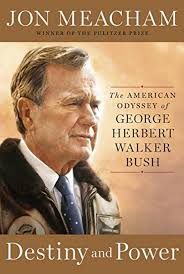
DESTINY and POWER/ GEORGE H.W. BUSH/ MASTERFULLY MEACHAM

With high advance praise from historians David McCullough, Doris Kearns Goodwin and Michael  Beschloss one need not say much more in recommending this masterful work by  Jon Meacham.

imgres-2 Destiny and Power,The American Odyssey of George Herbert Walker Bush captures the man brilliantly and fairly and secures him a permanent place in American Presidential history.  George Herbert Walker Bush may indeed be  A last of his kind, and Meacham relates clearly and concisely  the depth of that appellation.  More than a biography, Meacham details a period in American and world history through the portal of the Bush Oval Office. The research is impeccable and the access provided Meacham by a very private president and his family is remarkable.

A must read, now even more meaningful with another Bush running for President.

I also recommend  Meacham’s Franklin and Winston an Intimate Portrait of an Epic Friendship. Search gordonsgoodreads for details.