FINANCIAL CRISIS BOOKS-TWO GREAT OVERVIEWS

The Sunday May 18th  New York Times carried two wonderful overviews of two current books on the financial crisis. If you are following this odyssey both articles are most worthwhile. Gretchen Morgenson’s Fair Game column, Geithner Staying on Script  dissected Geithner’s Stress Test  self-defense book with precision!  In my view no reporter is better than Morgenson in getting to the bottom of  complex financial issues and her article is enlightening and the conclusions on point.  Writes Morgenson,

images

“Mr. Geithner does do some introspection. “I did not view Wall Street as a cabal of idiots or crooks,” he writes. “My jobs mostly exposed me to talented senior bankers, and selection bias probably gave me an impression that the U.S. financial sector was more capable and ethical than it really was.” That’s as close as he gets to saying that he was wrong to trust — not question — bankers he encountered.

A final flaw: In his book, Mr. Geithner boasts that the bailouts he helped design have been profitable to taxpayers. But his calculations do not take into account the cost of capital that the taxpayers extended to the banks.

Concludes Morgenson

“As for the oversight mistakes that he and his regulatory colleagues made, Mr. Geithner essentially says “We were human.” But this fails to address head-on the possibility that he was a captured regulator, a man locked into the mind-set of the very bankers he was supposed to oversee.”

 

http://nyti.ms/1oADWtM


images-1

The second article, written by Binyamin  Appelbaum, The Case Against The Bernanke-Obama Financial Rescue, reviews a new book by Atif  Mian and Amir Sufi titled House of Debt.  The authors flatly accuse Timothy Geithner and Ben Bernanke of focusing only on preserving the financial system ( the banks).  From Appelbaum’s  article ”

“If you actually look at the argument that people like Mr. Geithner make, they almost always point to financial metrics like risk spreads and interest rates,” he said. “But if you look at the real economy, it just tends to come out in our favor.” Millions of Americans remain unemployed almost five years after the formal end of the recession.”


http://nyti.ms/1lwE9YE

I have not as yet read either Stress Test or House of Debt.  These two overviews are great previews and set the table for two more good reads on this complex subject, a story which has no ending.


THE GOLDFINCH-ALLEGORY TAKES WING

Since completing The Goldfinch by Donna Tartt the novel has won a Pulitzer Prize for fiction. Forgive me , but I had speculated that to myself prior to the announcement, after reading only a hundred pages.

images

The plot is indeed complicated and the characters surrounding Theo Decker’s evolution into young adulthood evolve in pyramids of detail that can at times be overwhelming. However, Tartt never leaves any doubt as why each player in her cast influences  life choices made by the protagonist.

Park Avenue, Las Vegas, Lower East Side, Amsterdam. The societal character of these destinations is ingrained in the story. Tartt’s research and attention to subtile nuance is extraordinary. Tartt will immerse even the knowledgable New Yorker in the sounds, sights, energy and social theatrics of the city. Her descriptions remind one of  a Pete Hamill character in a smoke-filled  Daily News City Room banging on an Underwood under a green eye shade lamp at 1 AM , amid a torrential rainstorm roaring  against window panes!

Theo’s mother is killed in a bombing at the Metropolitan Museum of Art and there begins the connection with The Goldfinch a 17th Century painting by a Dutch Master that is worth millions. Of course, it was his mother’s favorite work of art and remains both symbolically and physically the centerpiece  and road map of the novel.

Theo’s life after his mother’s death could have been traditional Park Avenue, thanks to loving parents of a classmate. Even after Theo’s alcoholic father appears with his latest love , Xandra , and whisks him off to Las Vegas , the caring Barbour’s do not disappear. Each of Tartt’s characters stay in the mainstream until the very end, including Hobie the master of antique restoration and Theo’s only rock.

Without revealing the story, this book will take you to the worlds of drugs, antiquities, New York Society , the art world underground and dozens of subtile stops including a decaying Las Vegas subdivision offering no hope to residents of foreclosed abandoned homes. The landscape of this novel is immense and the attention to intricate detail ( Peal and Co.) and antique restoration is of the calibre of a well researched treatise on the subject. Yet, it all comes together with meaning and purpose, but not without expecting much time, thought and introspection on the readers part. The use of the editors marker was sparse.

From Theo, late in the journey. ” Only here’s what I really, really want someone to explain to me. What if one happens to be possessed of a heart than can’t be trusted–? What if the heart , for its own unfathomable reasons, leads one willfully and in a cloud of unspeakable radiance away from health, domesticity, civil responsibility and strong social connections and all the blandly held common virtues and instead toward a beautiful flare of ruin, self-immolation, disaster? ” Get the picture? Theo traversed all of the aforementioned territory and lived to tell the tale.

Other books by Donna Tartt: The Secret History and The Little Friend.


THE CIVIL RIGHTS AND VOTING RIGHTS ACT FIFTY YEAR CELEBRATION

Watching and listening to today’s celebration of the Lyndon Johnson Presidency and the passage of the Civil Rights and Voting Rights Acts urges me to remind you of the great Robert Caro book The Passage of Power.  Every detail of these great accomplishments are presented in Caro’s incomparable fashion. See a brief overview at gordonsgoodreads.com.  This book is so extraordinary you too will have sat in a room with LBJ.

The Barbarous Years – The Original American Immigrants

Pulitzer Prize winning author Bernard Bailyn writing The Barbarous Years opens a sweeping and authoritative discourse into the  peopling of North American between 1600 and 1675.  From Jamestown, Virginia to Plymouth and the Massachusetts Bay Colony, who were these individuals who braved three plus months voyages on small, crowded and disease infested ships to arrive at the edge of the American wilderness? You will learn not only who they were but why some succeeded while others were destined to fail.

images

No one needs tout Bailey’s credentials as historian and researcher. He is brilliant. However, what is most remarkable is his ability to keep the subject flowing, fascinating and understandable for the lay reader. Bailyn delivers in brilliant digital display the complexity and challenges of the people responsible for the early settlement of North America.

Think of this:

Why did the Jamestown fail numerous times?

Why did the Catholics establish a foothold in Maryland and the Finns and Swedes in Delaware?

Why did The Massachusetts Bay Colony begin to work from day one.? Was it religious fervor or the composition of the settlers themselves?

What role did the varied Native American tribes play in the success or failure of early settlement.

How did the Pilgrims differ from the Puritans and the aforementioned from the  Quakers and the Dutch?

Were indentured servants a precursor to slavery?

Winthrop, Bradford ,Stuyvesant, Keift, Underhill, King Philips War.

The Barbarous Years that marked the original settling of America is a most accurate title for the book. Adventurers, scoundrels, orphans, preachers, doctors, lawyers, Native Americans, politicians, merchants and perhaps most important, the hundreds of unnamed families with children who came to America during the Great Migration of the 1630s , bringing with them the skills and the ethic to permanently settle on the land.

The ” New World” was British North America during its early settlement but Bailyn clearly identifies the complexity of cultures, trade and geography that would eventually become America. The Barbarous Years is a fabulous foundation for understanding colonial America’s formative years. Also by Bernard Bailyn: The Ideological Origins of the American Revolution, The Ordeal of Thomas Hutchinson, and Voyages to the West, which won a Pulitzer.

A wonderful different perspective of the  settlement of the Massachusetts Bay Colony comes from reading Anya Seton’s historical novel Winthrop Women. Search Gordonsgoodreads.com


A MOVEABLE FEAST-THE RESTORED EDITION

The original A Moveable Feast, among Ernest Hemingway’s most beloved works, was originally published posthumously  in 1964. The Memoir is of the author’s life in Paris as a struggling writer, newlywed and young father between 1920 and 1926.

images

 A Moveable Feast The Restored Edition with a forward by Hemingway’s only living son Patrick Hemingway and edited by his grandson Sean Hemingway presents the original A Moveable Feast manuscript exactly as Hemingway intended. A major difference is the exclusion from The Restored Edition of the influence that Hemingway’s fourth wife Mary had upon the original publication in 1964.

Of great significance from this reading is Hemingway’s agony over his leaving Hadley for Pauline.

” Any blame in that was mine to take and posses and understand. The only one, Hadley, who had no possible blame, ever, came well out of it finally and married a much finer man than I ever was or could hope to be and is happy and deserves it and that was one good and lasting thing that came from that year.”

Whether or not you have read the original I commend to you A Moveable Feast The Restored Edition. It it wonderful to be in Paris with Ernest and Hadley, to be young, carefree, tasting the food, wine and life itself.

” Lets walk down the rue d Seine and look in all the galleries and in the windows of the shops. We can stop at a new cafe where we don’t know anyone and nobody knows us and have a drink. We can have two drinks. We’ll come home and eat here and have a lovely meal and drink and afterwards we’ll read and go to bed and make love.”

Writing, wonderful writing, every word framing a picture, painting or memory. There is never enough Hemingway. The Restored Edition is worth the time. Do it again, or for the first time!


BEN CARSON’S VIEW OF AMERICA THE BEAUTIFUL

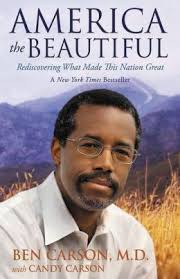
Two pieces of information converged upon me this week.  A family member sent me a book,America The Beautiful, written by acclaimed neurosurgeon Dr. Ben Carson.  Simultaneously I learned that in the straw poll at the CPAC conference in Washington that Carson finished third in the presidential poll behind Ted Cruz and Rand Paul.  Surprisingly he ranked ahead of Chris Christie!  I quickly turned to the book.

imagesBen Carson is an African-American who has distinguished himself in the medical profession after rising up from a childhood of poverty in Boston and Detroit to live the American Dream. He is also a much sought after speaker.  Without question Carson is a conservative with his credentials and beliefs clearly outlined in America The Beautiful.   He is also a devout Christian and strongly connects his social and political views to his belief in God. The book details much of Carson’s philosophy and substantiates many of his views with the historical founding fathers references to a higher power.

If Carson becomes a greater factor in Republican politics you may wish to read his narrative, and learn why he is at the opposite end of the spectrum from President Obama.  In some parts of the book Carson becomes a political moderate while elsewhere he rings the clarion that America is moving toward socialism and expresses great fears that President Obama’s desire to redistribute wealth will guarantee that outcome.

Carson willingly credits America’s social support system as playing a vital role in his own rise from poverty while at the same time he decries a welfare system that he believes spawns laziness. However, in an odd twist, he calls for nationalizing the health care system with the government limiting insurance company profits and establishing rates for hospital and medical services! Sounds a bit like Obama Care.

Dr. Carson poses an interesting option when looking at the Republican field of 2016 presidential candidates. Clearly he is very conservative but in comparison to Rick Santorum, Sarah Palin and even Ted Cruz and Ron Paul he is a moderate!

American The Beautiful was among the New York Times Best Sellers for many weeks.  If you are interested in following the GOP political mix this book is a good choice. My guess is that the country will be hearing more from Ben Carson.

ORPHAN TRAIN-FORGOTTEN CHILDREN-NOW ALIVE!

Between 1854 and 1929 orphaned and homeless children cast out from the teeming tenements to the harsh streets of New York City were collected and boarded on special railroad trains headed  for the  farmlands of the American West. The hope of the organizers was finding families to offer these nine to 13 year olds a home and new beginning.

images

NOTICE OF ARRIVING TRAIN !

HOMES WANTED FOR CHILDREN.  A COMPANY OF ORPHAN CHILDREN OF DIFFERENT AGES WILL ARRIVE AT OAKLAND, IOWA, FRIDAY, DECEMBER 9, 1904. THE DISTRIBUTION WILL TAKE PLACE AT 10:30 AM AND 1:30 PM.

Over a period of sixty years a quarter million indigent immigrant children were sent West. From station to station in small towns west of Chicago they were  paraded by poorly equipped social workers before prospective foster parents, many of whose motives were less than noble.  Few if any background checks of the perspective families were completed. Children were selected at each stop and those that were not chosen moved on to the next whistle-stop somewhere down the line. There was little or no follow-up and many of these children became little more than un-paid household labor and farm help, often in dysfunctional families.  Many were not given the opportunity to attend school.

” THE CHILD YOU SELECT IS YOURS FOR FREE, ON A 90 DAY TRIAL, AT WHICH POINT IF YOU SO CHOOSE, YOU MAY SEND HIM  BACK.”

Christina Baker Kline in her riveting New York Times best selling  novel Orphan Train (2013)  weaves a story of  how the toxic ingredients of the Orphan Trains, conceived to rescue children from the depravity of New York’s streets, often cast them into  even worse circumstances. Orphan Train is the story of  one train rider, a  9 year-old girl, who finally in her 90s  comes to reveal her secret story to yet another rider from a turbulent world of another era.

images-1

NOBODY WANTS ME. I HAVE TO GET BACK ON THE TRAIN.”  “ALL RIGHT CHILDREN THE JOURNEY CONTINUES, THE GOOD PEOPLE OF ALBANS, MINNESOTA ARE WAITING.”

The story is powerful and Orphan Train is a rewarding read, both historically and emotionally.  Christina Baker, in remarkable fashion, creates a protagonist who vividly portrays this little known chapter in American history.

Earlier this year I referred you to Jacob Riis’s  How The Other Half Lives  gordonsgoodreads.com.  Riss was among the first Muckrakers , uncovering social injustice in America. It is in his How The Other Half Lives that I first learned the history of the Orphan Trains.

Orphan Train is a novel so well researched that it could be categorized a historical novel. Kline was able to interview four actual train riders when they were in their late 90s.    Other works of fiction by Christina Baker Kline  are Sweet Water, Desire Lines, The way Life Should Be and Bird in Hand.

TWELVE YEARS A SLAVE-THE BOOK-A DOCUMENT OF HISTORIC PROPORTION

It is astonishing to this reader that Solomon Northrop’s narrative TWELVE YEARS A SLAVE lay silent in literary archives for over 100 years. Each compelling paragraph cries out to be voiced and has not lost one syllable over the decades, as indicted in the book’s dedication to Harriet Beecher Stowe whose Uncle Tom’s Cabin is throughout the world, identified with the reform of slavery.

images-1

I have seen the Oscar-winning motion picture but if you have not I urge you to read the book first. No film could begin to capture the depth and emotion evoked in the 336 pages of this personal narrative. By reading the book, the movie will become enormously more meaningful because it fills in all of the subtleties that could not possibly be accomplished by directors and editors.

“The institution that tolerates such wrong and inhumanity as I have witnessed, is a cruel,unjust and barbarous one.  Men may write fictions portraying lowly life but let them toil with him in the field, sleep with him in the cabin, feed with him on husks; let them behold him scourged, hunted, trampled on, and they will come back with another  story in their mouths. ”   Northrup’s narrative describes how the ” institution ” passed from father to son. ” Mounted on his pony the 12-year-old child  rides into the field with his whip playing the overseer , greatly to the father’s delight.  Without discrimination he applies the rawhide, urging the slaves forward with shouts, while the old man laughs and commends him as a thorough-going boy.’

Solomon Northrup , in his own words: ” This is no fiction, no exaggeration.  If I have failed in anything, it has been in presenting to  the reader too prominently the bright side of the picture.Those who read this book may form their own opinions of this peculiar institution.”

TWELVE YEARS A SLAVE, the book and the movie combine to make a powerful testament to one of the darkest periods in American history.

THE LAST PICTURE SHOW-COMING OF AGE-OSCAR WEEK

It seems coincidental to be posting Larry McMurtry’s semi-autobiographical  novel The Last Picture Show on the morning after the Oscars. The 1961 book became the screen play for the 1971 motion picture adaptation starring Cybill Shepherd, Jeff Bridges, Cloris Leachman and Timothy Bottoms as Sonny ( presumably Larry McMurtry).  The picture won two Academy Awards with a total of eight nominations and was followed by a sequel based on McMurtry’s  novel Texasville. McMurtry grew up in West Texas  thus becoming the natural setting for The Last Picture Show.  Surely the book is McMurtry’s coming of age in a everybody knows everybody small town with little to do and less to offer.

images

” Sometimes Sonny felt like he was the only human creature in the town. There was only one car parked on the courthouse square-the night watchman’s old white Nash. A cold norther was singing in off the plains, swirling long ribbons of dust down Main Street, the only street in Thalia with businesses on it. Sonny’s pick up was a 41 Chevrolet, not at its best on cold mornings. In front of the picture show it coughed out and had to be choked for a while but then it stared again and jerked its way to the red light, blowing out spumes  of  white exhaust that the wind whipped way.”

Enter the cast of characters, buddies, girl friends, oil field rough necks , the pool hall king, the football coach and his unfulfilled wife, Roberta ( Mrs. Popper). “When Sonny kissed Mrs. Popper outside the Legion Hall it seemed to him that the whole spectrum of delicious experience lay suddenly within his grasp.” And so goes this marvelous adventure of growing up i the 1950s in what could be a hundred other American small towns.  McMurtry’s brilliance nails nearly every nuance  of teens stumbling into adulthood.

It is fitting that we post The Last Picture Show during Oscar week. McMurtry is the author of some 40 screenplays including Lonesome Dove  and he co-authored the screen play for Brokeback Mountain. He has also written thirty highly acclaimed novels including Lonesome Dove for which he won the 1986 Pulitzer Prize for fiction.  The book was the basis of the TV series and the blockbuster motion picture of the same name.  Search goordonsgoodreads.com for overviews of McMurtry’s other great series of books on the American West.

THIS BOY’S LIFE/ ANOTHER GLASS CASTLE

When I read Jeannette Walls’ memoir The Glass Castle I believed that I had read the ultimate survival story of an adolescent growing up in a completely dysfunctional family.  Survival is the word that continues to come to mind when reflecting on Walls’ wonderful book that since its publication in 2005, continues to be a best seller. See gordonsgoodreads.com

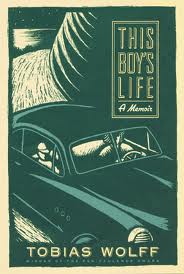
That preamble leads me to the discovery in my library of a volume which must have been left over from one of my children’s required reading lists, Tobias Wolff’s This Boy’s Life.

images-4

First published in 1989, this memoir is another detailed account of a youngster’s struggle to survive under the most bazaar family circumstances. Toby’s mother, just like Jeannette Walls’, is a nomad, seeking a better life and fortune , always where the grass may be greener.  Unlike Walls’ , Toby’s mother leaves his father and moves from man to man finally ending up in rural Washington living with a despicable and violent drunk.  Each chapter will make the reader into a believer of the survival tactics that children adopt to conquer  insurmountable obstacles.

If this memoir has escaped your reading list, don’t delay. After you  have read the book you may wish to Netflix the highly acclaimed 1993 movie This Boy’s Life starring a very young Leonardo DiCaprio and Robert De Niro. 

Tobias’ brother Geoffrey who stayed his father in Connecticut, had a very different upbringing from Toby ( Choate/Princeton). He is an important character in This Boy’s Life . He also became an author having written among other novels Duke of Deception in 1979 and The Age of Consent in 1995.

This Boy’s Life ends with Toby leaving ,or better said in the context of the memoir, escaping for the war in Vietnam.  His experiences are detailed in his second memoir Pharaoh’s Army, Memoirs of the Lost War.