In the 1850s, just prior to the Civil War at the height of the Cotton Kingdom and the southern slave society, a young Frederick Law Olmsted, just employed as a reporter for the fledgling New York Times was sent on a mission to report on the nature, culture and society of the American South. He had previously been wandering through Europe seeking a sense of personal direction.
But this was a real job with a paycheck, expectations and deadlines. Olmsted took his brother on what turned out to be two separate trips, the first into the eastern southern states and the second a year later a more adventurous journey through Kentucky then on to Tennessee and East and West Texas. Travel was by riverboat , trail horseback and foot.
Olmsted delivered hundreds of insightful detailed dispatches to the Times over these two years. Southern society, the cruelty of slavery, the grandiose lifestyles of plantation owners and of course of lasting impact on his future career, the American natural landscape. His political philosophy was sharpened by the early German settlers of the West Texas Hill Country and the southern gentry slave holders and their progeny. He and his brother enthusiastically tasted heritage cuisines in Cajun and Creole Country, and African in the deep south and came to an understanding of their cultural origins

Tony Horwitz in Spying on the South takes it upon himself to recreate step by step Olmsted’s two journeys. With some of the original manuscripts in hand he attempts to re-imagine what Olmsted observed 150 years earlier, admittedly an almost impossible task. In some respect everything had changed, pavement, highways, strip malls. I other cases, nothing changed. Attitudes, economic disparity, political divisions and yes the wonderful cuisines of the south remained. Did Howritz capture Olmsted’s trip? That was a tall order. However, Horwitz’s trek on pack mules in West Texas likely came closest to the Olmsted experience!
Frederick Law Olmsted went on to develop a world renown reputation as a landscape architect and an advocate for public lands and shared spaces. Central Park is considered among his masterpieces from both a social and a landscape perspective. Without question the Olmsted design and social imprimatur was deeply nurtured by his two adventures in the pre Civil War American South.
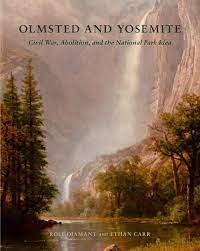
For more on Frederick Law Olmsted see gordonsgoodreads.com Olmsted & Yosemite.
 Gordon's Good Reads