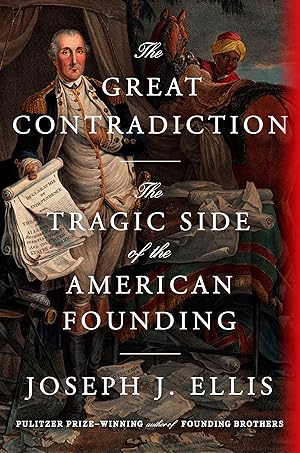
James/Percival Everett/POWERFUL

It is no surprise that Percival Everett’s James is leading multiple Best Seller Lists. A ride on a raft on the muddy Mississippi with Jim and Huck misses absolutely nothing of the strife and life of slaves and their society of oppressors in the American South. The dialogue is real:

Way I sees it is dis. If’n ya gotta hab a rule to tell ya wha’s good, if’n ya gots to hab good splaIned to ya, den ya cain’t be good.  Good ain’t got nuttin to do wif da law.  Law says I’m a slave.”

Funny, humorous and always insightful Percival James has delivered a brilliant portrait as the sounds, words, and message echo in the reader’s mind long after the cover is closed. Why of course.

JUNETEENTH/TWO IMPORTANT TITLES

John Swanson Jacobs, son of Harriet Jacobs both of whom escaped slavery, is now available in a rediscovered narrative titled A TRUE STORY OF SLAVERY THE UNITED STATES GOVERNED BY SIX HUNDRED THOUSAND DESPOTS.

The book goes far beyond Jacob’s bondage and escape there from to crystallize his views on the very government and the US Constitution that allowed the institution to continue and thrive through the end of the Civil War. Jacob’s SIX HUNDRED THOUSAND DESPOTS are clearly defined by his narrative as the white American oligarchy that that allowed and supported slavery’s existence. In his own words, Jacobs holds all American citizens, North and South accountable for writing -absolute rule over an unfree people- into the democratic charter. Jacob’s narrative is one of the very few first hand accounts of slavery that survive, including his mother’s Harriet Jacob’s INCIDENTS IN THE LIFE OF A SLAVE GIRL and also the NARRATIVE OF THE LIFE OF FREDERICK DOUGLASS, AN AMErICAN SLAVE. Before leaving America for Australia and then a life at sea he briefly joined the lecture circuit with Frederick Douglas. The book also includes a biography of Jacobs by Jonathan Schroeder titled NO LONGER YOURS.

Another important Juneteenth volume is Matthew Stewart’s AN EMANCIPATION OF THE MIND RADICAL PHILOSOPHY, THE WAR OVER SLAVERY, AND THE REFOUNDING OF AMERICA.

This volume is a highly charged analysis of how government, the white oligarchy, American’s prominent religious denominations and the economics of the plantation/cotton economy forced and kept four million human beings in bondage. In the effort to dominate the national political system the slaveholders were able to count on the antidemocratic aspects of the US Constitution: The overrepresentation of the small states in the Senate and the Electoral College; the growing power of the unelected judiciary: and the absence on meaningful checks on the corruption of state governments.

Of great interest to this reader was the influence of German revolutionaries, progressives and intellectuals upon the American abolitionist movement. They called themselves the 48ERS, having been among the some 10,000 Germans emigrating to America during that period. They included Friedrich Knapp, Ludwig Feuerbach, journalist Ottilie Assign, August Willich, Carl Schurz and many others. There were some 10,000 German immigrants living in the Ohio Valley by the start of the Civil War whose abolitionist views were made well known to President Lincoln.

Two volumes written over 250 years apart, one by an escaped slave the other by a modern day historian zero in on the same underlying issues that allowed slavery to exist and in some cases remain a threat to American democracy to this very day. I can think of two more timely reads.

THE UNDERGROUND RAILROAD/COLSON WHITEHEAD

The dust cover  description of Colson Whitehead’s  The UNDERGROUND RAILROAD is clear:  The Underground Railroad is at once a kinetic adventure tale of one woman’s ferocious will to escape the horrors  of bondage and a shattering, powerful meditation of the history we all share.

Written as a narrative, The UNDERGROUND RAILROAD spares little in its descriptions and depiction of the physical and mental horrors of slavery.  Despite the dystopia, Whitehead  delivers glimmers of hope amidst the despair of each turning page.  Written as a narrative and the recipient of the 2017 Pulitzer Prize for Fiction, The UNDERGROUND RAILROAD spares little in its descriptions and depiction of the physical and mental horrors of slavery.  Despite the dystopia, Whitehead  delivers glimmers of hope amidst the despair of each turning page.

The book adds to the  contemporary narrative of Twelve Years a Slave and  more recently Y’a’a Gyasi’s novel Homecoming.  See my overviews of the aforementioned here at gordonsgoodreads.com.


TWELVE YEARS A SLAVE-THE BOOK-A DOCUMENT OF HISTORIC PROPORTION

It is astonishing to this reader that Solomon Northrop’s narrative TWELVE YEARS A SLAVE lay silent in literary archives for over 100 years. Each compelling paragraph cries out to be voiced and has not lost one syllable over the decades, as indicted in the book’s dedication to Harriet Beecher Stowe whose Uncle Tom’s Cabin is throughout the world, identified with the reform of slavery.

images-1

I have seen the Oscar-winning motion picture but if you have not I urge you to read the book first. No film could begin to capture the depth and emotion evoked in the 336 pages of this personal narrative. By reading the book, the movie will become enormously more meaningful because it fills in all of the subtleties that could not possibly be accomplished by directors and editors.

“The institution that tolerates such wrong and inhumanity as I have witnessed, is a cruel,unjust and barbarous one.  Men may write fictions portraying lowly life but let them toil with him in the field, sleep with him in the cabin, feed with him on husks; let them behold him scourged, hunted, trampled on, and they will come back with another  story in their mouths. ”   Northrup’s narrative describes how the ” institution ” passed from father to son. ” Mounted on his pony the 12-year-old child  rides into the field with his whip playing the overseer , greatly to the father’s delight.  Without discrimination he applies the rawhide, urging the slaves forward with shouts, while the old man laughs and commends him as a thorough-going boy.’

Solomon Northrup , in his own words: ” This is no fiction, no exaggeration.  If I have failed in anything, it has been in presenting to  the reader too prominently the bright side of the picture.Those who read this book may form their own opinions of this peculiar institution.”

TWELVE YEARS A SLAVE, the book and the movie combine to make a powerful testament to one of the darkest periods in American history.

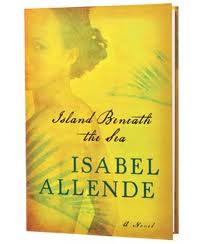
DISCOVER- ISLAND BENEATH THE SEA- THE NOVEL

Isabel Allende was born in Peru and raised in Chile. Her her 2009 novel Island Beneath The Sea, translated from its original Spanish, is the story of the evolution of slavery  in Saint-Dominque,  modern-day Haiti.  Allende,  like James Michener, establishes characters  so compelling that the reader becomes associated with every aspect of their lives.  Like Michener’s book Caribbean , Island Beneath The Sea begins with the saga of the annihilation by the Spaniards of the island’s Arawak Indians followed by the establishment of slavery as the economic  driver of the sugar industry throughout the Antilles.

imgres

The devastation and human suffering caused by the Spanish  is compounded when the French replace Spanish rule by establishing a permanent colony on Saint-Dominque.  The story of the great sugar plantations and the abhorrent treatment of the slaves imported from Africa is told through the life of a slave girl, Zarite’,  born of an African mother and a white sailor, neither of whom she never knew.

Island Beneath the Sea is a generational saga of the children of mixed black and white blood, that was so prevalent in plantation life.  Young girls became the forced lovers of the plantation masters and overseers with offspring by the hundreds bought and sold in the cycle of human bondage.  The story of Zarite’s survival is riveting , bringing to the reader an understanding of the plantation slave culture, later imported to the American south. In broad terms, I would classify Island Beneath the Sea as a historical novel.

In the early 1800s with the great slave revolts devastating the island’s plantations, the slave culture of the Caribbean migrated to America.  The economic driver expanded to include cotton and rice. The novel captures reality as Zarite, having been transported by circumstance from Saint Dominque ( Haiti)  to New Orleans  discovers that her emancipation and freedom, even in America, is a glass only half full, as an entire sub culture of mixed race ethnicity evolves and plantation life for the slave does not change.

Our contemporary discourse regarding slavery, heightened by the release of the movie Lincoln, makes this novel even more timely. Throughout its pages lies the heritage of the greatest issue faced by American’s transcending the 19th and 20th centuries.

Isabel Allende is the author of nine novels including Ines of My Soul, Daughter of Fortune and Portrait in Sepia., all of which were New York Times best sellers.  I am thankful for the introduction to Allende by my daughter much in the same way as I was grateful to a good friend for recommending Anya Seton’s Winthrop Women.  You too will not be disappointed!