Critics have acclaimed Andrew Robert’s CHURCHILL WALKING WITH DESTINY as the best single volume biography of the iconic world figure. Having completed the 982 pages, read in sequence, I add my voice to the acclaim. It is a masterwork by the celebrated British historian. His commitment to exacting detail refreshes the landscape of history, while at the same time his prose is not at all cumbersome.

Churchill’s life and his personality is indeed complicated but Roberts misses nothing. History lovers will wrap their minds around the voluminous Churchill quotations and Roberts places them in exacting context. From Winston’s birth through the Boer War, WW I, the “Wilderness Years,” and then of course the lead-up and fighting of WW II, Roberts introduces the reader to every professional and personal influence on Churchill. Yes, Winston’s personality, lifestyle and his varying demeanor is splendidly portrayed. (I can cite a typical Churchill breakfast menu and the exact proportions of Whiskey and water.)
The portrait of the Second World War is profoundly complete in great detail of the successes and failures, both militarily and diplomatically. CHURCHILL, is without a doubt, a book for students of history. Reading CHURCHILL makes one wish that the knowledge within of war, leadership, politics and diplomacy could be universal. So many lessons and a plethora of wisdom. ” Expert knowledge, however indispensable, is no substitute for a generous and comprehending outlook upon the human story, with all its sadness and with all its unquenchable hope.” (Churchill, February 26, 1946 University of Miami)
In the bleak years of 1939-1940 when England stood alone against Hitler, Winston Churchill made one of his many inspirational speeches.
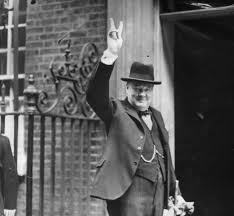
“Come then, let us to the task, to the battle, to the toil-each to our part, each to our station. Fill the armies, rule the air, pour out the munitions, strangle the U-boats, sweep the mines, plough the land, build the ships, guard the streets, succor the wounded, uplift the downcast, honor the brave. Lets us go forward together, there is not a week or a day or hour to lose.” Little wonder it was said of Churchill, ” He weaponized the English language.” Roberts allows the reader to captivate the famous Churchill intonation.
Another prodigious biography of Churchill is CHURCHILL by Roy Jenkins. An impeccable companion read to CHURCHILL WALKING WITH DESTINY is THE STORM OF WAR, also by Andrew Roberts. (See gordonsgoodreads.com April 2012.)
Engage, absorb, enjoy! GHH


 Gordon's Good Reads