Lord of Misrule. No Seabiscuit or Secretariat Here!

 The most ardent  “rail bird”  will find Jaimy Gordon’s description of the world of horse racing at third-rate, down on their heels race tracks absolutely illuminating, intriguing and at times both sad and downright hilarious.   You will also find it surprising that Jaimy Gordon is not a rail bird at all but rather a college professor.   Her vivid portrait of the world or “underworld” of horseracing has earned her the National Book Award for Fiction.

You will  not find a Seabiscuit or Secretariat story in Lord of Misrule.  No heroes here. Only no-name horses, jockeys, trainers, hot walkers, grooms, blacksmiths, promoters and owners struggling, cajoling, doing whatever necessary to make dinner! 

No one in the grandstand, at the window or even on the rail  in Lord of Misrule has an inkling of what is going on in the barns behind the track. The side deals, the fix, claimers,  stalking horses, ice buckets, butte, you name it and Jaimy Gordon makes it real.   Her characters, mostly a tragic lot, are the personification of a world known to very few. The author has uncovered the grimness of horseracing, and the pathetic daily lives of those who survive in this gritty world.

Lord of Misrule is a fast read but the book will capture you long before the first race. A bit of history from Wikipedia.   In Britain  in the sixteenth century, the Lord of Misrule was an officer appointed by lot at Christmas to preside over the ” Feast of Fools!”   Appropriate title, Jaimy.

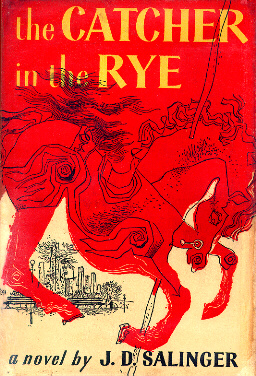
RUSTPROOF! Holden Caulfield, Scout Finch, Jody Baxter

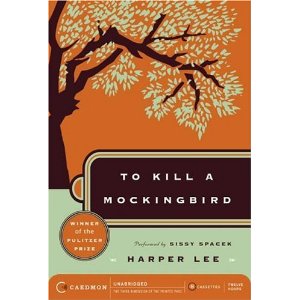
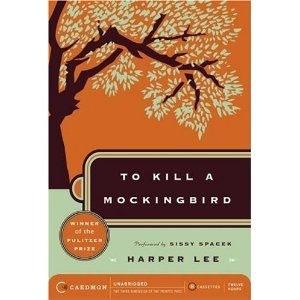
The newly released J. D. Salinger biography written by Kenneth Slawenski just a year after Salinger’s death will bring Catcher in the Rye (1951) and Holden Caulfield to the forefront again.    The same is true of the recent revived interest in Harper Lee’s To Kill a Mockingbird (1960) on the occasion of last year’s 50th anniversary of its publication.  

Salinger’s death prompted me to revisit Catcher in the Rye and the publicity surrounding To Kill a Mockingbird’s anniversary placed me back in the center of those pages.  A wonderful experience reading these works as an adult!

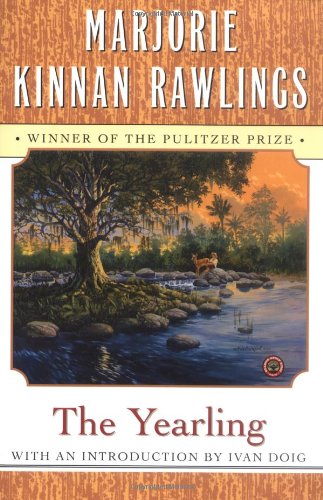
While hunting for Catcher in the Rye in the   “Classics” section of my bookstore I found another gem, one which I  had not read,  The Yearling, written in 1939  by Marjorie Kinnan  Rawlings. 

The novel won a Pulitzer and was an instant best seller. Jody Baxter, growing up in back woods Florida “cracker” country with a father and mother preparing him for a life, which would be as difficult as their own. Originally it was labeled a children’s book but do not be fooled by the title, its message, descriptions and dialogue is a worthy read for all ages. The film The Yearling was released in 1946 and added tremendously to Rawlings fame.

The reference to “rustproof” in this  blog title is credited to Ivan Doig, author of House in the Sky, who wrote a wonderful prologue for the The Yearling’s paperback re-issue in 2002.  He is a well-known novelist raised on a ranch in Montana.

I believe the term “rustproof” is a wonderful description of so many great reads we have overlooked or forgotten. This blog aims to re Kindle the memory! Rawlings first novel; South Moon Under was published in 1933.

Older Titles Appear On Times Best Seller Print and Electronic List

You may notice in the Sunday New York Times Book Section that there are two important new categories of Best Sellers, Fiction Print and Electronic and Non-Fiction Print and Electronic.

According to the Times, the new rankings reflect weekly sales for books sold in both print and electronic formats as reported by vendors offering a wide range of general interest titles. The sales venues for print books include independent book retailers; national, regional and local chains; online and multimedia entertainment retailers; university, gift, supermarket and discount department stores; and newsstands. E-book rankings reflect sales from leading online vendors of e-books in a variety of popular e-reader formats.

Popping off the page of Non Fiction Print and Electronic, this Sunday, February 20, 2011, ranked at number 11, is the 2005 memoir The Glass Castle by Jeannette Walls!  This is a new world of reporting who is reading what and when.  It is the essence of Gordon’s Good Reads’ philosophy that people like to discover wonderful books that they may have overlooked.

If you have not read The Glass Castle, first published in 2005, I urge you to do so. You will find this memoir of survival in a very dysfunctional family astonishing and nearly unbelievable.

A suggestion. Why not read Walls’ second book about her family first? Half Broke Horses, published in 2009, a true-life novel, is the story of Walls’ no nonsense and resourceful grandmother Lilly Casey Smith. By doing, so you will learn from who Jeannette Walls received her grit, allowing her to survive The Glass Castle. It is every bit as captivating. and wonderfully written.

Enjoy!

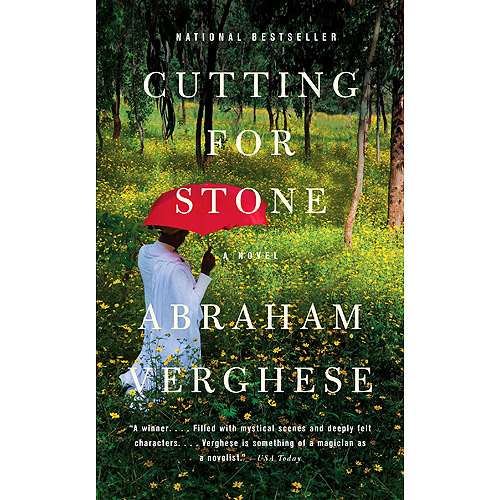
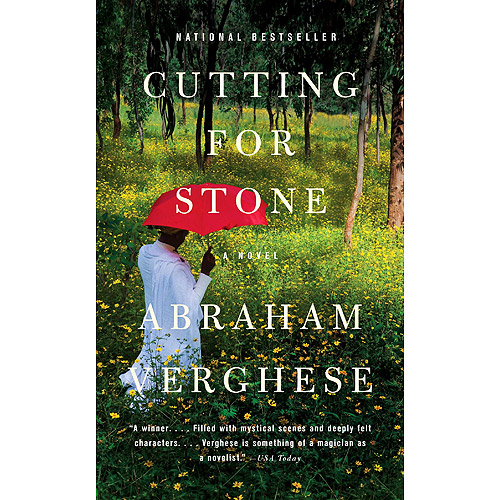
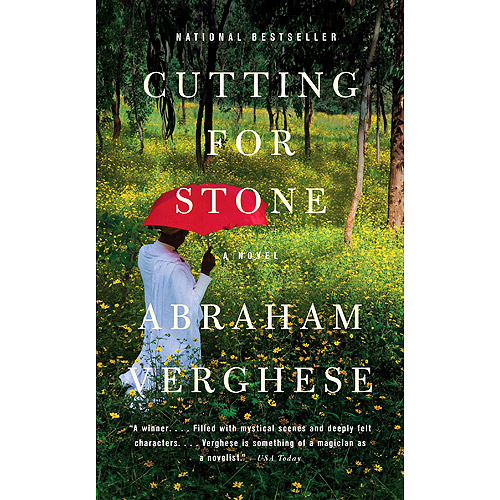
Cutting For Stone & What Matters Most

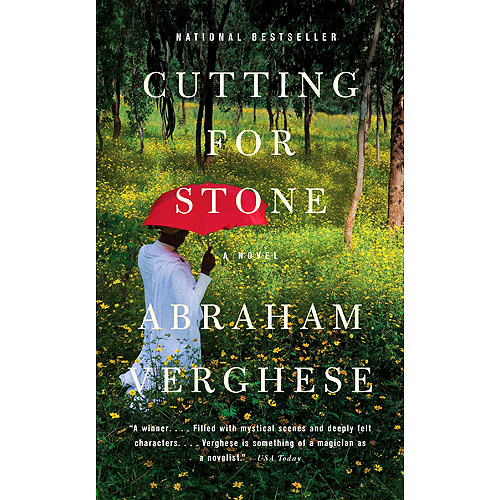
Many extensive literary reviews have delved into the inner meanings of Abraham Verghese’s magnificent novel Cutting for Stone. For many, the title itself begs that question. I was so captivated by the writing style, the evolution of the plot and the introduction of the characters that Cutting for Stone drew me in and held me close for the sheer enjoyment of the story.

Dr. Thomas Stone fathers co-joined twins with a young assistant, Sister Mary Praise Joseph . Sister Mary dies in childbirth, he abandon’s them all and  flees to America .The boys are raised by foster parents as their own. The stage is set for their incredible life journey.

The story begins in India, moves to Ethiopia and ends in New York City. Page by page you will find it impossible to abandon the twins . The players you will meet that pattern their lives are unforgettable. Verghese introduces nearly every human emotion as relationships unfold.

I have shared my enthusiasm for this novel with several friends and to the person they have thanked me profusely. You can take whatever inner meaning from Cutting for Stone that you wish. I can only promise pure pleasure. 

 Want more?

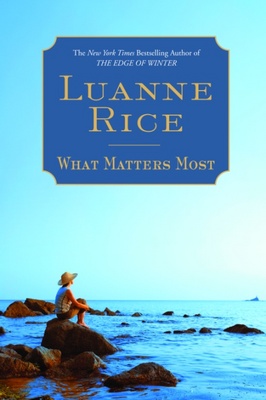
Less sweeping in scope  but every bit as compelling is another wonderful novel with plot similarity to Cutting For Stone.  Luanne Rice’s What Matters Most is the story of Sister Bernadette Ignatius and Tom Kelly who conceived a son they were forced  by church doctrine to leave behind in Ireland. Seamus Sullivan is raised in an orphanage and establishes a bond with a young girl that becomes the sought after love of his life. 

Sister Bernadette Ignatius  moves to America to become Mother Superior at the Star of the Sea Academy in Connecticut. Low and behold, Tom Kelly is the school’s caretaker! After years of their secret life, they begin the inevitable search for their abandoned son.  Meanwhile, in Ireland,  Seamus Sullivan , now a young man  seeks the only person he has ever loved, Kathleen Murphy who was claimed from the orphanage when they were both children.  As fate would have it she is a servant in a Newport, Rhode Island mansion. Now, put these circumstances together and let your imagination run as you turn to the Prologue of What Matters Most.

Thomas Stone’s sons discover their father in Cutting for Stone. In What Matters Most Sister Ignatius and Tom Kelly seek their son . Seamus begins his quest to find his beloved Kathleen.  Two wonderful stories immersed in love, miracles and heartbreak.

A New York Trilogy

Several years ago I had the privilege of an e-mail communication with Mike Wallace the co-author of Gotham just after I read the book. I shared my enthusiasm for this incredible volume and when I told him I actually read the 1236 pages sequentially he allowed that I might be the only person in captivity who did that!  This Pulitzer winner, written with Edwin G. Burrows, is the quintessential history of New York through the end of the 19th Century.

This preamble places in perspective my enthusiasm for New York the novel by Edward Rutherford.  Rutherford tells the New York story from the time of the city’s origins through the beginning of the twenty-first century through the lives of the fictional Van Dyck and Masters families. The story masterfully unfolds generation by generation.

Rutherford is every bit as captivating as is the standard-bearer of historical novels James Michener.  Every cell of Rutherford’s characters are believable as they wind, twist, love, fight, succeed and negotiate their lives through all of New York’s epic development. The Dutch settlement, Native Americans, independence, immigration, the classes, Civil War, financial booms and busts, politics, loyalists, revolutionaries, unions, heroes and villains, the swells and near-do-wells, all play a role.  You can taste the oysters at Frances Tavern!   Rutherford’s New York is comparable to the writing and character development in Michener’s Centennial, Chesapeake and Texas with the exception of Michener’s penchant for geological evolution! New York has earned a place on my Deserving of a Pulitzer shelf! New York will not give you the detail of Gotham but in living with the generations of the Van Dyck and Masters Families, you will  personally experience the story of the great city. 

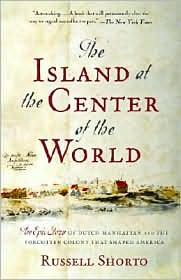
Complete your New York historical journey  by gaining a full understanding of the Dutch societal impact on the founding and ethos of the city by reading The Island in the Center of the World by Russell Shorto. This is a necessary read for all lovers of New York told through the voices of those that built the city and opened the New World long before the Pilgrims. You will come away with a deeper understanding of Peter Stuyvesant  an all of the other prevailing Dutch names and places rich in New York’s history.  You will learn why New York has always been open to new people, ideas, commerce and opportunity. Best of all you will enjoy more great storytelling.

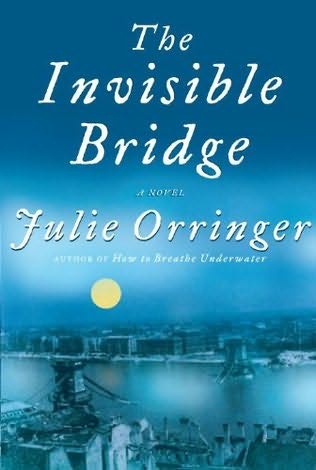
Julie Orringer, The Invisible Bridge

Had I read Julie Orringer’s collection of short stories How to Breathe Under Water published in 2005 the beauty of her first novel The Invisible Bridge released in 2010 would have been no surprise. “Don’t even ask, just read it,”  proclaimed my bookseller as she handed me a copy. My anticipated question, who is Julie Orringer, will never cross my lips!

The Invisible Bridge is an adventure, an unlikely love story, an incredible insight into a family which in fact is partly her own. Set in Paris and Budapest as the Second World War unfolds, the book is alive with memorable characters that evolve and continually exceed all expectations. The panorama of place and time is vividly portrayed. 

I had the opportunity to meet Julie Orringer after reading The Invisible Bridge and learned that the novel was in fact partly about her grandparents and great uncles. The family was among the Hungarian Jews living in Budapest deceived by Hitler and their own government. I am getting ahead of your read!

From Budapest to Paris and back to Budapest, the knowledge and fear of the impending reality of war sears through the dialogue as the chapters unfold. Orringer guides the reader through this incredible story of highs and lows . Through it all, The Invisible Bridge never looses its romance, sense of family and the evolution of personal character through the best and worst of circumstances. 

Orringer spent seven years writing and researching the book including two years in Budapest and the effort paid off.  The Invisible Bridge is a riveting love story crafted with historical accuracy that creates realism for the reader.

I have a shelf in my library of books I think worthy of a Pulitzer. The Invisible Bridge is there !

IF YOU ARE A LATE COMER TO HEMINGWAY READ HADLEY FIRST!

For many of us getting to the classics was a long journey, first developing  the zeal and then at last the time!  I discovered the works of Ernest Hemingway later in life, long after the corporate mountains were climbed and descended and children raised and sent off to college. Looking back, I am glad that my sojourn  arrived then because I think my mind was much more receptive , and appreciative.

Life experience  elevates the enjoyment of so many great writers, broadening perspective and understanding.  Now at the right time and place I was ready to consume For Whom the Bell Tolls, Death in the Afternoon, A Moveable Feast, The Sun Also Rises, The Old Man and the Sea, and A Farewell to Arms.

Now, what does Hadley by  Gioia Diliberto have to do with this?  I wish I had read it first! Hadley is a marvelous biography of Hemingwey’s first wife Hadley Richardson . For those who are reading  Hemingway for the first time, Hadley is an excellent introduction and a must read. It is Diliberto’s gift to the Hemingway reader offering  deep insight into his  mind, personality, relationships and lifestyle.  In the pages of Hadley you will see  The Sun Also Rises and A Moveable Feast evolving in Hadley and Hemingway’s  love story and their life together and apart. If you have not already begun your Hemingway journey take my suggestion and read Hadley first then move quickly on to the main course!

The Worst Hard Time: Insightful Parallells

The Worst Hard Time by Timothy Egan dramatizes remarkable similarities between the Great Depression of the 1920s and the 1930s and the Great Recession of 2008-2011. The land grab in the High Plains, the breaking of the virgin sod, and the rampant speculation in wheat by homesteaders and suitcase farmers alike all fueled by easy money.  Sounds a lot like no income check mortgages home equity loans!

If you interchange  a few names: Housing Bubble for High Plains land, wheat speculation for Mortgage Backed Securities and suitcase farmers for real estate and Wall Street speculators Tim Egan could have very well been describing today’s financial crisis.

Egan wrote The Worst Hard Time in 2005 and uncannily described exactly what was coming in the next Worst Hard Time! 

Another fine Tim Egan book is The Big Burn which includes many additional lessons on what happens when financial speculation and politics trumps common sense.

Both books are timely reads.

Yes, Colonel Roosevelt is a Page-Turner!

He is sitting just above a cowcatcher railroading out of Mombasa, hunting White Rhino in the Dark Continent, receiving a triumphant hero’s royal welcome in the palaces of Europe. A spoiler in an election campaign, living on the edge of death exploring an unknown Brazilian River, the presidency yet again within reach, a passionate advocate of the war and duty loses a son in battle.

The epic image of Theodore Roosevelt reaches another crescendo in Edmund Morris’ new biography Colonel Roosevelt (2010 Random House). Morris’ two previous historical masterpieces The Rise of Theodore Roosevelt and Theodore Rex received critical acclaim including the former receiving the Pulitzer Prize. Colonel Roosevelt completes the trilogy and is worthy of the praise which will undoubtedly be forthcoming.    
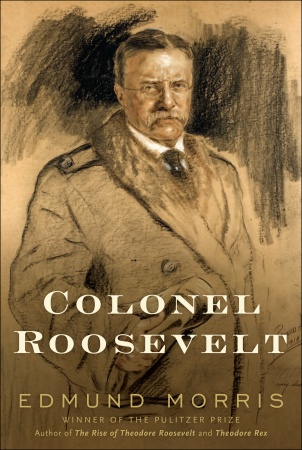
Colonel Roosevelt continues Morris’ biographical work after Roosevelt leaves the presidency following the election of William Howard Taft in 1908. It ends with Roosevelt’s death in 1919.

 Roosevelt embarks upon a lifelong dream of an African big game safari. He follows that with a heroic post presidential tour of the capitols of Europe.  Morris’s detail is so vivid it is as though the author were present. Roosevelt returns home to find the Republican Party in disarray. He is greatly disappointed in President Taft, his friend and chosen successor. He sees his Republican Progressivism platform in shambles.

 Morris’ study of Roosevelt Progressivism and the resulting split in the Republican Party is telling in its relevance to the divide that exists in the modern day GOP. A century ago, the ultra conservatives were the Taft Republicans and the more moderate Republicans became Roosevelt’s Progressives. The split resulted in Roosevelt’s Bull Moose Party and his failed election bid in 1912 that saw the GOP divided between Taft and Roosevelt with the resulting election of Woodrow Wilson. It raises an interesting comparison to the Tea Party split within the current GOP.

Morris’ treatment of the Roosevelt-Wilson acrimony through the conclusion of the First World War is riveting. It is so well written that for the non-historian it becomes an insightful overview of the political momentum of the entire tragedy and the tremendous divide it created in what was then an isolationist America.

 Morris deserves his just accolades as a historian. His research is impeccable. Best of all he is also a great storyteller.  His style in all three Roosevelt books presents personalities and huge volumes of historical facts in a flowing, manageable and memorable landscape.

 The term Page-Turner is most often used in reference to fast-paced novels, not a biography. However, Edmund Morris consistently writes monumental Page-Turners combining facts and clear interpretation with artistry to bring history and personalities vividly into focus. Start by turning the pages of The Rise of Theodore Roosevelt, hit the campaign trail to the presidency with Theodore Rex, and then be a witness to Roosevelt’s incredible later life as so beautifully detailed in Colonel Roosevelt. During the many hours of pleasure it will take to absorb all three, Edmund Morris will personally place you amidst the Roosevelt memorabilia in the great room at Sagamore Hill.