Roger Lowenstein has researched and written an excellent analysis of an often overlooked battlefield of the Civil War. ” Money” This in depth academic work explores in great detail the complexity and drama of exactly how both the Confederacy and the Union financed the war. In Lowenstein’s account, the battle for financing may have equaled and even surpassed the importance of outcomes from the horrendous military clashes.
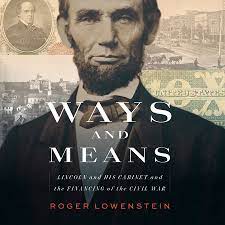
Taking a page from Doris Kern Goodwin’s Team of Rivals, Lowenstein places Salmon P. Chase’s selection by President Lincoln as Treasury Secretary at the very center of finding the money to finance the prolonged conflict, rightfully called America’s Second Revolution. In the north money for the war effort was a daily struggle but in the Confederate south the impossibility and mismanagement of securing funding became the most significant factor in the Confederacy’s final defeat.
Often overlooked during the passions of the war in 1862 the Republican 37th Congress, following succession by the Democratic southern states, enacted some of the most progressive legislation in the nation’s history. The Homestead Act, the Land Grant College Act, the Transcontinental Railroad, creation of the Agriculture Department, the Legal Tender Act, making paper money legal tender for all debts public and private. The same congress established the nation’s first Graduated Income Tax to provide critical financing for the war effort.
Lowenstein’s narrative ties together how the critical role the divergent approaches to financing the war were a determining factor in the final outcome at Appomattox. Additionally, the book is a study of the expansion of the power of the federal government acting as a nation.
 Gordon's Good Reads