MUSK/TRUMP/GOOD/BAD/UGLY

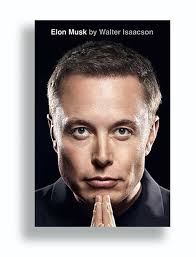
If you feel the need, perhaps you do not, there are two important current biographies of these two men who are at the forefront of the news. Confidence Man ( Donald Trump) by Maggie Haberman of the New York Times, and Walter Isaacson’s Elon Musk. Great first hand personal research and objective reporting. The best!

Here you go!

You can read my take on these two books here at gordonsgoodreads.

SPYING ON THE SOUTH/ HORWITZ

In the 1850s, just prior to the Civil War at the height of the Cotton Kingdom and the southern slave society, a young Frederick Law Olmsted, just employed as a reporter for the fledgling New York Times was sent on a mission to report on the nature, culture and society of the American South. He had previously been wandering through Europe seeking a sense of personal direction.

But this was a real job with a paycheck, expectations and deadlines. Olmsted took his brother on what turned out to be two separate trips, the first into the eastern southern states and the second a year later a more adventurous journey through Kentucky then on to Tennessee and East and West Texas. Travel was by riverboat , trail horseback and foot.

Olmsted delivered hundreds of insightful detailed dispatches to the Times over these two years. Southern society, the cruelty of slavery, the grandiose lifestyles of plantation owners and of course of lasting impact on his future career, the American natural landscape. His political philosophy was sharpened by the early German settlers of the West Texas Hill Country and the southern gentry slave holders and their progeny. He and his brother enthusiastically tasted heritage cuisines in Cajun and Creole Country, and African in the deep south and came to an understanding of their cultural origins

Tony Horwitz in Spying on the South takes it upon himself to recreate step by step Olmsted’s two journeys. With some of the original manuscripts in hand he attempts to re-imagine what Olmsted observed 150 years earlier, admittedly an almost impossible task. In some respect everything had changed, pavement, highways, strip malls. I other cases, nothing changed. Attitudes, economic disparity, political divisions and yes the wonderful cuisines of the south remained. Did Howritz capture Olmsted’s trip? That was a tall order. However, Horwitz’s trek on pack mules in West Texas likely came closest to the Olmsted experience!

Frederick Law Olmsted went on to develop a world renown reputation as a landscape architect and an advocate for public lands and shared spaces. Central Park is considered among his masterpieces from both a social and a landscape perspective. Without question the Olmsted design and social imprimatur was deeply nurtured by his two adventures in the pre Civil War American South.

For more on Frederick Law Olmsted see gordonsgoodreads.com Olmsted & Yosemite.

MAKING THE PRESIDENCY/CHERVINSKY

Lindsay M. Chervinski’s book MAKING THE PRESIDENCY/ John Adams and the Precedents That Forged the Republic is a must read for its relevance to the historical perspective of the Electoral College and the precedent of the election of John Adams as its relates to the controversies of 2020 and 2024.

Chervinski has produced a great academic yet entertaining work in understanding the historic perspective of our electoral process through the lens of John Adams and the hotly contested election of first Adams himself succeeding George Washington and then his loss to Thomas Jefferson in his bid for a second term.

The author elevates the contributions of John Adams to our democracy and in his defining of the early powers of the presidency. It is a case study of the implications of the Alien and Sedition Acts, the establishment of highly partisan political parties in the election process and the fascinating intrigue and plotting of Alexander Hamilton and Thomas Jefferson. Both unlikely bedfellows in the bitter Jefferson-Adams electoral contest.

” History repeats itself ” can become a cliche. After reading MAKING THE PRESIDENCY you will quickly see how history can fast forward.

For those in Massachusetts or nearby, Revolutionary Spaces is hosting a discussion with Lindsay Chervinsky on Thursday, November 21 at 1PM at Old South Meeting House in Boston. For reservations go to revolutionary spaces.org There is no charge for admission.

WORKING/ROBERT A. CARO

If you are like anxiously waiting for the next installment of Robert Caro’s biography of Lyndon Johnson, WORKING by the author himself will help with your understanding of why patience is necessary. In this book Caro describedsin depth his approach to research and writing. His fundamental research ethos is Turn Every Page, a discipline dating back to his early days as a newspaper reporter.

If you are a follower of Caro’s work this book is an essential read that is most enlightening of Caro and also the enormous contributions made by his wife Ina.

With regard to the release date of the final Lyndon Johnson book the code word is patience knowing that the master is WORKING!

TOM CLANCY/ACT OF DEFIANCE

A new Jack Ryan Novel in the Red October genre, this edition written by Brian Andrews and Jeffrey Wilson. Everything would expect from a Clancy adventure, this time featuring the president and his daughter.

Hard to believe it was forty years ago when Clancy’s Hunt for Red October was first published. Like all series the adventures can often be challenging to maintain but Andrews and Wilson give this quick read their best effort.

You can see overviews of nearly all of Clancy here at Gordons Good Reads. I have read and enjoyed them all.

JUNETEENTH/TWO IMPORTANT TITLES

John Swanson Jacobs, son of Harriet Jacobs both of whom escaped slavery, is now available in a rediscovered narrative titled A TRUE STORY OF SLAVERY THE UNITED STATES GOVERNED BY SIX HUNDRED THOUSAND DESPOTS.

The book goes far beyond Jacob’s bondage and escape there from to crystallize his views on the very government and the US Constitution that allowed the institution to continue and thrive through the end of the Civil War. Jacob’s SIX HUNDRED THOUSAND DESPOTS are clearly defined by his narrative as the white American oligarchy that that allowed and supported slavery’s existence. In his own words, Jacobs holds all American citizens, North and South accountable for writing -absolute rule over an unfree people- into the democratic charter. Jacob’s narrative is one of the very few first hand accounts of slavery that survive, including his mother’s Harriet Jacob’s INCIDENTS IN THE LIFE OF A SLAVE GIRL and also the NARRATIVE OF THE LIFE OF FREDERICK DOUGLASS, AN AMErICAN SLAVE. Before leaving America for Australia and then a life at sea he briefly joined the lecture circuit with Frederick Douglas. The book also includes a biography of Jacobs by Jonathan Schroeder titled NO LONGER YOURS.

Another important Juneteenth volume is Matthew Stewart’s AN EMANCIPATION OF THE MIND RADICAL PHILOSOPHY, THE WAR OVER SLAVERY, AND THE REFOUNDING OF AMERICA.

This volume is a highly charged analysis of how government, the white oligarchy, American’s prominent religious denominations and the economics of the plantation/cotton economy forced and kept four million human beings in bondage. In the effort to dominate the national political system the slaveholders were able to count on the antidemocratic aspects of the US Constitution: The overrepresentation of the small states in the Senate and the Electoral College; the growing power of the unelected judiciary: and the absence on meaningful checks on the corruption of state governments.

Of great interest to this reader was the influence of German revolutionaries, progressives and intellectuals upon the American abolitionist movement. They called themselves the 48ERS, having been among the some 10,000 Germans emigrating to America during that period. They included Friedrich Knapp, Ludwig Feuerbach, journalist Ottilie Assign, August Willich, Carl Schurz and many others. There were some 10,000 German immigrants living in the Ohio Valley by the start of the Civil War whose abolitionist views were made well known to President Lincoln.

Two volumes written over 250 years apart, one by an escaped slave the other by a modern day historian zero in on the same underlying issues that allowed slavery to exist and in some cases remain a threat to American democracy to this very day. I can think of two more timely reads.

SKIES OF THUNDER/CAROLINE ALEXANDER

Gordons Goodreads along with countless books, movies and streaming documentaries have delved deeply into the European and Pacific Theaters of The Second World War. Caroline Alexander’s new work of non-fiction SKIES OF THUNDER takes the reader to a relatively lesser known WWII Theater, the BURMA HUMP.

During WWII one of the most deadly missions of the war flew hundreds of tons of supplies from India to China over the treacherous airoute above the Himalayas and the northern deep jungles of of Burma. (Now Myanmar). FDR was determined to supply the Nationalist Chinese Army to prevent a Japanese takeover of China. China’s Nationalist leader was none other than Chiang-Kai-shek. With the old Burma Road not accessible, the only supply access was by air. The flying conditions brought about by weather including the annual Monsoons, high altitude icing and the dangerous Himalayan peaks made for nearly impossible flying conditions. But fly they must and hundreds lost their lives.

Alexander’s writing and research has no mercy for the military commanders in charge. Vinegar Joe Stilwell’s and Claire Lee Chennault’s ( Flying Tigers fame) reputations are left in tatters. Chiang-Kai-shek’s strongest supporter was perhaps FDR himself. The project became rife with a black market of American supplies. Through it all hundreds of brave pilots gave their lives, many bodies never recovered from snow covered mountain slopes and deep unexplored jungle.

Exactly what did the Hump accomplish? It demonstrated conclusively that a vast quantity of cargo could be delivered by air even under the most unfavorable circumstances if leadership was willing to pay the price in men and money. A Japanese takeover of China was prevented and millions of Japanese troops were diverted from the Pacific Theater to China. However, following the war, Chiang Ki-shek’s Nationalist Government ultimately fell to the Communists leaving the United States with Formosa which is now Taiwan.

AN UNFINISHED LOVE STORY/DORIS KEARNS GOODWIN

Anderson Cooper gave the perfect description of Doris Kearns Goodwin when he called her a national treasure. His quote appears on the dust cover of Kearns Goodwin’s new book AN UNFINISHED LOVE STORY, A PERSONAL HISTORY OF THE 1960S.

Richard Goodwin while in his twenties and early thirties was a speechwriter and inner circle advisor to Presidents Kennedy and Johnson and then later to Robert F. Kennedy. For years, all of Goodwin’s personal papers of the era sat collected in some thirty boxes stored in the Kearns Goodwin home at Concord, Massachusetts. In their later years after over 40 years of marriage Richard in his 80s and Kearns in her seventies decided it was time to open the boxes and write his personal history. By this time Kearns had established herself as among the most prestigious of presidential Pulitzer Prize winning historians. ( Search Gordons GoodReads).

What is remarkable about this book is the insiders look behind the scenes of the personalities and the inner workings of the campaigns and administrations of John F. Kennedy and Lyndon Johnson. Added to the narrative is the disruptive force of Robert Kennedy and how Richard Goodwin navigated his mixed loyalties. Those loyalties of course spilled over into the Kearns/Goodwin love story, she being an ardent loyalist of Johnson and Richard having left the Johnson inner circle for Bobby Kennedy’s ill fated primary campaign against LBJ.

The reader learns of the beginnings of the Peace Corps ( an off the cuff-JFK speech in Michigan), the LBJ Great Society the inside strategy of the Voting Rights Act, The Civil Rights Act and LBJ’s famous joint session of Congress speech in which Goodwin co-opted Martin Luther King’s We shall overcome. Insight into the transition from the Kennedy to the Johnson administration after JFK’s death evoke a combination of anger and empathy. The Robert Kennedy personality for all of its strength and weaknesses is on abundant display.

A remarkable aspect of AN UNFINISHED LOVE STORY is the lesson learned of how great writers and politicians learn how complicated and controversial legislation can be properly packaged and themed to insure success. Kennedy, Goodwin and LBJ were a brilliant combination in fulfilling this task.

As readers of Gordons Good Reads surely know I too elevate Doris Kearns Goodwin as a National Treasure. AN UNFINISHED LOVE STORY IS a must read for those interested in American political history of the 1960S.

THE MAKING OF THE ATOMIC BOMB

Richard RhodesTHE MAKING OF THE ATOMIC BOMB, first copyright 1986, is an extraordinary deeply scientific examination of the development of atomic energy. This work is so unique that this non-scientific reader( me), fascinated with the subject, found the narrative accessible, engrossing and understandable. This book is of far greater scientific depth than American Prometheus. (see Gordons Good Reads).

If a layman seeks an understanding of nuclear fission, the splitting of the atom, atomic chain reaction and the creation of a weapon of mass destruction THE MAKING OF THE ATOMIC BOMB brings together the history of the discovery of the atom, the groundbreaking scientists involved ( you will meet many more than Oppenheimer), the building of the atomic bomb itself and the resulting moral controversy over, how and when, and if ever it should be used.

Francis William Ashton ( Circa 1936): There are those who say that such research should be stopped by law, alleging that man’s destructive powers are already large enough. Personally I think that subatomic energy is all around us and that one day man will release and control its almost infinite power. We cannot prevent him from doing so and can only hope that he will not use it exclusively in blowing up his next door neighbor.

Rhodes expert, understandable and readable nuclear development research fast forwards to the ethical controversy of using atomic weapons and delves deeply into the decision making process prior to the deployment of Big Boy over Hiroshima and Nagasaki. Rhodes offers a substantial overview of the political and military strategy leading up to the decision that ended World War II.

Could the enemy not be warned in advance or a demonstration arranged? We feared that if the Japanese were told that the bomb would be used on a given locality they might bring our boys who were prisoners of war to that area.

The detail in Rhodes writing equals and in scientific terms( formulas, equations, graphs, charts, maps) exceeds what an educated reader expects from and author like Robert Caro.

THE MAKING OF THE ATOMIC BOMB together with AMERICAN PROMETHEUS are a giant step in understanding the scientific and ethical development of atomic energy. Both books are worth the effort.


/…….

THE RISE AND FALL OF THE SECOND AMERICAN REPUBLIC/MANISHA SINHA

The title is exactly what this academic work entails. What became of Lincoln’s vision of a unified American Republic following the initial Republic’s dismemberment during the Civil War? The years are 1860-1920. A very broad survey of a period when the philosophy of today’s political parties were reversed.

Manisha Sinha, Chair in American History at the University of Connecticut has written a scholarly detailed description of how Lincoln’s dream of Reconstruction was eviscerated in a cascading series of events that returned the defeated South into a post-war era of subservision of any and all rights gained by the Slaves with the Emancipation Proclamation and the passage of the Thirteenth, Fourteenth and Fifteenth Amendments to the Constitution. Sinha also places the Abolitionist movement in the North under a microscope and delves into the conflicts that developed between Abolitionists and Suffragettes as to who should be granted the right to vote.

From the day he took the Oath of Office following Lincoln’s assassination, President Andrew Johnson began a step by step premeditated campaign to restore The Lost Clause in the American South. For a brief period there was hope. The right to vote by black majorities in many regions saw former slaves elected to local and state offices. However this success, unprotected by the eventual withdrawal of federal troops and the political destruction of the Freedmen’s Bureau led to lawless revenge by the former plantation aristocracy. Sinha’s narrative details the horrors of the Black Codes, Lynchings, Poll Taxes, Jim Crow, and inmate leased labor that prevailed throughout the south.

The Rise and Fall is more than a deep review of Reconstruction. The narrative carries forward to Manifest Destiny and the Westward Expansion which led to the devastating impact upon Native Americans in the in the new territories. It is a general survey of politics, self interests, the Lost Cause, the impact upon labor during the industrial revolution, failed policies and racism in America from 1860-1920, long before the modern day Civil Rights Movement began. It is the perfect prelude to that forthcoming era.

This is an extremely complicated era in American History and Manisha Sinha does a brilliant job in enlightening the reader. An important addition to one’s library of American History.