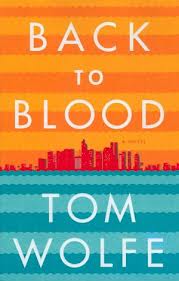
BACK TO BLOOD-MIAMI-PAINTED BY TOM WOLFE

I opened Tom Wolfe’s Back To Blood  on Thursday afternoon!  It is now Saturday afternoon and every word on each of the 704 pages has been digested!  I guess I could simply end my overview with that!  However, it can not go unsaid that Tom Wolfe engages the reader from the first page whetheimages-2r it be Bonfire of the Vanities or my favorite Wolfe novel, I am Charlotte Simmons.

Back to Blood catapults the reader into the political and social structure of Miami.  There is little left out of this vivid painting. A WASP publisher of the Miami Herald seeks to avoid controversy at all costs. Add to the mix a young aspiring  reporter, A black chief of police, a Cuban mayor, and a police officer, also Cuban, who with great consistency finds himself in the middle of  two huge stories that threaten the delicate balance between all of the competing constituencies within this cosmopolitan melting pot. There is also plenty of  humor, bringing back images of Lucky You by Carl Hiaasen, another Miami based novel.

With great skill, Wolfe introduces the ethnic beauty of the women of Miami who play a major role adding to the complexity of relationships as played out by the protagonist police officer Nestor Camacho.  There are dozens of contemporary themes as a video of a police drug take down goes viral, a local psychiatrist specializing in pornographic addiction becomes a high-profile TV Doctor, a stunning light-skinned Haitian woman of French heritage is a love interest.  Miami Art Basel and a new Miami Art Museum become a focal point in a fake painting fraud perpetuated by a Russian Oligarch and his entourage.   Wolfe carefully  and with great creativity brings all of these factions together in a tumultuous conclusion.

images-3

Place Back to Blood on the Christmas gift list for friends who enjoy a good read.  Pick up the hard cover as any Tom Wolfe novel is worth a permanent place in a book lovers library. Luckily, Back to Blood arrived when the family was traveling and I only had my dog to offend with my face in a book for two days. What pleasure great writing can bring and the new Tom Clancy novel Threat Vector is on the way December 4th!

Timothy Egan’s Fascinating Read For Those Who Watched Dust Bowl on PBS

The Ken Burns PBS special Dust Bowl could well have been based upon Tim Egan’s book The Worst Hard Time. Although Egan appeared in the  television special, his book takes the reader on an even more vivid journey.  Of course it is also in the Dust Bowl that begins Steinbeck’s The Grapes of Wrath.

The Worst Hard Time bTimothy Egan dramatizes remarkable similarities between the Great Depression of the 1920s and the 1930s and the Great Recession of 2008-2011. The land grab in the High Plains, the breaking of the virgin sod, and the rampant speculation in wheat by homesteaders and suitcase farmers alike all fueled by easy money.  Sounds a lot like no income check mortgages home equity loans!

If you interchange  a few names: Housing Bubble for High Plains land, wheat speculation for Mortgage Backed Securities and suitcase farmers for real estate and Wall Street speculators Tim Egan could have very well been describing today’s financial crisis.

Egan wrote The Worst Hard Time in 2005 and uncannily described exactly what was coming in the next Worst Hard Time! 

Another fine Tim Egan book is The Big Burn which includes many additional lessons on what happens when financial speculation and politics trumps common sense. It is all about Teddy Roosevelt, the environment and our National Parks.

Both books are timely reads.

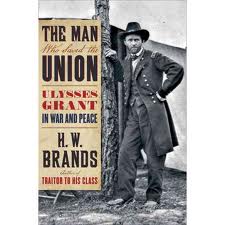
THE MAN WHO SAVED THE UNION-ULYSSES GRANT IN WAR AND PEACE

In the excitement of  the release of  the Steven Spielberg  movie Lincoln, I have coincidentally just completed H.W. Brands’ The Man Who Saved The Union , Ulysses Grant in War and Peace.  Grant, not Lincoln, the man who saved the union?  On the surface, the book’s title is a dichotomy of  enormous proportion. In reality, Grant accomplished much of Lincoln’s vision and the movie Lincoln  should encourage renewed interest in the presidency of Ulysses Grant.

Historian Brands takes nothing away from the great emancipator. To the contrary, he highlights Lincoln’s wisdom in plucking Grant from the western theater of the Civil War and rapidly promoting him to command all Union forces.  Brands forcefully makes the case for Lincoln’s stubborn confidence in General Grant amid repeated periods of doubt, chaos and defeat. Following the war, Lincoln relied on General Grant to carry out the challenge of reconstruction it’s the South including its return to civil order.

Spielberg’s  Lincoln, is based in part of Doris Kerns Goodwin’s book Team of Rivals.  Brands’ biography of Grant portrays how together, two of the greatest figures in American history, Lincoln and Grant, crafted an outcome that did indeed preserve the union. Ironically, through an act of fate, it was the hand-picked military general who carried out the brilliant politicians foresight. The movie Lincoln, and the books Team of Rivals and The Man Who Saved The Union embrace the same cast of historical figures.  Following a biographical review of Grant’s early and then wartime years, Brands continues his narrative after Lincoln’s assassination and the debacle of Andrew Johnson’s ascension to the presidency, leading to Grant’s election as president.

Brands leaves no doubt that General Grant, as the overseer of reconstruction while Johnson was president, used every tool within his power as commanding general, to carry out Lincoln’s philosophy toward bringing the rebel states back into the union. Grant’s zeal was equal to Lincoln’s regarding equality and the rights of full-citizenship for the recently emancipated slaves, while at the same time finding the way to keep the Southern States in The Union.   Lincoln ‘s death and the Johnson presidency made the task nearly impossible.  It was during this period that Grant came to fully understand and embrace Lincoln’s intellect which laid the foundation  for a Grant presidency that would bring into fruition Lincoln’s dream.

General Ulysses Grant, the man who disavowed politics and  as General in Chief refused an office in Washington, casts aside his disdain for public office and accepts the nomination of the Republican Party for President of the United States. It is Grant who carries forth the Lincoln legacy by navigating  passage of the, Fourteenth and Fifteenth Amendments to the Constitution through a bitterly divided congress.  In order, these amendments granted equal citizenship under the U.S. Constitution and created the voting rights act.  Brands details Grant’s deft handling of reconstruction during his two terms in the White House utilizing diplomacy and the military to neutralize the Klu Klux Clan and other White Citizens Organizations.  You see in Grant’s ability do deal with the disparate forces in congress much of the same political savvy wielded  by Lyndon Johnson over a half century later!

I caution readers not to look here for a battlefield  history of the Civil War although there is substantial detail on the capture by Grant of Fort Donelson and Fort Henry in the west and the epic battle at Spotsylvania in Virginia.  While the military overview of the war is complete, this book is mainly about Grant, the man, the general and the president.  You will find many of Lincoln’s Team of Rivals still in play while Grant begins his ascendency and assumes the presidency.

Team of Rivals by Doris Kerns Goodwin is an obvious read before seeing Lincoln.  The Man Who Saved The Union by H.W. Brands is a must sequel.  Brands is also the author of the great FDR biography Traitor to his Class.

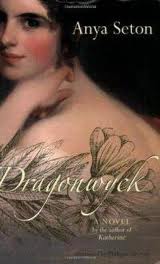
Dragonwyck-Sixty Years Before Fifty Shades of Grey!

Anya Seton’s novel Dragonwyck preceded E L James’ Fifty Shades of Grey by sixty years. However, Seton’s story was prescient of the current runaway best-selling trilogy!

I came upon Dragonwyck after reading Seton’s The Winthrop Women and was quickly drawn to the story of an innocent Connecticut farm girl being catapulted through circumstance into becoming the young wife of the wealthy and dominating patroon of Dragonwyck Manor. The similarities to the Fifty Shades of Grey plot become quickly evident.  Fifty Shades of Grey has Christian and Anastasia, Dragonwyck, Nicholas and Miranda!  Fast cars for Christian and Anastasia, a fine coach and six for Nicholas and Miranda. No bondage and handcuffs in Dragonwyck to be sure, however eighteen year old Miranda Wells quickly learns there is a tremendous price to be paid  for releasing the bonds of hardscrabble New England farm life for an aristocratic lifestyle of limitless wealth as the submissive mistress of Dragonwyck Manor. Dragonwyck emits echos of the great gothic novel Jane Eyre.

Set in the mid-nineteenth century, Dragonwyck begins in Connecticut, then moves to the wealthy estates of the Mid-Hudson region of New York and the social whirl of New York City.  Dragonwyck  is not a historical novel of the scope of The Winthrop Women but it does open to the reader much of the social and economic lifestyles of many of the founding Dutch families of New York as they shared their time between mansions in New York City and their castles on the Hudson. Landed gentry supported by an old world feudal system of subsistence tenant farmers who worked the land.

For further insight into Seton’s The Winthrop Women, see my September blog post. You may also wish to consider Seton’s novel Katherine  for which many overviews are available on-line. It was the most popular of all of her novels and is on my “futures” list.


HEART OF DIAMONDS! FAST PACED WEEKEND READ

I worked with Dave Donelson years ago, long before he wrote his first novel, Heart of Diamonds.  His connection with the media business is apparent in the development of the story and principal characters in his book.  This is the type of novel that you may pick up now knowing what to expect, with no national reviews and no best seller listing.   Had the author not handed me this book on a chance meeting, it would likely have not come to my attention.  I am glad that it did!

Here is the list of ingredients for this extremely fast paced thriller!  A beautiful female network reporter who is passed over for the coveted anchor chair, complicated by the fact that she is the girl friend of the network’s Washington News Bureau Chief.   A war-torn African Republic of the Congo ruled by your typical despot. A young and handsome doctor who has eschewed a prestigious NYC hospital assignment for a clinic serving the malnourished who are also victims of the violence among the warring Congo factions. A diamond mine in the Congo owned by a famous television evangelist who is a public supporter of the President of the United States, and who through an elaborate scheme, is skimming the diamond mine’s profits  without the knowledge of his partner,  the despotic president of the Congo Republic!

You guessed correctly if you placed Valeria Grey, seeking a big story to offset her disappointment over losing the anchor chair to a male talking head, literally in the middle of  this complex mix of violence, subterfuge, death, and high stakes potential political fall-out. Could the President of the United States be so foolish as to become involved in the scheme?  It certainly becomes a life and death struggle for Valerie Grey and those who seek to support her exposing this incredible blockbuster story!

As I referenced earlier, Heart of Diamonds was a surprise which I opened and completed in a day and a half. Alarmingly insightful and an enjoyable page turner indeed!

ANYA SETON’S WINTHROP WOMEN, A TREASURE FROM THE 1950s

The republishing of the prodigious historical novels of Anya Seton in the first decade of this century brings to light the treasure trove encompassed in her work.

Winthrop Women, first published in 1958 and later released in 2006 is a particular gift for those whose interests lie in the history of the Puritans, the Massachusetts Bay Colony and the early settlement of the environs of Greenwich, Connecticut.  Above all, it is a great love story and the saga of a strong and independent woman richly entwined in the region’s history.

Winthrop Women  embraces a broad  historical web, set in the 1600s (1617-1655)  centered around the family of  John Winthrop, a fanatical practitioner of the Puritan faith  who became the first governor of the Massachusetts Bay Colony and his rebellious niece and daughter-in-law Elizabeth Fons. Their descendents  remain in Connecticut and  throughout New England.  Seton tells the Winthrop family and  Elizabeth Fons’  story in three parts: The early years in England living a near aristocratic lifestyle; the great Puritan migration to the New World with the establishment of the Massachusetts Bay Colony;  Elizabeth’s  banishment from Massachusetts and her emergence in Greenwich, Connecticut with husbands (correct) , lovers and children joining in the journey!

Anya Seton’s story of Elizabeth is written in ” high-definition.”  From childhood, “Bess”  is of independent thought and passionate in her views. She was born on a collision course with the beliefs of her Puritan elders, especially John  Winthrop.  Long before boarding the ship Lyon for the journey to  the New World, this child of luxury and  high social status had established herself as the Fons’ and Winthrop family non-conformist.

Proudly leading his flock beneath the banner of religious freedom to the colonies in New England,  far away from the dictates of King Charles, Cromwell and the ruling British establishment, John Winthrop becomes a  zealot and religious tyrant, ruling over his domain, with a wrathful “God” as his enforcer.

Elizabeth’s ever complicated life, saturated with her passion for men and her non-conformist beliefs, provides the framework for an abundant tableau of what life and love was like in 1630s New England. The drudgery of daily survival, the absence of  luxuries, disease and Indians both friend and foe. Foremost, the woman’s role of being, above all, a necessary  “good breeder,” upon which the future of the faith and the colony itself depended!

Elizabeth, having fallen in love with John Winthrop’s son, her cousin Henry, became pregnant and was hastily married before leaving England!  Henry, a kindred free spirit was not traveling with Elizabeth on the ship Lyon but was under his father’s supervision on the Arabella. Elizabeth learned  upon her arrival in Massachusetts that Henry had drowned in a boating accident upon landing. There would be two more husbands and many children, living and still-born before her story concludes thirty years later.

During a brief period when Winthrop had been ousted as Massachusetts Bay Colony Governor, the community rose up against Elizabeth’s behavior with rumors and  speculation that she and her Indian servant Telaka  were possessed by the devil. The outcry became witchcraft! Banishment from the colony, the final solution in those days short of hanging, saw Elizabeth, her family and Telaka ( whom Elizabeth had rescued from a slave auction) on their way to Greenwich where under Dutch law there was greater respect for individual freedom and religious beliefs. This novel is so wonderfully written and researched  that of course, Telaka, had ended up in Boston only after being kidnapped from her tribe, the Siwanoy Indians who populated the area in and around Greenwich! A homecoming for Telaka and a new most welcoming home for Elizabeth, her husband and brood?  Not quite that simple!

In the Greenwich chapters you will walk with Elizabeth on the white beaches of  Monakewago ( Tods Point), follow the Mianus River, witness the massacre of over 1000 Siwanoy Indians ( Telaka’s family) in what is today Cos Cob. There will be yet another husband and more “breeding, ”  and another banishment with the loss of thousands of acres of land that today encompass the entire Town of Greenwich.

History is taught in many ways and Seton is deserving of  high praise both as a novelist and historian for Winthrop Women.  Seton wrote Winthrop Women while living in Old Greenwich, Connecticut where she died in 1990 at age 86. She is buried there in Putnam cemetery.

Other highly acclaimed novels by Anya Seton  include, Foxfire ( 1950),  Katherine (1954),  The Mistletoe and the Sword (1956).

THE SHAARA TRADITION OF EXCELLENCE CONTINUES MOVING WEST TO SHILOH

Jeff Shaara continues his magnificent writing  with another Civil War historical novel.  A Blaze of Glory takes the reader to the western theater of the war and the battle of Shiloh. It is the first of  a new Shaara trilogy.  Jeff is the son of  Michael Shaara, author of  the Pulitzer Prize winning Killer Angels. 

Gordon’s Good Reads last reviewed Shaara’s The Final Storm , the World War II battle of Okinawa. (June, 2011)   A Blaze of Glory uses the same Shaara style by viewing the horror of battle through characters with boots on the ground. In this case, a Confederate Cavalry Lieutenant and a Union Private. Shaara holds nothing back in the vivid portrayal of the hand to combat and carnage that occurred when armies lined in formation across from one another enduring volleys of musket fire, artillery canister and grape-shot. He captures egos and indecision as well as bravery and heroism.

” The fight around Shiloh Church had come from the plans and ambitions of generals, and no matter the disaster of that, it was the foot soldiers who would still do the deed, who would be asked to decide the fate of the town, of the country, and more important to many, the fate of the men around them.”  You will walk in the footsteps of Lieutenant James Seeley and Private Fritz “Dutchie” Bauer.

April 6, 1862, 100,000 troops on the field of battle, 25,000 casualties,  including the death of a Confederate General that many say could have determined the outcome of the Civil War and the fate of the Union. Egos abound!  Grant, Beauregard, Johnston, Buell and Sherman are all present. A surprise Confederate attack on superior Union forces. Victory is in hand and then, a stunning decision that is the subject of discussion by Civil War historians to this day. Did  a need for personal glory determine the outcome at Shiloh?

Several years ago Shaara completed the initial Civil war trilogy begun by his father’s Killer Angels by writing Gods and Generals and The Last Full Measure. This new trilogy which begins with A Blaze of Glory will concentrate on the war in the western theater and follow Grant’s rise to his appointment by President Lincoln as General in Chief of all Union Forces.

Jeff  Shaara’s historical novels on World War II in addition to The Final Storm ( Okinawa and the dropping of the atomic bomb) are: No Less than Victory ( The Battle of the Bulge, and the fall of the Third Reich)The Steel Wave, ( The Normandy Invasion) and The Rising Tide ( The North Africa and Italy campaign).  He also wrote Gone for Soldiers a novel on the war with Mexico and two books on the American revolution Rise to Rebellion and The Glorious Cause. In Gone for Soldiers you will meet many of the Mexican War officers that later became the generals in Shaara’s Civil War novels.


BAILOUT- WHERE DID THE TARP MONEY GO? EYE-OPENING, FRIGHTENINGLY PERSUASIVE

Neil Barofsky’s book  BAILOUT An Inside Account of How Washington Abandoned Main Street while rescuing Wall Street, leaves no doubt that in his mind the American taxpayers have struck out and the big banks continue their winning streak. He also casts a large vote of no-confidence in Treasury Secretary Tim Geithner.


From December 2008 until March of 2011 Barofsky served as the Special Inspector General in charge of the oversight of TARP ( SIG-TRAP).  The primary purpose of  SIG-TARP, created by an act of Congress, was to monitor the flow of TARP funds to prevent fraud and misuse of the appropriations.  Barofsky,  appointed by President Bush was later re-appointed by President Obama. His three years of overseeing and reporting to Congress on the administration of TARP played out in an almost daily adversarial relationship with Treasury Secretary Geithner.

In a book, the first chapter of which is titled  Fraud 101! , Barofsky’s conclusions come as no surprise to the reader.  In a prescient view on the day that he accepted the assignment he writes, ” I had no idea what I was in for and what I’d learn. I hadn’t yet understood the degree to which the entire crisis was unleashed by the greed of a small handful of executives who exploited a financial system that guaranteed that no matter what risks they took, they’d be able to keep the profits and lavish pay those risks generated with the assurance that if their outsized bets went wrong, the U.S. taxpayer would cover their loses. ” 

BAILOUT  is well written, to the point and Barofsky  successfully reduces complex issues in layman’s terms.  The book is also a lesson in how Washington insiders operate and why the system is broken. It is a disturbing read, not only because of  enlightenment about what went wrong with TARP, but moreover, Barofsky makes a case that nothing has changed and that the banking system is heading back down the same disastrous road. It is important to remember that the author resigned from his position and was not fired, which adds objectivity to the writing

Barofsky holds out little hope that the watered down Dodd- Frank legislation will make a difference. “As recent history has repeatedly shown, through massive campaign contributions, relentless lobbying, and multi-million dollar payouts awaiting government officials who join Wall Street firms, no legislation can confer the necessary fortitude upon the regulators. ”

Not an optimistic outlook for the nation’s ability to deal with financial institutions that are “Too Big To Fail,” particularly when some used TARP money to purchase additional banks!

BAILOUT is an important read, particularly during this election cycle.   Ironically TARP is not a campaign issue but Barofsky leaves little doubt that ” To Big To Fail” remains a looming disaster for the U.S. economy and American taxpayers.

Another important book on this general subject is Reckless Endangerment by Gretchen Morgenson and Joshua Rosner. See gordonsgoodreads October 19, 2011.


COMING TO GGR

Two new books on subjects frequently followed by GGR. Jeff Shaara’s A Blaze of Glory, a novel of the Battle of Shiloh and BAILOUT  by Neil Barofsky an inside account of the Wall Street bailout.

IN THE GARDEN OF BEASTS. A DIPLOMAT AND HIS DAUGHTER DURING THE RISE OF NAZI GERMANY. ECHOES OF CABARET!

 This work of non-fiction  by Erik Larson is a remarkable  historical perspective  of  William E. Dodd, U.S. Ambassador to Germany during Hitler’s rise to power.

With the ear of FDR,  Dodd is given the posting to Berlin over the objections of Secretary of State Hull and the insiders of the ” Pretty Good Club,” who ruled the bureaucracy at the U.S. State Department prior to WW II.   Dodd further distanced himself from “ the club” with his frugality, conservative approach and his unwillingness to bend the truth in his actions in Germany and resulting communications with his superiors.  Dodd was a Diplomat by accident. He was a scholar, a Jeffersonian Democrat, a farmer who loved the history of old Germany where he had studied as a young man. He was shocked by the changes taking place  as Hitler rose to power.

Dodd and his family arrived in Germany in 1933.  His daughter Martha, abandoning a husband in New York,  joins her father,  brother Bill, Jr. and Dodd’s wife as the family establishes residency in Berlin. While Dodd is hard at work trying to understand Hitler and the Nazi Party, Martha joins the social whirl and conducts affairs with what became dozens of lovers of all rank in the diplomatic circle. On the contrary, Bill, Jr. and Dodd’s wife maintain a low profile, while Ambassador Dodd tries to fathom the complexities of a sea change in the German government.

Erik Larson’s work is engrossing from the first page. Beginning with the faint echoes of  jack-boots, through Ambassador Dodd’s perception, you envision the steps of the evolution of  the coming blood and terror of Nazism.  Meanwhile, Martha adopts the party line of a “New Germany!”  At the turn of every page, I could faintly hear Joel Grey in clown make-up singing from Cabaret, Wilkomen, I am Cabaret. Do you feel good? Leave your troubles outside, in here, life is beautiful!

Life was not beautiful and Dodd knew it. Germany was living an orchestrated lie.  He stood firm against the rising abuse, publicly chided the Third Reich and enraged his detractors in Washington, D.C.  Said Secretary Hull, “Why can’t you just get along!” Dodd would have no part of the establishment in D.C. or the Third Reich. His was a voice crying in the wilderness of  Nazi propaganda and U.S. isolationism.

 Then came the “ Night of the Long Knives.”  Hundreds of Hitler’s adversaries were murdered, in their homes, hanged in prisons,  guillotined, while others were shot and left to die only to be discovered by their children.  Hitler deemed his victims enemies of the state, justifying cold blooded murder.The persecution of Jews had already begun. Kristallnacht was on the horizon. The policy of appeasement toward Hitler, which Dodd fought so hard against, continued. No government recalled its ambassador or filed a protest. This was the beginning of Hitler’s rise to total power. To no avail, Dodd warned of a march toward war. Ironically, Roosevelt shared his view but most Americans had no stomach for involvement in European conflicts. In the end, FDR acquiesced to Dodd’s detractors and a member of the “Pretty Good Club” replaced him.

In The Garden of Beasts reads like a novel.  The multiple themes are intriguing.  It is no surprise that it rose to the number one ranking on the New York Times Bestseller List. Martha wrote her own memoir of her life in Germany titled Through Embassy Eyes. Marthaand Bill, Jr. edited and published Ambassador Dodd’s Diary.

 How could the world stand by and watch this all happen?  Read In The Garden of Beasts and you will discover the book is aptly titled. Contrary to the Cabaret lyric, life was not good, it was merely an illusion, clown face and all. 

Erik LArson also wrote The Devil in the White City.