PHILIPPA GREGORY-HISTORICAL FICTION AT ITS BEST

The Other Boleyn Girl, written by Philippa Gregory and published in 2001, is among the very best novels written about Tudor England and King Henry VIII.  If you have not read this great novel place it on your must read list.  This true story about Mary Boleyn, the younger sister of Henry the VIII’s second wife Anne Boleyn, is remarkable in many ways.   The book enlightens the reader not only of the history of the period but it portrays an accurate glimpse into how women, even in their teens, were used as pawns for both power and pleasure.

images


This is the story of Mary, the first daughter in the Boleyn family to be offered to a King in return for the hope wealth and power. So driven was this family that when Mary’s star began to fade in Henry’s ardor , sister Anne pushed her aside to eventually become Queen Anne.  Although you may know how that romance ended, believe me, the writing of Philippa Gregory will  capture and fascinate you through the final page. This story of two sisters and a King is also a study of the structure of society in 16th Century England. It is not suprising that Philippa Gregory is a recognized authority on women’s history.

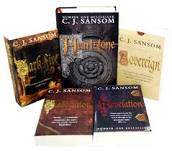
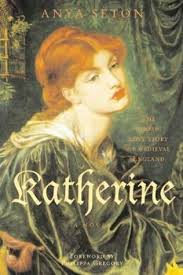
Tudor England was  fascinating and this blog has focused on many enjoyable reads set in that period, including the  great British novelist C.J. Sansom and the Shardlake series. Another wonderful work of historical fiction written of an earlier period, Medieval England, is Anya Seton’s Katherine.

After reading the Other Boleyn Girl I ordered the  2008 movie through Netflix.  The movie does not come close to the book’s more intricate story line and I would strongly suggest that reading the book is a must before watching the film.  Once you have read the book it is worth watching.


A MONUMENTAL WEEK IN CIVIL WAR HISTORY!

The first week of July, 2013 commemorates the 150 anniversary of the Civil War Battle of Gettysburg, considered by many historians as the greatest battle of the war and the fateful turning point leading to the ultimate defeat  and surrender of Robert E. Lee and the demise of the Confederacy.  The great battle took place in three engagements on July 1, 2 and concluding with the disastrous Confederate Pickett’s Charge on July 3rd, 1863.  The sun rose on July 4th over a battlefield that witnessed over 5,700 killed and more than 27,000  wounded, thousands of whom died from wounds in the ensuing weeks.  More has been written regarding this great battle than any other in history, including  D-Day.

15981669

This week another new book,  Gettysburg by Allen C. Guelzo is added to the library of Gettysburg non-fiction.  Simultaneous to the release of Guelzo’s book and in conjunction with the Gettysburg 150th anniversary, the Smithsonian has released a fabulous interactive map that helps explain why General Lee made a critical mistake in underestimating the depth of the Union Forces he faced. The map addresses the issue of the extreme lack of intelligence and reconnaissance on behalf of either side during all of the Civil War engagements.  Prior to the commencement of hostilities, Lee climbed to the top of  cupolas, one at the Lutheran Seminary and the other at Gettysburg College to survey Union troops.  The Smithsonian GIS generated map, together with the research of Middlebury College professor Anne Knowles, clearly shows that deceptive terrain made it impossible for Lee to judge the magnitude of the Union forces. Lee’s problems were of course magnified  by the absence of his cavalry led be Jeb  Stuart. To examine the new GIS map of the Gettysburg battlefield go to : http://bit.ly/1crQWYd

DO NOT OVERLOOK VICKSBURG!

With the natural focus this week on the Gettysburg anniversary it is easy to overlook yet another monumental Civil War battle that historically may equal and in some sense eclipse the great Gettysburg turning point. General  U.S. Grant’s victory at Vicksburg  which culminated on July 3, ( the same day as Pickett’s Charge) in some sense had a greater impact on the war’s outcome than Gettysburg.  

Following two weeks of battle including fierce fighting at Jackson Mississippi and Champion Hill  Grant turned his forces West to Vicksburg, the last remaining Confederate obstacle to opening the entire Mississippi River to Union control.  Following days of brutal fighting and bombardment Grant laid siege to the city and finally on July 4th, 1863 accepted the surrender of General Pemberton’s  Confederate forces and took control of  what had been an impregnable citadel above the river.

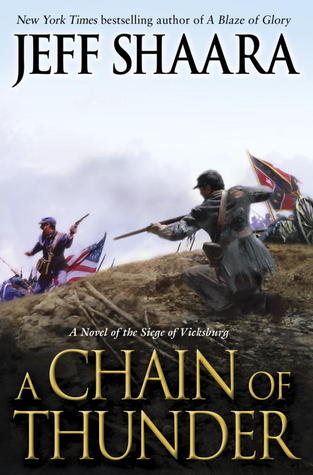
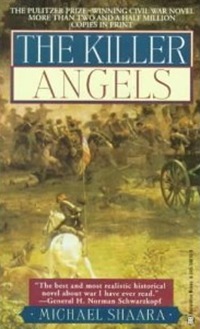
While there  continues to be much debate over the work of Civil War historians  ( See David Blight’s  article That a Nation Might Live in the July 1 Book Section of  New York Times ), it will come as no surprise to followers of Gordon’s Good Reads  that I have turned to historical fiction and Jeff Shaara’s new Civil War book A Chain of Thunder, A Novel of the Siege of Vicksburg. Jeff Shaara is the son of Michael Shaara, author of Killer Angels, the story of  the Gettysburg battle. Like the writing of the father, Jeff Shaara places the reader in the boots of the front line soldiers and additionally, in the case of A Chain of Thunder the devastated lives of the Vicksburg’s citizens.

Why does Vicksburg equal the historical importance of Gettysburg? The answer lies in President Lincoln’s recognition  that  he found in Grant following Vicksburg and his earlier victory at Ft. Donnelson,  a commander who could ” win.”!   There is little doubt that the victory at Vicksburg catapulted Grant into being named General In Chief of all Union Forces. In that capacity, Grant’s tenacity, with Lincoln’s unbridled support,  forged the final Confederate surrender at Appomattox Courthouse in 1865.   There is no doubt that the Grant Civil War legacy led to his becoming President of the United States, following the failed short-term of Vice President Andrew Johnson following Lincoln’s assassination.

Whether you prefer non-fiction or historical fiction of any combination thereof, The Civil War is an epic human story that changed the future of not only the nation, but the world.

Other Civil War historical novels by Jeff Shaara”  Gods and Generals, The Last Full Measure, A Blaze of Glory.


Another Anya Seton Classic

British historical novelist Philippa Gregory in her foreword to Anya Seton’s Katherine  is correct in identifying Seton among those writers who  ” Dominated historical fiction  following World War II.”   In the opinion of Gordon’s Good Reads,  Seton’s historical novel  Katherine , a huge best seller in the 1950s ,  is perhaps her very best.  Katherine is without doubt a love story, a romantic novel indeed, but the attention to the detailed setting in  Medieval  England in the 1300s , gives this book high marks as a classic historical novel. Just as she did with Winthrop Women, Seton traveled to the novel’s setting and has marvelously recreated a world that only a novelist of her calibre could bring to life.

images-1

Katherine , from rags to riches , Knights in shining armor ( John of Gaunt, Duke of Lancaster), serfs, England’s feudal system, bastard children, the Black Death,  kept woman, love triumphs!  All of the elements of a great romantic novel are here but with page after page the reader is placed in a time and place of Fourteenth Century squalor, chivalry and treachery amid riches , castles and jeweled crowns beyond imagination.    Arranged marriages enthroned Kings an Queens  including  12-year-old King Richard, while the lower classes begin an epoch march to freedom, long before Cromwell and Henry the Eighth dashed all hopes of equality.  Seton gets the history right and delivers the lesson  within the framework of a wonderful love story well outside the confining lines of a text-book. Add to this novel the poetry and presence of Geoffrey Chaucer!

Put Katherine on your reading list. Anya Seton ( 1906-1990), through all of the years will, never disappoint.  See my previous reviews here at gordonsgoodreads of Seton’s Winthrop  Women and Dragonwick.  Also by Anya Seton:  Avalon, Devil Water, Foxfire, Green Darkness and My. Theodosia.

ANYA SETON’S WINTHROP WOMEN, A TREASURE FROM THE 1950s

The republishing of the prodigious historical novels of Anya Seton in the first decade of this century brings to light the treasure trove encompassed in her work.

Winthrop Women, first published in 1958 and later released in 2006 is a particular gift for those whose interests lie in the history of the Puritans, the Massachusetts Bay Colony and the early settlement of the environs of Greenwich, Connecticut.  Above all, it is a great love story and the saga of a strong and independent woman richly entwined in the region’s history.

Winthrop Women  embraces a broad  historical web, set in the 1600s (1617-1655)  centered around the family of  John Winthrop, a fanatical practitioner of the Puritan faith  who became the first governor of the Massachusetts Bay Colony and his rebellious niece and daughter-in-law Elizabeth Fons. Their descendents  remain in Connecticut and  throughout New England.  Seton tells the Winthrop family and  Elizabeth Fons’  story in three parts: The early years in England living a near aristocratic lifestyle; the great Puritan migration to the New World with the establishment of the Massachusetts Bay Colony;  Elizabeth’s  banishment from Massachusetts and her emergence in Greenwich, Connecticut with husbands (correct) , lovers and children joining in the journey!

Anya Seton’s story of Elizabeth is written in ” high-definition.”  From childhood, “Bess”  is of independent thought and passionate in her views. She was born on a collision course with the beliefs of her Puritan elders, especially John  Winthrop.  Long before boarding the ship Lyon for the journey to  the New World, this child of luxury and  high social status had established herself as the Fons’ and Winthrop family non-conformist.

Proudly leading his flock beneath the banner of religious freedom to the colonies in New England,  far away from the dictates of King Charles, Cromwell and the ruling British establishment, John Winthrop becomes a  zealot and religious tyrant, ruling over his domain, with a wrathful “God” as his enforcer.

Elizabeth’s ever complicated life, saturated with her passion for men and her non-conformist beliefs, provides the framework for an abundant tableau of what life and love was like in 1630s New England. The drudgery of daily survival, the absence of  luxuries, disease and Indians both friend and foe. Foremost, the woman’s role of being, above all, a necessary  “good breeder,” upon which the future of the faith and the colony itself depended!

Elizabeth, having fallen in love with John Winthrop’s son, her cousin Henry, became pregnant and was hastily married before leaving England!  Henry, a kindred free spirit was not traveling with Elizabeth on the ship Lyon but was under his father’s supervision on the Arabella. Elizabeth learned  upon her arrival in Massachusetts that Henry had drowned in a boating accident upon landing. There would be two more husbands and many children, living and still-born before her story concludes thirty years later.

During a brief period when Winthrop had been ousted as Massachusetts Bay Colony Governor, the community rose up against Elizabeth’s behavior with rumors and  speculation that she and her Indian servant Telaka  were possessed by the devil. The outcry became witchcraft! Banishment from the colony, the final solution in those days short of hanging, saw Elizabeth, her family and Telaka ( whom Elizabeth had rescued from a slave auction) on their way to Greenwich where under Dutch law there was greater respect for individual freedom and religious beliefs. This novel is so wonderfully written and researched  that of course, Telaka, had ended up in Boston only after being kidnapped from her tribe, the Siwanoy Indians who populated the area in and around Greenwich! A homecoming for Telaka and a new most welcoming home for Elizabeth, her husband and brood?  Not quite that simple!

In the Greenwich chapters you will walk with Elizabeth on the white beaches of  Monakewago ( Tods Point), follow the Mianus River, witness the massacre of over 1000 Siwanoy Indians ( Telaka’s family) in what is today Cos Cob. There will be yet another husband and more “breeding, ”  and another banishment with the loss of thousands of acres of land that today encompass the entire Town of Greenwich.

History is taught in many ways and Seton is deserving of  high praise both as a novelist and historian for Winthrop Women.  Seton wrote Winthrop Women while living in Old Greenwich, Connecticut where she died in 1990 at age 86. She is buried there in Putnam cemetery.

Other highly acclaimed novels by Anya Seton  include, Foxfire ( 1950),  Katherine (1954),  The Mistletoe and the Sword (1956).

THE SHAARA TRADITION OF EXCELLENCE CONTINUES MOVING WEST TO SHILOH

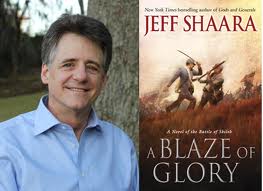
Jeff Shaara continues his magnificent writing  with another Civil War historical novel.  A Blaze of Glory takes the reader to the western theater of the war and the battle of Shiloh. It is the first of  a new Shaara trilogy.  Jeff is the son of  Michael Shaara, author of  the Pulitzer Prize winning Killer Angels. 

Gordon’s Good Reads last reviewed Shaara’s The Final Storm , the World War II battle of Okinawa. (June, 2011)   A Blaze of Glory uses the same Shaara style by viewing the horror of battle through characters with boots on the ground. In this case, a Confederate Cavalry Lieutenant and a Union Private. Shaara holds nothing back in the vivid portrayal of the hand to combat and carnage that occurred when armies lined in formation across from one another enduring volleys of musket fire, artillery canister and grape-shot. He captures egos and indecision as well as bravery and heroism.

” The fight around Shiloh Church had come from the plans and ambitions of generals, and no matter the disaster of that, it was the foot soldiers who would still do the deed, who would be asked to decide the fate of the town, of the country, and more important to many, the fate of the men around them.”  You will walk in the footsteps of Lieutenant James Seeley and Private Fritz “Dutchie” Bauer.

April 6, 1862, 100,000 troops on the field of battle, 25,000 casualties,  including the death of a Confederate General that many say could have determined the outcome of the Civil War and the fate of the Union. Egos abound!  Grant, Beauregard, Johnston, Buell and Sherman are all present. A surprise Confederate attack on superior Union forces. Victory is in hand and then, a stunning decision that is the subject of discussion by Civil War historians to this day. Did  a need for personal glory determine the outcome at Shiloh?

Several years ago Shaara completed the initial Civil war trilogy begun by his father’s Killer Angels by writing Gods and Generals and The Last Full Measure. This new trilogy which begins with A Blaze of Glory will concentrate on the war in the western theater and follow Grant’s rise to his appointment by President Lincoln as General in Chief of all Union Forces.

Jeff  Shaara’s historical novels on World War II in addition to The Final Storm ( Okinawa and the dropping of the atomic bomb) are: No Less than Victory ( The Battle of the Bulge, and the fall of the Third Reich)The Steel Wave, ( The Normandy Invasion) and The Rising Tide ( The North Africa and Italy campaign).  He also wrote Gone for Soldiers a novel on the war with Mexico and two books on the American revolution Rise to Rebellion and The Glorious Cause. In Gone for Soldiers you will meet many of the Mexican War officers that later became the generals in Shaara’s Civil War novels.


COMING TO GGR

Two new books on subjects frequently followed by GGR. Jeff Shaara’s A Blaze of Glory, a novel of the Battle of Shiloh and BAILOUT  by Neil Barofsky an inside account of the Wall Street bailout.

THE FINAL STORM-JEFF SHAARA

During this week as we reflect upon the 67th anniversary of D-Day I completed the fourth book in Jeff Shaara’s historical novels on World War Two. 

The Final Storm, which has just been released is the story of the War in the Pacific culminating and with the greatest emphasis on the battle for the island of Okinawa. Okinawa was to be the last stepping stone before an invasion of Japan.  The Japanese land invasion was of course preempted by the decision to drop the Atomic Bomb.

Shaara , as always,  magnificently tells his war epochs by placing the reader in the boots of the soldier, slogging through the life and death drama of war.  It would be impossible to put down The Final Storm without the greatest empathy and understanding of the men who gave everything to defeat the Japanese, not only on Okinawa ,but on all of the Japanese held Pacific Islands.   The book also provides dramatic personalized insight into the decision and the actual dropping of the Atomic Bomb on Hiroshima.

The earlier books in this Shaara collection concern the North Africa Campaign and an introduction to Eisenhower and Rommel in The Rising Tide,  the European Invasion and D-Day in The Steel Wave, and the great march across Europe including the Ardennes and the Battle of the Bulge in No Less Than Victory.
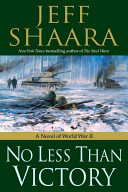
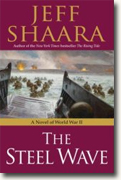
It would be difficult for anyone with an interest in WWII  to overlook these four volumes.  

Shaara’s portrayal  of the reality of war through  the prism of historical fiction is in my view unequaled.  Then again, having read his father Michael Shaara’s   Killer Angels, you know it is in the genes.

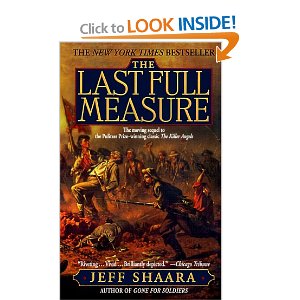
If your interest lies with the Civil War you will want to read Jeff Shaara’s  Gods and Generals and The Last Full Measure. Also do not overlook his  great novel on the American Revolution,  Rise to Rebellion.

Here is a promise. After reading a Shaara  novel  you will regard all service men and women with awe, respect and gratitude. An important thought during this period encompassing  Memorial Day, D-Day and the Fourth of July.

Civil War/ Lincoln Assassination/ Anniversary Week

Today, April 12, marks the 150th anniversary of the beginning of the Civil War with the firing on Fort Sumter, South Carolina.  April 15, Friday, marks the 146 anniversary of the assassination of Abraham Lincoln.  Earlier this week I commended to you Jay Winik’s April 1865,  an important work of non-fiction on the assassination and the tumultuous period that followed.

Hundreds of volumes have been written on the Civil War. On this anniversary I suggest to you three writings of fiction that I believe will give the reader the most vivid portrait of this monumental period in American History.  If you choose to read them all, I would suggest the following order.  Jeff Shaara’s  Gods & Generals, Michael Shaara’s Killer Angels ( The battle at Gettysburgand then Jeff Shaara’s The Last Full Measure. Jeff Shaara is the son of Michael Shaara.

These three historical novels describe the Civil War from the viewpoint of those who fought in and directed the great battles.  You will be present at the siege of Richmond, at Pickett’s Charge and on Little Round Top with the 20th Maine at Gettysburg and at the  Confederate surrender at Appomattox Courthouse .

The knowledge of the Civil War that you will gain from these three works of historical fiction is  priceless!

A New York Trilogy

Several years ago I had the privilege of an e-mail communication with Mike Wallace the co-author of Gotham just after I read the book. I shared my enthusiasm for this incredible volume and when I told him I actually read the 1236 pages sequentially he allowed that I might be the only person in captivity who did that!  This Pulitzer winner, written with Edwin G. Burrows, is the quintessential history of New York through the end of the 19th Century.

This preamble places in perspective my enthusiasm for New York the novel by Edward Rutherford.  Rutherford tells the New York story from the time of the city’s origins through the beginning of the twenty-first century through the lives of the fictional Van Dyck and Masters families. The story masterfully unfolds generation by generation.

Rutherford is every bit as captivating as is the standard-bearer of historical novels James Michener.  Every cell of Rutherford’s characters are believable as they wind, twist, love, fight, succeed and negotiate their lives through all of New York’s epic development. The Dutch settlement, Native Americans, independence, immigration, the classes, Civil War, financial booms and busts, politics, loyalists, revolutionaries, unions, heroes and villains, the swells and near-do-wells, all play a role.  You can taste the oysters at Frances Tavern!   Rutherford’s New York is comparable to the writing and character development in Michener’s Centennial, Chesapeake and Texas with the exception of Michener’s penchant for geological evolution! New York has earned a place on my Deserving of a Pulitzer shelf! New York will not give you the detail of Gotham but in living with the generations of the Van Dyck and Masters Families, you will  personally experience the story of the great city. 

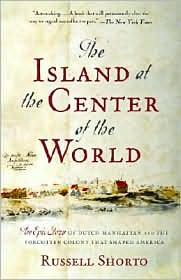
Complete your New York historical journey  by gaining a full understanding of the Dutch societal impact on the founding and ethos of the city by reading The Island in the Center of the World by Russell Shorto. This is a necessary read for all lovers of New York told through the voices of those that built the city and opened the New World long before the Pilgrims. You will come away with a deeper understanding of Peter Stuyvesant  an all of the other prevailing Dutch names and places rich in New York’s history.  You will learn why New York has always been open to new people, ideas, commerce and opportunity. Best of all you will enjoy more great storytelling.