RADIO ACTIVE/O’SHAUGHNESSY AT HIS BEST

Disclaimer! I have  enjoyed a friendship with Bill O’Shaughnessy of Westchester, New York City and of universal broadcasting industry acclaim for over forty years. I have been present at many of the illustrious speeches and tributes included in his latest anthology, Radio Active. This new tome is certainly a homecoming for those of us whose lives in this region have been part of the radio and television community.  However, Radio Active is beyond an industry book. The author shares relationships, interviews, profiles and observations on the political, economic, religious, gastronomic, and of course the media. O’Shaughnessy titles an entire section of the book, “The Obligatory Mario M. Cuomo Section.” His insights into the great statesman is universally acknowledged as unparalleled.

Open to any page and the author’s humanity leaps from the type. Although he is always in step with “the famous,” O’Shaughnessy’s amiability shines most brightly upon the “townies” he has grown to know and love. You may not recognize the names, Diane Gagliardi, Inez Candrea, Peter Mustich, Joseph Anastasi,  but now you will, you will indeed. If you are part of what O’Shaughnessy identifies as “Our Tribe,”  read the poignant remembrances of broadcasting luminaries  Stu Olds, Rick Buckley, Frances Preston, Martin Beck, Ed McLaughlin and Ward Quaal. O’Shaughnessy’s early, brave and prescient defense of Billy Bush is enlightening. If you are among the millions who miss Don Imus you will be warmed by the words of Jonathan Bush  written upon the firing of Imus, long before his own son Billy Bush fell to a similar self righteous swarm.


O’Shaughnessy calls his world the “Home Heath.” My observation is that in reality, the geography and scope of that reference is virtually unlimited. That is why when you randomly open Radio Active  one extraordinary individual after another leaps forth. “What is this,” asked a friend  reaching for  a copy of Radio Active that sat on my coffee table. A swish of pages, without lifting his gaze for twenty minutes.

Also by Bill O’Shaughnessy.

AirWAVES, IT ALL COMES BACK TO ME NOW, MORE: RIFFS, RANTS AND WAVES, VOX POPULI, MARIO CUOMO

Read insights into all of William O’Shaughnessy’s books here at gordonsgoodreads.com

O’Shaughnessy Commentaries daily on WVOX 1460 AM, WVIP, 93.5 FM, New Rochelle, New York. Onlineradiobox.com



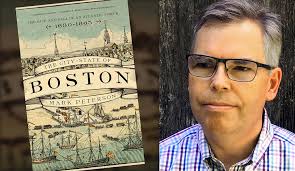
THE CITY- STATE OF BOSTON by MARK PETERSON

Boston, a city unlike any other in the annals of American history.  ” A City On a Hill,” The Athens of America, ” The Cradle of Liberty.”   Each appellation has been appropriately tested over centuries.  Mark Peterson’s THE C ITY-STATE OF BOSTON is nothing short of remarkable and an important unfolding of the fundamental role this city and its colonial inhabitants played in America from the 1630’s through the onset of the Civil War.

Look not in these pages for the” Midnight Ride of Paul Revere,” The Boston Tea Party, or for “One if by land, two if by sea.”  No. This scholarly work is about Boston’s era of enormous influence through the prism of religion, colonial government, social norms, economics, trade, regional influence, slavery and the utopian ideals that the Puritans of the Great Migration brought with them to the New World.  Peterson’s history unfolds upon American shores beginning in the 1630s as British Immigrants establish a largely independent entity called Boston, virtually free from the influence of the mother country. Boston, through the ingenuity and common purpose of its people, established an ethical  culture whose influence spread to the evolving New England Region. Boston became the undisputed mercantile center of the worldwide Atlantic trade, and the dominant force of culture and ideals that lead to the American Revolution.

You will learn of the New England influence upon the Articles of Confederation, of John Adam’s conflicts with Thomas Jefferson in the framing of the Constitution, and of how the slave states ultimately dominated the direction of the nation in the late eighteenth and early nineteenth centuries.  The southern block influence became so great under Jefferson that in the period of the War of 1812, Massachusetts considered becoming the first state to succeed from the fragile Union.

I hope these brief references will stimulate you to  absorb Peterson’s  incredible insight into this period of colonial history.  It ranks at the very top of the books I have selected on the subject because it journeys deeply below the surface of the famous named historical events and creates an understanding of how the most important city of the period came into dominance and then faded.  You will be introduced to new individuals whose names never have appeared on the,” marquee of history,”  but  the influence of whom was enormous.

Mark Peterson is the Edmund S. Morgan Professor of History at Yale University. He is the author of The Price of Redemption: The Spiritual Economy of Puritan New England.   Search gordonsgoodreads.com for two suggested companion reads to BostonAmerican Dialogue by Joseph Ellis, The Barbarous Years by Bernard Bailyn, John Adams by David McCullough.  


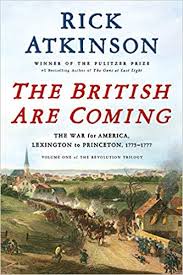
THE BRITISH ARE COMING/RICK ATKINSON

It’s here, Volume One of Rick Atkinson’s The Revolution Trilogy!   At last, the story of the Revolutionary War, beyond the limits of a single volume. Volume one, THE BRITISH ARE COMING, is extraordinary and that comes as no surprise to those who have read his  WWII Liberation Trilogy, An Army at Dawn, The Day of Battle, The Guns at Last Light.

Volume One of the Revolution Trilogy  tells the story from both the American and British perspective of the first 21 months of America’s war for independence. Incredible detail and a volume of characters with many new heroes and knaves. Atkinson’s narrative is in living color.  The Continental Army is indeed ragtag,  and Ben Franklin, Henry Knox, Nathaniel Greene, George Washington and many others are all seen in a new and very much alive perspective.  Even though history has unveiled the outcome, Atkinson entices the reader to plead for more intricate detail on just how that ending unfolded.  Volume Two is on the way.

Fall and Rise/ The Story of 9/11

The story of the 9/11 terrorist attacks, with good reason, will never fade.  Mitchell Zuckoff’s current retrospective on 9/11 and its aftermath, Fall and Rise The Story of 9/11, only adds to the relevance of the recent hard fought congressional battle to extend first responder benefits.

The book is chronologically presented and easy to read, benefiting from Zuckoff’s having covered 9/11 as a reporter for the Boston Globe.  The prism of passed time adds to Zuckoff’s perspective and research.  It is not incidental to his resume that he was a member of the Boston Globe’s Spotlight Team. He also wrote the NYT bestseller 13 Hours: The Inside Account of What Really Happened in Benghazi.  I recommend Fall and Rise, especially for those too young to have remembered the event as it unfolded.  The book, as well as any can, presents a cohesive story of the tragedy and the impact upon those who lived and died on that day.


NEW AND OLD FROM DAVID McCULLOUGH

David McCullough never disappoints. His latest book, THE PIONEERS, is the story of three New Englanders who opened the Northwest Territory to settlement in late eighteenth-century America. John Adams negotiated the acquisition of the Northwest Territory from the British at the close of the Revolutionary War. McCullough’s portrait begins.

Fellow New Englanders, also from Massachusetts, General Rufus Putnam and the Reverend Manasseh Cutler pioneered the first settlements along the Ohio River near present day Marietta, Ohio.  Both men are also credited with prohibiting slavery in the future Northwest Territory states of Ohio, Indiana, Illinois, Michigan and Wisconsin.  McCullough’s book is the story of these and other pioneering families and their descendants who settled the American frontier west of the Allegheny Mountains. The research is impeccable and the storytelling is classic David McCullough.

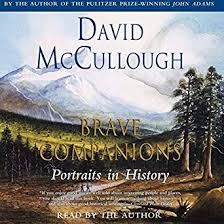
I came upon an earlier McCullough book that I had overlooked.  BRAVE COMPANIONS  is the well told stories of remarkable individuals who have contributed greatly to the American landscape: Amazon River explorer Alexander von Humboldt; Harriet Beecher Stowe and the impact of Uncle Tom’s Cabin; Frederic Remington; Louis Agassiz of Harvard; The Lindbergs; Harry Caudill a lawyer who opened to the world the tragic stories of Appalachia; David Plowden the photographer of vanishing America. David McCullough illuminates these uncommon individuals. BRAVE COMPANIONS is a short but marvelously enlightening read.

” How can we know who we are and where we are going if we don’t know anything about where we have come from and what we have been through, the courage shown, the costs paid, to be where we are?” David McCullough, BRAVE COMPANIONS, 1992.

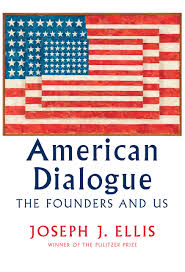
AMERICAN DIALOGUE-THE FOUNDERS AND US-JOSEPH ELLIS

Joseph Ellis’s latest book American Dialogue THE FOUNDERS AND US is important and timely.  His through examination of the philosophies of America’s Founding Fathers, particularly Adams, Jefferson, Washington, Madison and Hamilton provides a significant platform of thought and insight into America’s economic, environmental and constitutional crisis projected from the nation’s  founding the  present day.

America’s  failure to confront slavery and the genocide of the Native American’s is an underlying theme that continues to challenge American democracy.  Does our system of government continue to retreat from crushing issues of the day? Can a crisis of confidence in the American system of government continue to be averted by a collective closing of the eyes?

Then again, history delivers hope.  Says Ellis, “ Much like meteors streaking across the horizon, demagogues tend to enjoy only limited life spans, so the Trump Presidency is likely to resemble the proverbial blip on the historical radar screen.”

A critical eye is cast on the founders and in so doing Ellis illuminates fundamentals as to why America is facing relatable critical issues in modern times.

Ellis is the author of the Pulitzer Prize winning Founding Brothers.

THE HEARTBEAT OF WOUNDED KNEE/TRAGEDY/HOPE SURVIVAL

David Truer is a Ojibwe Native American from the Leech Reservation in northern Minnesota. Truer has a PhD in anthropology and is a prolific author and professor at the University of Southern California. His latest book, THE HEARTBEAT OF WOUNDED KNEE, NATIVE AMERICA FROM 1890 TO THE PRESENT is a combination of memoir and a work of historical non-fiction.

The books prologue is a sweeping history of the Native American story from the arrival of the first North American explorers, the colonists, westward expansion and the decimation of the Native American way of life through to the 1890 massacre of over 150 Lakota Sioux at Wounded Knee Creek.

Truer’s focus turns to the ensuing Indian reservations, forced “civilization,” Indian boarding schools, the allotment system of Indian land, broken treaties and false promises. Truer, through his  personal experience, details what Native Americans have been overcoming since Wounded Knee. Even from all of the heartbreak come rays of hope as evidenced in Truer’s own uncommon story of survival and success.

Within the pages of Gordon’s Good Reads, followers will find many volumes written of the Native American story and THE HEARTBEAT OF WOUNDED KNEE earns an important place among those narratives.  Another non-fiction work by David Truer is, Rez Life: An  Indian’s Journey Through Reservation Life.  His latest work is titled  Prudence, a novel of WWII.

Throughout the  pages within Wounded Knee the word heartbreak can be easily substituted for heartbeat. Words not easily separated in the telling and re-telling of the Native American story.


THE CHALLENGE OF GOING OFF PSYCHIATRIC DRUGS/ APRIL 8 NEW YORKER

I came upon this article in the April 8th issue of THE NEW YORKER titled  THE CHALLENGE OF GOING OFF PSYCHIATRIC DRUGS by Rachael Aviv.  My mind immediately cross referenced a book I had posted on this subject in April 2016.  THE NEW YORKER  article  and Whitaker’s 2010 book are together enormously insightful into this increasingly critical subject. I thought it appropriate to bring them forward as one. Important reading for anyone dealing with mental illness.

Robert Whitaker’s  2010 book Anatomy of an Epidemic is written with attitude. Even if only half of the hypothesis developed in Whitaker’s  examination of the effects psychiatric drugs  on adults and children is accurate, this book is an essential and illuminating read.

imgres-1

Whitaker leaves no doubt that the prescribing of an antidepressant drugs for both adults and children is of epidemic proportions in America.  He makes the case that there is no scientific evidence that mental disorders are caused by a chemical imbalance in the brain. The pharmaceutical industry continues to promote “magic bullets”  designed to alter the brain’s chemical balance, treating mental illness as a disease.

Research compiled by Whitaker documents that the long-term effects of the use of antidepressants cause permanent  brain damage rather than provide any definable  cure. He questions the entire efficacy of the use of drug therapy in the treatment of mental illness.  He advances a conspiracy theory between the drug manufacturers and the marketing of the “magic bullets” to patients desperate for answers for themselves and their children.

The most frightening conclusion proffered by  Anatomy of an Epidemic is that long-term recovery rates for persons with mental disorders are better for those who have not been subjected to any form drug therapy.

Just like the book, ” In a Different Key, The Story of  Autism ( See Gordonsgood Reads February posting), Anatomy of an Epidemic is an essential read for anyone concerned with examining a different narrative about the treatment of mental illness.

Robert Whitaker also authored Mad in America. He is a journalist and investigative reporter who has specialized in the area of mental health. His numerous articles and books have been the recipients of several awards including a Pulitzer finalist for investigative reporting.


CHURCHILL/ WALKING WITH DESTINY

Critics have acclaimed Andrew Robert’s CHURCHILL WALKING WITH DESTINY as the best single volume biography of the iconic world figure. Having completed the 982 pages, read in sequence, I add my voice to the acclaim.  It is a masterwork by the   celebrated British historian. His commitment to exacting detail refreshes the landscape of history, while at the same time his prose is not at all cumbersome.

Churchill’s life and his personality is indeed complicated but Roberts misses nothing. History lovers will wrap their minds around the voluminous Churchill quotations and Roberts places them in exacting context. From Winston’s  birth through the Boer War, WW I, the “Wilderness Years,” and then of course the lead-up and fighting of WW II, Roberts introduces the reader to every professional and personal influence on Churchill.  Yes, Winston’s personality, lifestyle and his varying demeanor is splendidly portrayed. (I can cite a typical Churchill breakfast menu and the exact proportions of Whiskey and water.)

The portrait of the Second World War is profoundly complete in great detail of the successes and failures, both militarily and diplomatically. CHURCHILL, is without a doubt, a book for students of history.  Reading CHURCHILL makes one wish that the knowledge within  of war, leadership, politics and diplomacy  could be universal. So many lessons and a plethora of wisdom. ” Expert knowledge, however indispensable, is no substitute for a generous and comprehending outlook upon the human story, with all its sadness and with all its unquenchable hope.” (Churchill, February 26, 1946 University of Miami)

In the bleak years of 1939-1940 when England stood alone against Hitler, Winston Churchill made one of his many inspirational speeches.

“Come then, let us to the task, to the battle, to the toil-each to our part, each to our station. Fill the armies, rule the air, pour out the munitions, strangle the U-boats, sweep the mines, plough the land, build the ships, guard the streets, succor the wounded, uplift the downcast, honor the brave. Lets us go forward together, there is not a week or a day or hour to lose.”    Little wonder it was said of Churchill, ” He weaponized the English language.”  Roberts allows the reader to captivate the famous Churchill intonation.

Another prodigious biography of Churchill is CHURCHILL by Roy Jenkins. An impeccable  companion read to CHURCHILL WALKING WITH DESTINY is THE STORM OF WAR, also by Andrew Roberts. (See gordonsgoodreads.com April 2012.)

Engage, absorb,  enjoy!  GHH


SOJOURNER TRUTH/NARRATIVE AND BOOK OF LIFE

SOJOURNER TRUTH, NARRATIVE AND BOOK OF LIFE.
The story of Sojourner Truth is well-known within antislavery literature.  This narrative, first written with the aid of a white woman, Olive Gilbert in 1850, was reprinted in 1875 with additional notes by Mrs. Francis W. Titus. The most recent publication which is the subject of this post was published by Ebony Classics in 1970.
Sojourner Truth was born into slavery in Upstate New York in 1825. Slavery at the large farms along the Hudson was common in that period. She was one of thirteen children  and most of her siblings were sold by the age of ten. She herself had five owners, and her five children were also enslaved, one of whom she managed to retrieve. That story is a riveting part of the narrative.

This remarkable woman  through her own determination  and with no education  became an extraordinary force in the antislavery and  early women’s movement. Standing six feet tall and wearing  a turban she spoke the language of enslaved people and often delivered her message through poetry and song. She had become such a force by the time of her death in 1883 that this “ high priestess of righteousness and equality “ had earned private audiences with both Presidents Lincoln  and Grant.  Historians place Sojourner’s influence only behind that of Harriet Tubman. She knew the “ hell of slavery” and spoke for the millions of women who had no voice. She said of her meeting with Lincoln, ” As I was taking my leave, he arose and took my hand, and said he would be pleased to have me call again.  I felt that I was in the presence of a friend, and now I thank God from the bottom of my heart that I always have advocated for his cause.”

Don’t miss the significance of the title “ BOOK OF LIFE.”  This is a rare personal glimpse into a world that can only  be elucidated by one who lived it.  You may well feel Sojourner’s presence.