THE FRIENDS OF EDDIE COYLE- WITH SHADES OF BRESLIN AND HIAASEN

I had not read any books by  George V. Higgins who wrote over 30 wonderful works of fiction including the Jerry Kennedy Series, A City On A Hill, The Sins of the Fathers and The Agent.  Higgins died on 1999 and left behind a treasure  of novels and THE FRIENDS OF EDDIE COYLE sets itself apart as a “game changer.”  THE FRIENDS OF EDDIE COYLE is considered by some reviewers as one of the greatest crime novels ever written!

images-1

Set in Boston in the 1960s, the book is 80 percent dialogue bringing together a cast of second and third-rate mobsters, informers and undercover cops with the  irony that Eddie Coyle in fact has  no friends and neither does anyone else the Boston underworld.

I draw a comparison  to Carl Hiaasen’s Lucky You in that there is a certain similarity between the helplessness of Eddie and the bumbling lottery ticket thieves in Hiaasen’s novel. The book also connects with Jimmy Breslin’s The God Rat, the true story about the informer in the famous New York City  bad cop trial in the Gotti and Genovese era.  By the way, I recommend both of these references as additional great reads. Of course Breslin and Hiaasen each have long lists of additional wonderfully worthy books.

THE FRIENDS OF EDDIE COYLE is a photograph in brilliantly written evocative dialogue within the Boston  criminal underworld, reflecting the mentality of the players and engaging the reader in the inevitable outcome.

If you enjoy this genre dig more deeply into the writing of Georg V. Higgins. The book was also made into a highly acclaimed movie starring Robert Mitchum in 1973.

SYCAMORE ROW FOLLOWS A TIME TO KILL-THRILLING!

If you have been anticipating the newest novel from John Grisham get Sycamore Row now. You will not be disappointed but rather overjoyed!

images

No, I do not think it attains the level of suspense of  A Time To Kill  however, the story line is captivating and grabs the reader on every page.  Grisham is never laborious and writes in a captivating an energetic manner.   The Sycamore Row plot and story line is wonderfully developed and as always his characters are  alive and real, including  the manner in which he brings forward Jake and Lucian from a  Time To Kill.  You are rooting for another victory from the first page  and Judge Atlee becomes as fascinating as Judge Noose!

I rank Sycamore Row along side another of my all time Grisham favorites Pelican Brief and The Firm. A Time to Kill remains at the top of the list. Enjoy!

THE FORGOTTEN MAN

The Forgotten Man is a sweeping title for a book about The Great Depression.  Historian Amity  Shlaes book was published just one year before The Great Recession of 2008 .  Prescient indeed!

images

Who is the forgotten man of The Great Depression?  The  Wall Street tycoon,  the homeless, the apple vendor, the WPA laborer, or the woman in the most famous photograph of the period by Dorothy Lange titled Migrant Mother?  In many respects the answer lies with none of the aforementioned.  Shlaes makes the case that the forgotten man of the 1930s  was those who today would be referenced as the great middle class.  The parallels between The Great Depression and The Great Recession are enlightening and Shlaes places in historical perspective  the lost opportunities of an entire generation of  Americans, then and now.

Surely this book is a study of the New Deal and what forms of government intervention did and did not work.  Shlaes is certainly not a hero worshiper of FDR  or of the New Deal but my take on this book is that it offers a balanced look at the multitude of factors surrounding Roosevelt, his advisors, detractors and the enormity of the recovery programs during the period.

Most provocative and compelling is the insight and comparisons to the economic conditions in which the U.S. Economy  finds itself today.  The Forgotten Man of the 1930s is very  much present in the displaced middle class of 2013. Is today’s forgotten man the family bread-winner out of work because of the government shutdown, the child in need of medical care, the returning veteran, the foreclosed upon and the forgotten?  The similarities are ever-present.

An aside  from within The Forgotten Man is the startling comparison of how politically effectively FDR communicated the New Deal through the then new medium, radio, the 1930s version of today’s social media. Radio was FDR’s bully pulpit.  A very interesting  analogy.

You may also wish to consider Shlaes Coolidge.  ( see gordonsgoodreads ) While Amity Shlaes is certainly not a liberal, I think both The Forgotten Man and Coolidge are balanced. I would recommend reading Coolidge first. By doing so, the New Deal is placed in greater perspective.

OVERLOOKED? THEN GET A COPY OF A TREE GROWS IN BROOKLYN, NOW!!

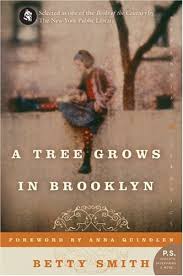
How wonderful to discover a highly acclaimed book that perhaps even the avid reader may have overlooked.  That was certainly the case for me when I came across a copy of the 1943 American classic A Tree Grows in Brooklyn, first published in 1942 , written by Betty Smith.  This is an ” honest and True” novel  about a young and very poor Irish girl and her family living in Brooklyn, New York in the early 1900s.  The book is so autobiographical in nature that there was a 1943 lawsuit by an individual claiming to be the prototype for one of the characters! Young Francie Nolan faces all of the challenges that life could muster including poverty, an alcoholic and yet somewhat heroic father, birth and death and an economy that offered little opportunity for an immigrant family, let alone a young girl.

images


The story is reminiscent of Frank McCourt’s Angela’s Ashes,  but Smith’s portrayal  of the fortitude of Francie sets a very high standard for storytelling. Francie’s mother, brother and the other ” Irish family” members are portrayed in wonderful detail and the book is a valuable insight into a period of American city dwelling immigrant history that is important to readers of any age and gender.

I am glad that this wonderful novel did not escape  me and I highly recommend it to you and any members of your reading family.  Further acclaim for A Tree Grows in Brooklyn came in 1945  when Twentieth Century Fox released the movie, the first film directed by  Elia Kazan.

PHILIPPA GREGORY-HISTORICAL FICTION AT ITS BEST

The Other Boleyn Girl, written by Philippa Gregory and published in 2001, is among the very best novels written about Tudor England and King Henry VIII.  If you have not read this great novel place it on your must read list.  This true story about Mary Boleyn, the younger sister of Henry the VIII’s second wife Anne Boleyn, is remarkable in many ways.   The book enlightens the reader not only of the history of the period but it portrays an accurate glimpse into how women, even in their teens, were used as pawns for both power and pleasure.

images


This is the story of Mary, the first daughter in the Boleyn family to be offered to a King in return for the hope wealth and power. So driven was this family that when Mary’s star began to fade in Henry’s ardor , sister Anne pushed her aside to eventually become Queen Anne.  Although you may know how that romance ended, believe me, the writing of Philippa Gregory will  capture and fascinate you through the final page. This story of two sisters and a King is also a study of the structure of society in 16th Century England. It is not suprising that Philippa Gregory is a recognized authority on women’s history.

Tudor England was  fascinating and this blog has focused on many enjoyable reads set in that period, including the  great British novelist C.J. Sansom and the Shardlake series. Another wonderful work of historical fiction written of an earlier period, Medieval England, is Anya Seton’s Katherine.

After reading the Other Boleyn Girl I ordered the  2008 movie through Netflix.  The movie does not come close to the book’s more intricate story line and I would strongly suggest that reading the book is a must before watching the film.  Once you have read the book it is worth watching.


New From Jeannette Walls -The Silver Star

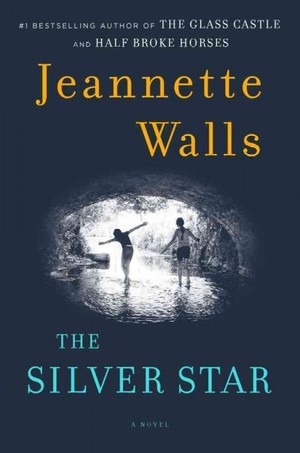
I join the millions of  readers who are fans of author Jeannette Walls.  Amazingly, her memoir The Glass Castle , first published in 2005 remains on the New York Times Best Seller List  eight years after its initial publication!  Walls also authored best selling Half Broke Horses, a memoir of  her grandmother Lily Casey Smith.

9781451661507_custom-c08fa0017449530fcf21256215de10bd3b3e6eb9-s2

Her new book, The Silver Star, will likely not reach the status of either The Glass Castle or Half Broke Horses but it certainly qualifies as a good read, easily accomplished in two or three sittings.

In some ways, similar to The Glass Castle, Walls  weaves a story of a dysfunctional mother, acting more like a sibling as opposed to an adult role model. The main characters, two sisters  ages 12 and 15 are essentially left on their own as their mother pursues a constant parade of  greener pastures and  purported life changing opportunities.  When mom is present, the lifestyle is  at best nomadic and always chaotic.

The silver lining in this story comes at the hands of a distant uncle who despite his “old fashion” views creates a safety net for the girls and brings a sense of stability for the first time in their lives.  The book’s title Silver Star beckons the discovery of an unanswered question.

While The Silver Star is not a memoir, Jeannette Walls fills these pages with her life experience of making the best of an imperfect world.

A MONUMENTAL WEEK IN CIVIL WAR HISTORY!

The first week of July, 2013 commemorates the 150 anniversary of the Civil War Battle of Gettysburg, considered by many historians as the greatest battle of the war and the fateful turning point leading to the ultimate defeat  and surrender of Robert E. Lee and the demise of the Confederacy.  The great battle took place in three engagements on July 1, 2 and concluding with the disastrous Confederate Pickett’s Charge on July 3rd, 1863.  The sun rose on July 4th over a battlefield that witnessed over 5,700 killed and more than 27,000  wounded, thousands of whom died from wounds in the ensuing weeks.  More has been written regarding this great battle than any other in history, including  D-Day.
15981669

This week another new book,  Gettysburg by Allen C. Guelzo is added to the library of Gettysburg non-fiction.  Simultaneous to the release of Guelzo’s book and in conjunction with the Gettysburg 150th anniversary, the Smithsonian has released a fabulous interactive map that helps explain why General Lee made a critical mistake in underestimating the depth of the Union Forces he faced. The map addresses the issue of the extreme lack of intelligence and reconnaissance on behalf of either side during all of the Civil War engagements.  Prior to the commencement of hostilities, Lee climbed to the top of  cupolas, one at the Lutheran Seminary and the other at Gettysburg College to survey Union troops.  The Smithsonian GIS generated map, together with the research of Middlebury College professor Anne Knowles, clearly shows that deceptive terrain made it impossible for Lee to judge the magnitude of the Union forces. Lee’s problems were of course magnified  by the absence of his cavalry led be Jeb  Stuart. To examine the new GIS map of the Gettysburg battlefield go to : http://bit.ly/1crQWYd

DO NOT OVERLOOK VICKSBURG!

With the natural focus this week on the Gettysburg anniversary it is easy to overlook yet another monumental Civil War battle that historically may equal and in some sense eclipse the great Gettysburg turning point. General  U.S. Grant’s victory at Vicksburg  which culminated on July 3, ( the same day as Pickett’s Charge) in some sense had a greater impact on the war’s outcome than Gettysburg.  

Following two weeks of battle including fierce fighting at Jackson Mississippi and Champion Hill  Grant turned his forces West to Vicksburg, the last remaining Confederate obstacle to opening the entire Mississippi River to Union control.  Following days of brutal fighting and bombardment Grant laid siege to the city and finally on July 4th, 1863 accepted the surrender of General Pemberton’s  Confederate forces and took control of  what had been an impregnable citadel above the river.

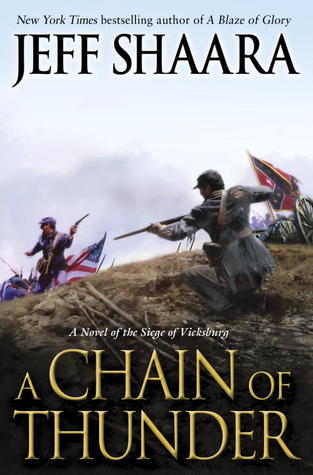
While there  continues to be much debate over the work of Civil War historians  ( See David Blight’s  article That a Nation Might Live in the July 1 Book Section of  New York Times ), it will come as no surprise to followers of Gordon’s Good Reads  that I have turned to historical fiction and Jeff Shaara’s new Civil War book A Chain of Thunder, A Novel of the Siege of Vicksburg. Jeff Shaara is the son of Michael Shaara, author of Killer Angels, the story of  the Gettysburg battle. Like the writing of the father, Jeff Shaara places the reader in the boots of the front line soldiers and additionally, in the case of A Chain of Thunder the devastated lives of the Vicksburg’s citizens.

Why does Vicksburg equal the historical importance of Gettysburg? The answer lies in President Lincoln’s recognition  that  he found in Grant following Vicksburg and his earlier victory at Ft. Donnelson,  a commander who could ” win.”!   There is little doubt that the victory at Vicksburg catapulted Grant into being named General In Chief of all Union Forces. In that capacity, Grant’s tenacity, with Lincoln’s unbridled support,  forged the final Confederate surrender at Appomattox Courthouse in 1865.   There is no doubt that the Grant Civil War legacy led to his becoming President of the United States, following the failed short-term of Vice President Andrew Johnson following Lincoln’s assassination.

Whether you prefer non-fiction or historical fiction of any combination thereof, The Civil War is an epic human story that changed the future of not only the nation, but the world.

Other Civil War historical novels by Jeff Shaara”  Gods and Generals, The Last Full Measure, A Blaze of Glory.


BUNKER HILL- A FIGHT FOR LIBERTY BECOMES A WAR FOR INDEPENDENCE

Nathaniel Philbrick’s new non-fiction work  BUNKER HILL, A CITY, A SIEGE, A REVOLUTION is a rewarding  history of the early stages of the American Revolution including the battles of Lexington and Concord,  Breeds Hill/Bunker Hill and the siege and eventual evacuation of Boston by the  British.  Philbrick, as was his style in his previous books Mayflower and  The Last Stand,  Custer, Sitting Bull and the Battle of Little Big Horn ( see review at gordonsgoodreads.com ) , is focused. His  historical research is precise  and the development of the characters of the  historical figures adds new dimension to this period of American History.

16158546

Set in 1775 and 1776, Philbrick explores the passions and the conflicts between Patriots , Loyalists and the multitude of  views  of those suspended in the middle. Many Patriots remained loyal to King George but simultaneously reviled against the British Parliament, clearly defining the difference between a call for “Liberty”  and the pursuit of  “Independence.”   In the ensuing American Revolutionary War, liberty and independence became synonymous.

Readers will meet a key revolutionary who stands unique among the better-known  Sam Adams , John Adams, John Hancock and Paul Revere.  Thirty three-year-old physician Joseph Warren cobbled together a group of independent thinking community leaders  and often unmanageable  farmers turned militiamen  into what would become the Continental Army.  Warren was  a self-styled political and military leader.  If it were not for Warren’s  death at the Battle of Bunker Hill,  Philbrick  speculates that relatively obscure George Washington may never have been called  upon to assume  leadership  of the Patriot  forces, which  of course ultimately lead to Washington becoming the nation’s first president. Thus , Bunker Hill gains even greater historical importance.

The Battle of Bunker Hill  ( June 17, 1775) , which came two  months after  Concord and Lexington  ( April 19, 1775  “The Shot Heard Round the World” ) , is considered the actual beginning of the Revolutionary War.  Concord and Lexington are referred to as ” skirmishes.”  British loses were so great at Bunker Hill, despite a technical victory, General Howe concluded that the British had in fact lost the battle for Boston, and was later forced to withdraw to Halifax, Nova Scotia following  a winter long siege of the city .

I greatly appreciate well researched non-fiction  like BUNKER HILL that focuses on specific events and the individuals  that played a vital role in the larger story.   Another example is David McCullough’s  biography  John Adams , critical to understanding  the American Revolution, the  drafting of the Declaration  of Independence and the Constitution.  An enlightening part of the puzzle pertaining to  George Washington and the Revolutionary War  is David Clary’s book Washington Lafayette, and the Friendship That Saved the Revolution. The book details the relationship between  the childless George Washington and a glory seeking teenage French Aristocrat,  Marquis de Lafayette. They become unlikely comrades-in-arms , forming  an unbreakable trust with great impact on  the war’s outcome and the forming of a new nation.  

BUNKER HILL, A CITY, A SIEGE, A REVOLUTION is worthy of your time and your library.