UNFULFILLED EXPECTATIONS/THE PRESIDENCY THE NATION URGENTLY NEEDED

In Destiny of the Republic Candice Millard has composed a work of non-fiction on the assassination  of the nation’s 20th president, James Garfield.  In a book that reads like a historical novel, Millard weaves the  true story of a man who never sought the presidency,  but accepted the Republican nomination in 1880 with a sense of responsibility to the nation. 

Garfield, born into abject poverty, was the last of the  “log cabin” presidents. He came into office at a time when the nation sorely needed a person with the vision to bring the country together and move on from the lingering tragedy of the Civil War’s division. Garfield rose to that challenge and was welcomed by the citizenry as a healer.

Millard carefully combines the promise of the Garfield presidency with the tragedy of  the bullet of  deranged assassin Charles Guiteau that left Garfield clinging to life over four months. The author uncovers the fear of Vice President Chester Arthur, placed in that position by New York power broker Roscoe Conkling, who after Garfield’s death sought to return to the levers of power through Arthur.  You will discover a positive turn of hand in this relationship.

Destiny of the Republic also exposes the ignorance within the country’s medical community by it’s refusal to adopt the standards of modern antiseptic medicine developed in England by Joseph Lister. Tragically, Garfield did not die from Guiteu’s gunshot wound but rather from infection caused by the ignorance and ego of Dr. D. Willard Bliss, who’s unclean hands and instruments  along with his enormous ego, caused the deadly infection that killed Garfield.  Millard tells the story of Alexander Graham Bell, the inventor of the telephone and admirer of Garfield, trying desperately to develop an instrument to find the bullet in Garfield’s body.

Yes, it reads like a novel, but every word is true ,including the revelation of the little known fact that Todd Lincoln was the only person present at the death of three of the four assassinated American presidents, his father,  Garfield and McKinley.  

I believe that Pulitzer Prize winning author  Debby Applegate  who wrote The Most Famous Man in America correctly summarizes  Destiny of the Republic in her dust cover quote, ” Candice Millard has rediscovered one of the great forgotten stories in American history. Millard has turned Garfield’s story into a crackling tale of suspense and a panoramic picture of a fascinating but forgotten era.”

Millard also wrote River of Doubt which was named best book of the year by the New York Times Book Review in 2006. River of Doubt is the story of Theodore Roosevelt’s journey into an uncharted part of the Amazon. For you Roosevelt fans, this is another great recommendation to add to the Roosevelt postings on Gordon’s Good Reads.

Gordon’s Good Reads /January-February Issue of VENU Magazine

Gordon’s Good Reads starts the New Year in VENU MAGAZINE with a look at five great suggestions for your library. A Handful of Dust by Evelyn Waugh, That Used To Be Us by Tom Friedman,  Rules of Civility by Amor Towles, Empire of the Summer Moon by S.C. Gwynne and Unbroken by Laura Hillenbrand.  You  will find VENU at leading retail establishments, hotels and venues throughout Fairfield and Westchester Counties.  Enjoy!

Osawatomie, Kansas/ Colonel Roosevelt/Edmund Morris

Gordon’s Good reads is an Edmund Morris fan!  We have recommended all of his TR books and in addition placed him among the historians suggested for Obama’s ” Kitchen Cabinet” of writers!  So here we go to Osawatomie, Kansas, magnificently researched by Morris in Colonel Roosevelt under the banner of TR’s The New Nationalism.  It all begins on page 100 and if you wish to see where President Obama’s campaign is heading Colonel Roosevelt may be a good road map.

Gordon’s Good Reads Christmas Picks

Classic books make thoughtful Christmas gifts. They can be paired to the personality and interests of the recipient and the  loves and likes of family and friends.  Classic books are unique gifts and will likely not be duplicated. You can find them in paperback for stuffing in Christmas stockings,  in original hard cover, collectors signed copies and of course digitally!  Some have been reviewed here in Gordon’s Good Reads.

To Kill a Mockingbird , Harper Lee

The Grapes of Wrath, John Steinbeck

East of Eden, John Steinbeck

Memoirs of a Geisha, Arthur Golden

The Poisonwood Bible, Barbara Kingsolver

The Sun also Rises, Ernest Hemingway

Death in the Afternoon, Ernest Hemingway

Lonesome Dove, Larry McMurtry

Sons and Lovers ,D.H. Lawrence

The Wings of the Dove, Henry James

As I Lay Dying, William Faulkner

To the Lighthouse, Virginia Woolf

Elmer Gantry, Sinclair Lewis

There are classics for all ages

Spark  young persons interest in reading good books with Jack London’s Call of the Wild or Patricia Rawlings The Yearling  or Harper Lee’s To Kill a Mockingbird?  It is well worth the try!  

Any further suggestions? Let me here from you and I will be happy to post.

NON ZERO SUM- WE ARE ALL IN THIS TOGETHER!

Conversations with friends can quickly lead to  book recommendations. A discussion of Tom Friedman’s That Used To Be Us, resulted in  a recommendation and  a gift copy of Robert Wright’s  NON ZERO SUM THE LOGIC OF HUMAN DESTINY. 

Heavy duty subject? Yes indeed! However, Wright presents the subject matter in a logical and understandable progression.  The basic  premise is that throughout the development of civilization, Non- Zero Sum cooperation, just the opposite of  Zero- Sum with only winners and losers, is what advanced our civilization from savages, barbarians, chiefdoms and tribes to a cooperative civilization.  Take a look at this quote from Wright. “Judging by history, the current turbulence will eventually yield to an era of relative stability, an era when global political, economic and social structures have largely tamed the new forms of chaos. The world will reach a new equilibrium. Or on the other hand, we could blow up the world.”

Or, “As history progresses, humans find themselves playing non-zero-sum games. Interdependence expands, and social complexity grows in scope and depth.”

“Innovate or die! Population density drives technological and social development not by creating opportunities, but by creating problems. Problems that must be solved  for the greater good!”

Not at all unlike many of Tom Friedman’s theories so ably expressed in The World is Flat,  Hot Flat and Crowded. and That Used To Be Us. Wright, like Friedman has the ability to take sweeping concepts and break them down into logical elements. He outlines how throughout history  man has managed to turn acute need and chaos into opportunity, not with a Zero-Sum  I win you lose approach, but with the concept of working together for a common good or what he calls Non-Zero!

Non-Zero is a tremendous exploration of how we have become who we are and the implication is clearly that the evolution of our civilization as a cooperative society will play a key role in what we become. 

Zero -Sum has no winners! With Non-Zero  everyone can win.  There are  many lessons here , especially in today’s political climate domestically and around the globe. If you have a friend in the U.S. House of Representatives or the U.S. Senate send them a copy!

Income Inequality Threatens Capitalism- Who Said That- Surprise!

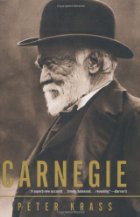
You might be surprised but here is the direct quote from non other than Andrew Carnegie who was one of the first capitalists, along with John D. Rockefeller Sr, to become American billionaires.  Here is Carnegie’s exact quote from 1889. 

” The gulf between rich and poor threatened the very survival of capitalism.” 

You might not think that view was espoused by the self-made bobbin boy who came to America and worked his way into the founding of U.S.  Steel!  Carnegie and John D. Rockefeller Sr.  competed daily to see who would become the wealthiest magnate in America! Rockefeller with Standard Oil may have edged out Carnegie for the title but the great irony is that both men  became two of the world’s greatest philanthropists benefiting nearly every conceivable worthwhile socially important endeavor. However, as both biographies clearly reveal, it was not pretty along the way. Just ask Ida Tarbell!

I write this post today after reading  in the New York Times the latest government figures on the distribution of wealth in America . It ties in perfectly with my Occupy Wall Street post of earlier this week.  In that post I commended to you Gretchen Morgenson’s Reckless Endangerment and Tom Friedman’s  That Used To Be Us.

Why Carnegie and Rockefeller?  If you want a solid historical perspective on the accumulation of wealth by two of America’s richest men , Ron Chernow’s TITAN The Life of John D. Rockefeller Sr. and Peter Krass’s  CARNEGIE offer the reader tremendous insight. 

Never before in the  American capitalistic system had so much wealth been accumulated by just two industrialists.  Both books are complete in their historical perspective of the personal lives of Carnegie and Rockefeller and admirably translate their personas into their business and later their philanthropic philosophy. 

As  I have read the daily accounts of Occupy Wall Street my memory clicked upon these two most worthy biographies.  They provide a meaningful and  necessary historical backdrop to the discourse of today. Chernow’s book was published in 1998 and Krass’s work  in 2002. 

If you have the time, these are wonderful back to back reads.  By chance , I read TITAN first and having done so would recommend that order. Each is of course deserving of a stand alone read.

Occupy Wall Street? Two Insightful Books Morgenson and Rosner,Friedman and Mandelbaum

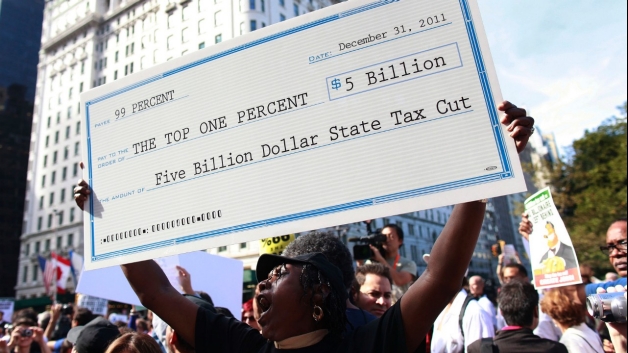
Anyone who questions the “why” in the Occupy Wall Street movement that is sweeping the nation and the world need only pick up a copy of Reckless Endangerment by Gretchen Morgenson and Joshua Rosner! ( See Gordon’s Good Reads July 16, 2011 blog post.)  The book did not predict that folks would be manning the barricades by October but I would assume the  Occupy Wall Street movement came as no surprise to these two  excellent reporters. Reckless Endangerment is a must read for all who are trying to put Occupy Wall Street in context.  The mantra ” We are the  Ninety-Nine Percent” will become abundantly clear after reading Morgenson’s and Rosner’s work.

Nor will the Occupy Wall Street movement come as any  surprise to readers of  Tom Friedman’s and Michael Mandelbaum’s That Used To Be Us, How America Fell Behind in the World We Invented and How we Can Come Back.  That Used To Be Us  places in focus the circumstances leading up to the economic and social turbulence in America.

Friedman and Mandelbaum cite four major challenges facing America: How to adapt to globalization, how to adjust to information technology, how to cope with large and soaring budget deficits and how to manage in a world of rising energy consumption and rising threats to the climate and environment.  Though That Used  To Be Us was written before Occupy Wall Street  it clearly enlightens the reader on the years of ignorance in all quarters leading up to the nations current economic straits.  Whereas Reckless Endangerment is an investigative chronology of  America’s financial meltdown, That Used To Be Us  meticulously peals back the covers of missed opportunities to right the ship by both government and business. The  How We Come Back  subtitle of the book brings forth big challenges and a hint of optimism but ironically it ties directly into the public protests of today.   Friedman and Mandelbaum call for an end to the political “gross irresponsibility” demonstrated during the budget crises. ” Anyone who proposes solutions that are not at the scale of the problem and don’t require immediate action is not serious. ” They call for  equipping the citizenry with the skills and tools essential for economic growth in a global economy, rebuilding America’s infrastructure,  and emphasize that ” cutting ”  is not the answer unless it is coupled with major tax increases to create hope for a future balanced budget. ” Anyone who says that we can restore order to our national finances today without raising taxes is not being serious.”

Global warming is a major subject in That Used to Be Us, and the twist is that the authors see global warming as a huge economic opportunity to get out in front of new technology with inventions and production that can lead America out of the Great Recession and place its future on a sound economic growth pattern. The authors  urge America to seize the green energy initiatives being undertaken in China and make them America’s own. Stop exporting our science and technology at our own expense, reference the authors.

Great books are timeless and many have been posted on Gordon’s Good Reads.  Reckless Endangerment and That Used To Be Us my not go down in the annals of literature  as timeless or iconic but in 2011 they are certainly timely and both add greatly to broadening ones understanding of this critical American crossroads.

My blog of last week on That Used To Be Us, promoted by last Sunday’s  New York Times Op-Ed by Tom Friedman was written with 100 pages of the book left to read. The finish line is an eye opener no matter what your politics.

Where Have You Gone Joe DiMAGGIO? ASKS TOM FRIEDMAN

I am 100 pages short of finishing Tom Friedman’s and Michael Mandelbaum’s new book That Used To Be Us. How America Fell Behind In The World It Invented and How We Can Come Back. However, after reading Tom’s opinion column in today’s ( October 9, 2011 New York Times) I feel compelled to get the word to you right away. 

 The column title Where Have You Gone Joe DiMaggio? poses the conundrum  that Friedman and Mandelbaum answer in their carefully crafted and researched book.  Anyone who is vested in figuring out what is wrong with America  ( aren’t we all?), and what we need to do to fix it, is encouraged to read this book now.  THAT USED TO BE US  is  about the important national dialogue being played out in print, over the air, in Washington DC  and now in the streets!  It will not go away. The book is not about philosophy but rather solutions! This quote from Friedman’s  New York Times Op-Ed  truly sets the agenda for That Used To Be Us.

“We cannot bail or tax-cut our way to prosperity. We can only, as  ( Steve) Jobs understood, invent our way there. That is why America needs to be for the world in the 21st century what Cape Canaveral was to American the 1960s: the place where everyone everywhere should want to come to start-up and make something — something that makes people’s lives more productive, healthy, comfortable, entertained, educated or secure. To do that, we need to reinvigorate our traditional formula for success — quality education and infrastructure, open immigration, the right rules to incentivize risk-taking and government-financed scientific research.”

That Used  To Be Us is worthy as a stand alone Tom Friedman read but it is even more compelling if you have read his The World is Flat (2005) and Hot Flat and Crowded. (2008)

All of Friedman’s work is a reasoned approach to identifying problems and pointing to proven and in many cases obvious solutions.  Michael Mandelbaum adds to the excellence in this new volume. Both authors  spare no individual, political party or company in bringing issues to the feet of those responsible for our problems and giving due credit  in recognition of wisdom.

When I have finished the last 100-pages I will be even more impressed  but having completed 256 and today reading Tom’s Op Ed  I am compelled to post this blog today!


RULES OF CIVILITY…OR… RULES OF NEW YORK?

Amor Towles  debut novel Rules of Civility captures the rules of New York and places George Washington’s  110 Rules of Civility in the Appendix  where they rightfully belong! This read is a love relationship with New York, a city that authors its own rules!

What could be more compelling?  The earnest daughter of hard-working Russian immigrants born and raised on the Lower East Side.  A near-do-well wanna-be who will do anything to be accepted and regain lost riches. A sweet and adventurous mid-western transplant.  The swells of the Upper East Side trust fund gang, a hard charging publisher and of course “ladies who lunch .”  The players are all there and their personalities explode in a wonderful page-turning story set in the post depression era of the late 1930s.  New York is  bouncing back, regaining its lost energy, wealth, world status and rebuilding with money, music, bricks, mortar and unlimited opportunity for those willing to dare a ride on a rainbow.

The  book’s intimacy with New York is reminicent of Pete Hamill’s Downtown and Tabloid City.   There is a hint of F. Scott Fitzgerald and even a flash of Hemingway. ” By nine o-clock the restaurant would feel like the center of the universe.”  The 21 Club, the village jazz clubs before red velvet rope lines, the big bands, the after swing parties and the glorious and transparent lives  of trust fund swells of the Upper East Side and Oyster Bay.  Towles builds characters  who are looking out, looking in and some who don’t give a damn about all the action swirling around them. Falling in and out of love with intimacy left to the imigination.

Rules of Civility  is a New Yorker’s book but just like  the city, it is there for the  enjoyment of anyone willing to seize the moment.  This is a very, very good first novel which may well  have a movie running through its veins.

Simply said, enjoy!

VENU MAGAZINE/SEPTEMBER-OCTOBER ISSUE

Gordon’s Good Reads appears in the just published September-October issue of  VENU Arts and Culture Magazine now available at locations throughout Fairfield and Westchester Counties. Gordon,s Good Reads  is proud to be associated with this wonderful publication.  Enjoy