THE WRIGHT BROTHERS/ DAVID McCULLOUGH

The Wright Brothers narrative is so brilliantly written by historian David McCullough that the reader can imagine sitting in his library listening to his melodious voice tell a wonderful American story. McCullough never disappoints as he brings to life Wilbur and Orville, their sister Katherine and their father Bishop Wright and their early endeavor as builders of bicycles in Dayton, Ohio.  The book is much more than the story of the invention of the airplane, although McCullough misses no detail in that pursuit.

imgres-2 I am an ardent fan of McCullough but must admit I thought, why bother with this book, I know the story of the Wright brothers.  Never doubt McCullough’s ability to tell the whole story, including the U.S. Army Department’s ” flat turn down ” of a request by the Wright Brothers for government support for further testing of their heavier than air Flyer.  They supplied documentation of 105 successful flights made in 1904, but to no avail in moving the American Military bureaucracy. Ironically, the Secretary of War at the time was Ohioan William Howard Taft. The British and the French were excited to consider the Wright’s requests.   So the Wright Brothers and sister Katherine were off to Paris and LeMans astonishing Kings, Queens and cheering throngs with their accomplishment. Their reception was comparable to that afforded conquering heroes with private funding made immediately available.

In 1909, William Howard Taft, now President of the United States presented the Wright brothers gold medals. “I esteem it a great honor and opportunity to present these medals to you as evidence to what you have done. I am so glad-perhaps at a delayed hour-to show that in America it is not true that “a prophet is not without honor save in his own country.”  A touch of irony indeed.

Enjoy!


THE GUNS OF LAST LIGHT/ THE TRAGIC REALITY OF 1944-1945

The final installment of Rick Atkinson’s WWII trilogy, THE GUNS  OF LAST LIGHT, offers prodigious unsettling detail of the final push to defeat Hitler during the winter of 1944 and the spring of 1945.  The book begins with D-Day  continues through the Normandy hedgerows, the liberation of Paris, Operation Market Garden and the Battle of the Bulge.

imgres-1

Atkinson’s narrative spares no detail  and his criticisms  of Allied leadership are jaw dropping. In his epic account  of the final months of the war, Atkinson creates no heroes.  His depth of research renders judgement on the good and bad.

American deaths in the winter of 1944 at the Bulge alone totaled 19,276.  In the final year of the  campaign of 135, 576 American soldiers  were killed on the Western Front while military bureaucrats meticulously planned the  up coming  Yalta conference between Roosevelt, Stalin and Churchill. Millions of dollars  and endless hours of planning and logistics were spent on caviar, wild game, wines of every description, imported silver, cigars,  china and furniture. Little was accomplished  at Yalta, increasing speculation on how Germany would later  be  carved up among  the victors.

bulge_gallery_05

This is a book for students of WWII history and the reader will be well rewarded by the depth of its six hundred plus pages. Atkinson’s work qualifies for my Every Word Counts honor. The two other volumes equally worthy of accolades are An Army at Dawn, the North Africa Campaign, (search gordonsgoodreads)The  Day of Battle, the war in Italy.

I can not resist sharing this quotation from the book.  Patricia O’ Malley was  a one year old when her father, Major Richard James O’Malley  was killed by a sniper at Normandy. Later as an adult she  wrote this following a visit to  her father’s  grave at the cemetery at Collerville above Omaha Beach. I cried for the joy of being there and the sadness of my father’s death. I cried for all the times I needed a  father and never had one. I cried for all the words I wanted to say and wanted to hear but had not.  I cried and cried.


LUSITANIA-DEAD WAKE

Erick Larson’s best seller Dead Wake, The Last Crossing of the Lusitania, to this reader raises as many questions about the 100-year-old story as it answers.  That in itself gives weight to this great mystery and the continued interest in this often explored maritime and political disaster.

imgres-1

Larson’s  writing begs for answers to the biggest question of all. Were the British through lack of communication and direct intervention complicit in the sinking of the great ship?  Was the sinking of the Lusitania necessary to bring America to the aid of the British in World War I?

Dead Wake is deep in detail of the broad cross-section of the Lusitania’s passengers which at times in the narrative overshadows the disaster itself. The author’s portrayal of Woodrow Wilson’s courtship of Edith Galt places his ardent pursuit of her within his tortured indecisiveness to bring America into the War.


On Friday, May 7, 1915 at 2:10 P.M. the Lusitania was struck by a single torpedo fired by German Submarine U-20. The great liner sank in 18 minutes. Over 1200  souls perished in a chaotic scene so inhuman that German U-Boat 20 Captain Schwieger lowered his periscope unable to view the calamity he had caused.

On April 17, 1917, two years after the sinking of the Lusitania and three additional American ships, Wilson asked a joint session of congress to declare War on Germany. The carnage at sea, however, may  not have been Wilson’s tipping point.  Larson walks the reader through the Zimmerman telegram, intercepted by British code-breakers, seeking to bring Mexico into the War with the promise to bring back to that nation its former lands in Texas, New Mexico and Arizona.

Larson allows Lord of the Admiralty Winston Churchill  the last word. ” What he ( Wilson) did in April 1917, could have been done in May, 1915.  And if done then, what abridgment of the slaughter; what sparing of the agony; what ruin, what catastrophes would have been prevented; in how many million homes would an empty chair be occupied today.” I can imagine Churchill, 35 years later, reiterating the same words to FDR as they sat in the White House on the eve of America’s entry into World War II.

To delve further into the sinking of the Lusitania you may wish to read Lusitania, An Epic Tragedy, by Diana Preston.

Another writing of great merit by Erik Larson is In The Garden of Beasts.  For more detail on this book search gordonsgoodreads.com


SHORT NIGHTS OF THE SHADOW CATCHER

Author Timothy Egan in his book Short Nights of the Shadow Catcher  crafts a splendid and enjoyable biography of  world-renowned  American Indian anthropologist, photographer  and chronicler  Edward Curtis.

images


Egan captures the epic story of Curtis’s extraordinary creation of the 20-volume The North American Indian, an incomparable photographic and narrative now considered a work of art, documenting the complex and tragic story of the vanishing Native Americans. Egan writes in extensive detail of the thirty years during which Curtis became a slave to the completion of the work, capturing the personal sacrifices and near death adventures necessary for the narrative to be “preciously”  Edward Curtis. “This was a place like no other he had seen through three decades of portrait foraging, ”  writes Egan.  ” Think of it,”  Curtis wrote in his diary, ” At last, and for the first time in all my thirty years work with the natives, I have found a place where no  missionary has worked.”

Edward Curtis

Edward Curtis

At the Little Big Horn  battlefield and only after extensively interviewing Sioux who were present  that day, Edward Curtis uncovers a very different story of what actually happened at Custer’s Last Stand. ” Let them fight, there will be plenty of fighting left for us to do.”  George Armstrong Custer as told to Curtis by Crow Scout White Man Runs Him overlooking the  battlefield where General Marcus’s troops were slaughtered.

The reader will meet those who inspired Curtis to pursue his dream including Teddy Roosevelt, Gifford Pinchot, J.P. Morgan, George Bird Grinnell , Chief Joseph and Geronimo. Egan’s portrait of Curtis is explicit in that it would be impossible to find another American who sacrificed  to the extent of Edward  Curtis to pursue the documentation and preservation of the vanishing way of life of the first Americans.

More than a biography, Short Nights of the Shadow Catcher shares with the reader Curtis’s depth of knowledge and understanding of the widely different cultures, rituals, and beliefs of the various American Indian tribes.  It is also a wonderfully crafted story of how the creative work of those who possess incomparable talent and vision are often  lost in their own time only to attain rightful acclaim by future generations.

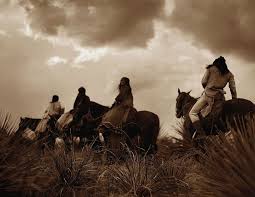
Before The Storm--Apache 1906--Edward Curtis

Before The Storm–Apache 1906–Edward Curtis

I commend Short Nights Of The Shadow Catcher to all who have interest in poignant literature surrounding our first Americans.

Other books I have posted on gordonsgoodreads by Timothy Egan include The Worst Hard Time and The Big Burn.  Utilize the search tab found here.

AN ARMY AT DAWN-NORTH AFRICA-DRESS REHEARSAL FOR EUROPEAN INVASION

Rick Atkinson’s  first volume of his World War II Trilogy An Army At Dawn is an extraordinarily candid appraisal of the performance of the U.S. Military during its initial foray into the Second World War in North Africa.

imgres

This excellent historical work portrays the North Africa Campaign of 1942-1943 as a painful dress rehearsal for a green U.S. Command and Army, embarking on its first and often catastrophic combat missions since the First World War.  ” A great sorting out was underway: the competent from the incompetent, the courageous from the fearful, the lucky from the unlucky.”   Atkinson spares no one in his  harsh analysis of both the American and British forces and their leadership.  The takeaway is that if the Allies had invaded across the channel in 1942 as originally envisioned, D-Day would have been a disaster only rivaled by Dunkirk.  A move up the boot of Italy or into southern France according to Atkinson’s read would have also been doomed from the outset.

The North Africa Campaign learning curve was critical to the final Allied victory in Europe. ” Eisenhower had been naive, sycophantic,  unsure of his judgement, insufficiently vigorous and more a titular than actual commander.” Atkinson is blunt in his appraisal that North Africa taught the American Infantryman the necessity of  ” ruthless killer instinct”  in battle.”  ” A soldier is not effective until he has learned to hate. When he lives for one thing, to kill the enemy, he becomes of value. ”  The collaboration in the North Africa Campaign with the British under Montgomery  foretold difficulties to come in the invasion of Europe.

Eisenhower, Patton, Bradley, Montgomery, Rommel, all portrayed  by historian Atkinson at their very worst and very best. The book is scholarly in its approach and yet very readable, filled with humanity, heroism,  and battlefield reality. After months of failure with enormous and often needless casualties,  American forces finally morphed into fighting form and marched through the Kasserine Pass and on to the sea at Tunis.

An Army at Dawn was written in 2002. The remaining volumes in Atkinson’s trilogy are The Day of Battle, the war in  Sicily and Italy ( 2007 ),  from 1943-1944 and The Guns at Last Light, (2012),  the war in Western Europe, 1944-1945. Atkinson also authored The Long Grey Line and Crusade.

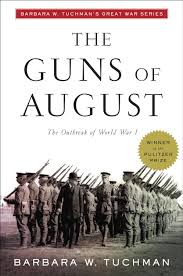
THE GUNS OF AUGUST- AN ANNIVERSARY READ BY A BRILLIANT HISTORIAN

August, 2014 marked the 100th Anniversary of the First World War , the perfect stimulus to read or reread Barbara Tuchman’s  The Guns of August.

images

While the French high command argued over whether to eliminate the crimson of their soldiers trousers, the Germans had already converted to olive-green and were building a mighty force and a thirty-six day offensive plan to bring France to a quick and tidy surrender and to regain German losses to both Russia and France from the war of 1870.  Barbara Tuchman in her Pulitzer Prize winning The Guns of August uncovers in great detail the misguided decisions and confusion among the French, German and British military and civilian leadership that led to the disastrous four years of carnage following the August 1914 outbreak of the First World War.

Tuchman’s meticulous research focuses upon the incredible errors made by all parties to the war by their failing to comprehend that warfare in the 20th Century had changed forever. Looking back on the  war’s 100th anniversary, the reader will be astonished to learn of the self-serving decisions and the indecisiveness  of politicians, generals, czars, prime ministers and presidents costing millions of lives on the battlefields of Belgium, France, Germany and Prussia . ” You will be home before the leaves have fallen from the trees, the Kaiser told departing troops in early August 1914.”

Tuchman leaves no stone unturned in the chronological detail leading up to the outbreak of the war. and its raging first month of battle. The Guns of August carries the reader through the German invasion of Belgium to the standoff on the outskirts of Paris and the Marne as the German Army, by only inches,  missed its opportunity to complete their 36 day plan for certain victory over France.

The French Army by mid-August had been in retreat since defeat at the Battle of the Frontiers on the Belgium border.  The Germans  army brutally pushed through Belgium, slaughtering civilians in their wake and then moved almost at will  into Northern France capturing not only territory but the rich natural resources that would help fuel its stamina through what would become four years of trench warfare. Meanwhile the British remained reluctant and confused in their commitment to both Belgium and France.  So much for French ” Élan” as their armies retreated in a desperate attempt to regroup before Paris fell.

Then occurred what German General Kluck termed a ” French miracle. ” Just four days before the Germans completed their 36 day schedule for decisive victory, the Battle of the Marne ended  with Germany in a startling reversal at the hands of a re-grouped French Army.  Said  Kluck, ” That men who have retreated for ten days , sleeping on the ground and half dead with fatigue, should be able to take up their rifles and attack when the bugle sounds is a thing upon which we never counted. It was a possibility not studied in our war academy.”

The Guns of August sets the stage for  what became The Western Front,  four years ( 1914-1918) of the most horrendous fighting in the history of the modern world.  Casualties at one point reached 50,000 per day.

Tuchman’s narrative style allows for assimilation of a trove of information and detail of an event the enormity of which forever changed the world.  Tuchman retains a rightful honored place among the great historians of her time. The Guns of August was published in 1962. She won a second Pulitzer in 1971  for ‘Stilwell and the American Experience in China, 1911-45.  Also by Barbara Tuchman, The Proud Tower, a look at the quarter century leading up to World War I, the clash between Olympian luxury of the wealthy and the uprising of the underclass. Additionally, The Zimmermann Telegram, the story of the German promises made to Mexico  to entice them to enter the First World War.  Her last book  The First Salute,  published in 1988, sets the American Revolution in international perspective and was on the New York Times best-seller list for 17 weeks.

Barbara Tuchman died in 1989 at age 77 after suffering a stroke at her home in Cos Cob, Connecticut. The cabin in which she wrote her prized works remains on a rocky rise overlooking the meadows of the family property.

David McCullough- Thirty Seven Years Later- A NYT Best Seller !

Yes, hundreds of other kindred spirits did the same as me!  On the occasion of the 100th anniversary of the opening of the Panama Canal we were reminded of  David McCullough’s  The Path Between The Seas  and rushed out to purchase this acclaimed historical work.  As a testament to its relevance,  the book again appeared on the New York Times Best Seller List on Sunday, September 7th, 2014,  37 years after its original publication in 1977!

images

The epic story of the building of the Panama Canal, started by the French, completed by the Americans, could not have been better told than through a David McCullough narrative.  The Path Between The Seas details every nuance of this unprecedented enterprise in world history.

Despite the enormity of the subject, McCullough’s story telling never gets bogged down in detail but rather enlightens  and educates the reader into understanding the complexities of the entire undertaking.  Meet the fascinating Frenchman Ferdinand deLesseps, the promoter of the Suez Canal, whose failure at Panama, ensured the ultimate completion by America of an enterprise the scale of which had never before been attempted by mankind. It literally required a revolution to reorganize the geography and power structure of the world.

McCullough masterfully tells the story of the canal. The politics, money, ego’s, intrigue and with great insight to the racial issues surrounding 45,000 West Indian black men and women whose manual labor made the building of the canal possible. The development of  the engineering skills and construction knowledge previously unknown and untested became miracles in their application.  ” We are facing a proposition greater than was ever undertaken in engineering history. ”

Combined with the enormity of the engineering and logistical challenge was the understanding the once the American’s bought out the failed French effort, the first priority would be ridding the Canal Zone of Yellow Fever and Malaria which had heretofore devastated the work force. The resulting benefit to medical research, while at the same time overcoming skeptical pedestrian medical views , would benefit populations worldwide for decades.  No single construction effort in American History had exacted a comparable  price in human lives and dollars and yet the scientific, social and economic rewards would ultimately dwarf the investment costs.

Just as in Truman, John Adams and Mornings on Horseback,  McCullough combines his skills as historian with those of a storyteller resulting in a thrilling journey during an American  era when anything seemed possible.


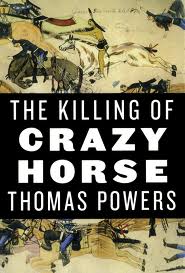
THE KILLING OF CRAZY HORSE- AUTHOR’S IMMERSION DELIVERS “THE FEEL OF IT”

Thomas Power’s The Killing of Crazy Horse is most deserving of the praise offered  by fellow authors Larry McMurtry and Evan Thomas. Power’s work of non-fiction ventures miles beyond the compelling story of Crazy Horse to encompass a rich journey into the final years of the Sioux and the demise of their culture upon the great northern plains.

images

Power’s  detail into the relationships of members of the Sioux families together with their interface with the white trappers, adventurers , soldiers, translators and scouts tells the story of what actually occurred to bring about the destruction of this once proud Indian Nation. Power’s research is so outstanding that he seems to have personally absorbed the Sioux culture, language, relationships, spirituality, pride and passions and then realistically tells the tale in a captivating style. The context is so strong it seems that Powers was present in the teepee, on the battlefield, smoking the pipe, on the Powder River, at the Sun Dance and at The Killing of Crazy Horse.

Unique in its approach, Powers relates the story through the voices of the Indians, the families of Sitting Bull , Crazy Horse , Red Cloud, and the half breeds who served both the Indians and the military often in duplicitous and self dealing fashion. General Crook’s role as the major facilitator in the demise of Crazy Horse  delves into the personality and motives of the man who so influenced the fate of Crazy Horse and  the northern tribes.

The story of the Oglala Sioux and Crazy Horse can not be told without Custer and the Little Big Horn. I have read much of this historic event but never before have I seen this epic through the eyes of Crazy Horse and the Sioux themselves, present on the Little Big Horn Battlefield that day.

Every word counts in the very best of non-fiction writing and The Killing of Crazy Horse meets this standard on each page. Crazy Horse: ” I am no white man! They are the only people who make rules for other people who say, if you stay on one side of this line it’s peace, but if you go on the other side I will kill you. I don’t hold with deadlines. There is plenty of room, camp where you please.”

In his Afterword, Powers perfectly captures this reader’s reaction to his work: ” My effort here has been to tell the story in a way that helps readers to experience its weight and quality-the feel of it.”  Powers words ” the feel of it ”  become abundantly apparent.

The Killing of Crazy Horse eclipses all expectations of  ” the feel of it,” learning from the people, places, triumphs and tragedies  of the Oglala Sioux.

Thomas Powers is a Pulitzer Prize winning writer. He has also written Intelligence Wars : American Secret History from Hitler to al-Qaeda; Heisenberg’s War: The Secret History of the German Bomb; and The Man Who Kept the Secrets: Richard Helms and the CIA.

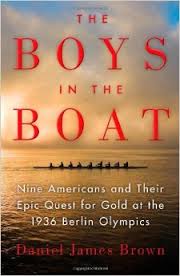
THE BOYS IN THE BOAT- AN EPIC STORY OF SEABISCUIT CALIBRE

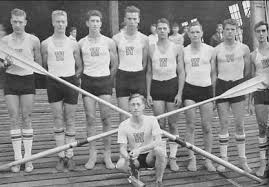
Daniel James Brown’s  THE BOYS IN THE BOAT ranks  among my top non-fiction reads of 2014.  It is a captivating human story made even more compelling by Brown’s remarkable story telling.  This book is much more than its brilliant depiction of the sport of crew with nine men acting as one in an eight pared shell.  Brown wraps their journey to victory in the 1936 Berlin Olympics  in the history of the times.  The culture of young men growing up in the lumber and mining towns of the Pacific Northwest with few prospects beyond a life of hardship and physical labor.  The author brilliantly captures the darkness of the depression  of the 1930s and its impact on families and family life. He incorporates the drumbeat of the Nazi’s, preceding the outbreak of  WW II, and the elaborate deception of Hitler surrounding the 1936 Olympic Games.

images-1

Out of this era of despair appear nine young working class men, eight oarsmen and a coxswain , who literally by chance  come together under a brilliant coach and an iconic boat builder at the University of Washington.  Among these young men is teenager Joe Rantz, a boy with few prospects in life after being abandoned at age ten by his father an step-mother.  His true story of grit and determination swells the heart of the reader right through the exciting climax of this great American drama.  The Washington eight-oared shell captured the imagination of the country much as did the underdog racehorse Seabiscuit, as so beautifully chronicled in Laura Hillenbrand’s book of the same name.

Could there ever again be nine young men more deserving of ultimate triumph ?  Could a nation in a great depression be uplifted by a sport so obscure as crew, which was  formerly dominated only by the eastern elite.  Shades of Seabiscuit versus Man O’ War!  Could Hitler’s propaganda machine receive a huge setback by nine determined young American’s in eight-oared-shell ?   It all happens because of  THE BOYS IN THE BOAT!

The legendary boat-builder and philosopher of human nature George Pocock, provides a narrative for each chapter of  THE BOYS IN THE  BOAT :  ” He came to understand how those almost mystical bonds of trust and affection, if nurtured correctly, might lift a crew above the ordinary sphere, transport it to a place where nine boys somehow become one thing-a thing that could not quite be defined, a thing that was so in tune with the water and the earth and the sky above that, as they rowed, effort was replaced by ecstasy. ”

images-2

Daniel James Brown: ” It occurred to me that when Hitler watched Joe and the boys fight their way back from the rear of the field to sweep ahead of Italy and Germany seventy-five years ago, he saw, but did not recognize, heralds of his own doom. He could not have known that one day hundreds of thousands of boys just like them, boys who shared their essential natures-decent and unassuming, not privileged or favored by anything in particular, just loyal, committed and perseverant- would return to Germany dressed in olive drab, hunting him down.”

I commend  THE BOYS IN THE BOAT to the very top of your summer reading list. Buy it in hardcover because it belongs in your library for future generations.  Also by Daniel James Brown, The Indifferent Stars Above and Under a Flaming Sky.


PIKETTY- CAPITAL IN THE TWENTY-FIRST CENTURY- THE NEWS IS NOT GOOD!

It is somewhat astonishing that Thomas Piketty’s  CAPITAL in the 21st Century remains at the very top of the New York Times Best Seller List! Not intending to be condescending, this is not an easy read even for the most ardent observers of the national and world economy.  The first 250 pages, filled with exhaustive research over a 250 year period, complete with charts and graphs, is a test of anyone’s concentration.  You may need to read many pages more than once! The good news is that once through this sophisticated and advanced course in economics, the reader will come to an understanding of the inexorable march of an economic matrix that appears to be leading to a dysfunctional environment for the capitalistic system as  we have known in America for over 300 years.  Ironically, there is  currently a billboard on the south bound FDR Drive  in New York City that reads,” The French Aristocracy Didn’t See It Coming Either! ”  images Piketty does not set out to be an alarmist but rather to lay out what he believes is the most definitive research ever completed on the subject of inequality and the distribution of wealth in America and Europe, dating back to the seventeenth century.  Admittedly, Piketty qualifies some of the early collection of data as anecdotal but at the same time has sought out all-available recorded records to track the distribution of wealth over three centuries. What is most troubling in the Piketty thesis is his substantiation of a mathematical paradigm that left unchecked , places  the concentration of wealth worldwide and particularly in the United States on an unstoppable course of disastrous inequality.  Not an exciting prospect. Piketty: ” If the growing concentration of income from labor that has been observed in the United States over the last few decades were to continue, the bottom 50% could earn just half as much in total compensation as the top 10% by 2030.”  In the United States, the most recent survey by the Federal Reserve, indicates that the top decile own 72 percent of America’s wealth,  of which the bottom half claim just 2% .  These figures clearly delineate the plight of the dwindling  middle class.  If the top ten percent  and the bottom 2 percent control 74 percent of all wealth in America, that leaves only 26% for everyone else! Fundamental to Piketty’s  thesis is that a predicted economic annual growth rate in America of 1.5 percent or less will force a greater concentration of wealth among the top decile because based upon a rate of return there will be no incentive to invest risk capital back into the economy.  The top ten percent can comfortably continue to invest capital at 4-5% ( with some hedge funds at 10-30%) and in essence keep these capital resources off the table in the hands of the super wealthy, further shrinking the middle class and decimating the lower class.  He also predicts that as future generations  of the wealthy mature, inherited wealth will be exclusively bequeathed, removing it from the general capitalistic economy, in the same manner as did the old European aristocracies.  Thus, a new American Aristocracy fueled by inherited wealth? Piketty: ” In my view, there is absolutely no doubt that the increase of inequality in the United States  prior to 2007 contributed to the nation’s financial instability. The reason is simple:  One consequence of increasing inequality was virtual stagnation of the purchasing power of the lower and middle classes in the United States , which inevitably  made it more likely that modest households would take on debt, especially since unscrupulous banks  and financial intermediaries, freed from regulation and eager to earn good yields on the enormous savings injected into the system by the well-to-do, offered  credit on increasingly generous terms.” ” If we consider the total growth of the U.S. economy in the thirty years prior to the crisis, we find that the richest appropriated three-quarters of the growth.The richest 1-percent absorbed 60 percent of the total increase of U.S. national income in this period.  It is hard to imagine an economy and society that can continue functioning indefinitely with such extreme divergence between social groups.” Capital In The Twenty First Century has raised considerably debate and the outright questioning of Piketty’s research and formulas ( r>g ). However, if you take him for his word, the forecast is not comforting and for sure,  don’t look for many rave reviews from the financial establishment! Unfortunately, if you have sensed something wrong with the economy, Piketty offers great insight but little comfort! Capital in The 21st Century  is well worth a major investment of time.