THE BULLY PULPIT-HISTORY LESSONS FOR TODAY!

It is rare that I blog about a book with 400 pages still to read but if you or a member of your family loves history then place The Bully Pulpit, Theodore Roosevelt, William Howard Taft and the Golden Age of Journalism at the top of your  holiday list.

images-2

Doris Kearns Goodwin has outdone herself by telling the story of these two presidents at the turn of the 20th century  in an economic enviornment which is very relevant today.  Early on, this  prodigious work of history will place the reader both then and in 2013!  Goodwin lays the groundwork of the lives of TR and Taft , one most famous and the other mostly forgotten. Her research leads to a greater understanding of how the power of the presidency combined with investigative journalism can dictate  national policy.  There is no bully pulpit without the press. This of course is a lesson  learned long before the internet and cable news! Learn of the tremendous influence of McClure’s magazine during TR’s rise.   Of course , during this period of reflection on Abraham Lincoln, do not overlook  Goodwin’s Team of Rivals. 

THE FORGOTTEN MAN

The Forgotten Man is a sweeping title for a book about The Great Depression.  Historian Amity  Shlaes book was published just one year before The Great Recession of 2008 .  Prescient indeed!

images

Who is the forgotten man of The Great Depression?  The  Wall Street tycoon,  the homeless, the apple vendor, the WPA laborer, or the woman in the most famous photograph of the period by Dorothy Lange titled Migrant Mother?  In many respects the answer lies with none of the aforementioned.  Shlaes makes the case that the forgotten man of the 1930s  was those who today would be referenced as the great middle class.  The parallels between The Great Depression and The Great Recession are enlightening and Shlaes places in historical perspective  the lost opportunities of an entire generation of  Americans, then and now.

Surely this book is a study of the New Deal and what forms of government intervention did and did not work.  Shlaes is certainly not a hero worshiper of FDR  or of the New Deal but my take on this book is that it offers a balanced look at the multitude of factors surrounding Roosevelt, his advisors, detractors and the enormity of the recovery programs during the period.

Most provocative and compelling is the insight and comparisons to the economic conditions in which the U.S. Economy  finds itself today.  The Forgotten Man of the 1930s is very  much present in the displaced middle class of 2013. Is today’s forgotten man the family bread-winner out of work because of the government shutdown, the child in need of medical care, the returning veteran, the foreclosed upon and the forgotten?  The similarities are ever-present.

An aside  from within The Forgotten Man is the startling comparison of how politically effectively FDR communicated the New Deal through the then new medium, radio, the 1930s version of today’s social media. Radio was FDR’s bully pulpit.  A very interesting  analogy.

You may also wish to consider Shlaes Coolidge.  ( see gordonsgoodreads ) While Amity Shlaes is certainly not a liberal, I think both The Forgotten Man and Coolidge are balanced. I would recommend reading Coolidge first. By doing so, the New Deal is placed in greater perspective.

THIS TOWN- MARK LEIBOVICH JOINS “THE CLUB”

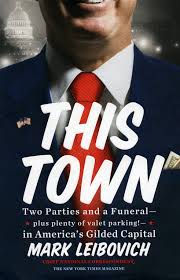
This Town, the new offering by The New York Times Chief National Correspondent Mark Leibovich is so inside the Beltway  the nation’s capital becomes  a  cul-de-sac.!

images

Leibovich  promotes the book by warning, ” This Town does not contain an index. Those players wishing to know how they came out will need to read the book.”  The reason the book has attained The New York Times Best Seller List must that every mindless egotist in DC has taken the authors advice. Unless you are a true political junkie there is not much here but it is a fun read for those who love politics and a few bold face names. The book reminds me of  watching cable television on a very light news day!

Light, anecdotal and gossipy, this tome could easily have been named The Club, the high level of membership attainment which the author refers to as the elite of  Washington DC.  In reading This Town it is clear that Leibovich has attained membership in this  esteemed group, having been given the imprimatur of a mention in Playbook.  You will learn that one has not arrived in the DC social media world until so recognized by this daily Politico tip sheet. That honor at one time belonged to The Washington Post, and who knows it may again under the ownership of  Jeff Bezos!

Leibovich is kind to most in the book. Two noteworthy  exceptions are Harry Reid and Arianna Huffington. Harry  Reid apparently never says goodbye during a phone conversation, he just hangs up when he has nothing more to say.

This Town is filled with depressing information for those from out-of-town.  ” But almost no one leaves here anymore. Better to stay and monetize a Washington identity in the humming self-perpetuation machine.”  ” The Atlantic had just reported that in 1974, 3 percent of retiring members of congress became lobbyists. Now 50 percent of senators and 42 percent of congressman do.” The payroll of the influencers eclipses the policymakers. This Town  begs the question, are the influencers in fact the policymakers? There is no recession in Washington

Disingenuous  best describes the daily activities and personal relationships in This Town and the author offers little hope that anything will change. A depressing thought.

A MONUMENTAL WEEK IN CIVIL WAR HISTORY!

The first week of July, 2013 commemorates the 150 anniversary of the Civil War Battle of Gettysburg, considered by many historians as the greatest battle of the war and the fateful turning point leading to the ultimate defeat  and surrender of Robert E. Lee and the demise of the Confederacy.  The great battle took place in three engagements on July 1, 2 and concluding with the disastrous Confederate Pickett’s Charge on July 3rd, 1863.  The sun rose on July 4th over a battlefield that witnessed over 5,700 killed and more than 27,000  wounded, thousands of whom died from wounds in the ensuing weeks.  More has been written regarding this great battle than any other in history, including  D-Day.

15981669

This week another new book,  Gettysburg by Allen C. Guelzo is added to the library of Gettysburg non-fiction.  Simultaneous to the release of Guelzo’s book and in conjunction with the Gettysburg 150th anniversary, the Smithsonian has released a fabulous interactive map that helps explain why General Lee made a critical mistake in underestimating the depth of the Union Forces he faced. The map addresses the issue of the extreme lack of intelligence and reconnaissance on behalf of either side during all of the Civil War engagements.  Prior to the commencement of hostilities, Lee climbed to the top of  cupolas, one at the Lutheran Seminary and the other at Gettysburg College to survey Union troops.  The Smithsonian GIS generated map, together with the research of Middlebury College professor Anne Knowles, clearly shows that deceptive terrain made it impossible for Lee to judge the magnitude of the Union forces. Lee’s problems were of course magnified  by the absence of his cavalry led be Jeb  Stuart. To examine the new GIS map of the Gettysburg battlefield go to : http://bit.ly/1crQWYd

DO NOT OVERLOOK VICKSBURG!

With the natural focus this week on the Gettysburg anniversary it is easy to overlook yet another monumental Civil War battle that historically may equal and in some sense eclipse the great Gettysburg turning point. General  U.S. Grant’s victory at Vicksburg  which culminated on July 3, ( the same day as Pickett’s Charge) in some sense had a greater impact on the war’s outcome than Gettysburg.  

Following two weeks of battle including fierce fighting at Jackson Mississippi and Champion Hill  Grant turned his forces West to Vicksburg, the last remaining Confederate obstacle to opening the entire Mississippi River to Union control.  Following days of brutal fighting and bombardment Grant laid siege to the city and finally on July 4th, 1863 accepted the surrender of General Pemberton’s  Confederate forces and took control of  what had been an impregnable citadel above the river.

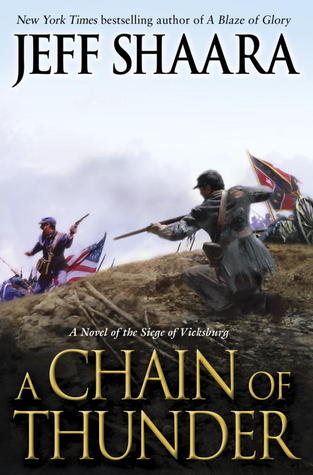
While there  continues to be much debate over the work of Civil War historians  ( See David Blight’s  article That a Nation Might Live in the July 1 Book Section of  New York Times ), it will come as no surprise to followers of Gordon’s Good Reads  that I have turned to historical fiction and Jeff Shaara’s new Civil War book A Chain of Thunder, A Novel of the Siege of Vicksburg. Jeff Shaara is the son of Michael Shaara, author of Killer Angels, the story of  the Gettysburg battle. Like the writing of the father, Jeff Shaara places the reader in the boots of the front line soldiers and additionally, in the case of A Chain of Thunder the devastated lives of the Vicksburg’s citizens.

Why does Vicksburg equal the historical importance of Gettysburg? The answer lies in President Lincoln’s recognition  that  he found in Grant following Vicksburg and his earlier victory at Ft. Donnelson,  a commander who could ” win.”!   There is little doubt that the victory at Vicksburg catapulted Grant into being named General In Chief of all Union Forces. In that capacity, Grant’s tenacity, with Lincoln’s unbridled support,  forged the final Confederate surrender at Appomattox Courthouse in 1865.   There is no doubt that the Grant Civil War legacy led to his becoming President of the United States, following the failed short-term of Vice President Andrew Johnson following Lincoln’s assassination.

Whether you prefer non-fiction or historical fiction of any combination thereof, The Civil War is an epic human story that changed the future of not only the nation, but the world.

Other Civil War historical novels by Jeff Shaara”  Gods and Generals, The Last Full Measure, A Blaze of Glory.


FROZEN IN TIME BY MITCHELL ZUCKOFF

Mitchell Zuckoff’s new book Frozen in Time ranks  among the best non-fiction works of survival and rescue during the Second World War. Furthermore,  the book  is testament to the strength of the human spirit.

16248142

Frozen in Time details the crash of a B-17 Flying Fortress  on the Greenland ice cap, while itself on a mission to find the crew of another downed plane. A Grumman Duck  amphibious rescue plane also vanishes, adding to the complexity of what becomes an epic tragedy.

Imagine, 9-men huddled in the tail section of a broken B-17 bomber, who during the first month on the ice, had no verification that anyone knew where they were!  They survived 148 days of 50-degree below zero weather with 100 mile per hour winds threatening to dump their makeshift shelter into bottomless crevasse only inches away. Then came the disappointment of many failed rescue attempts and further loss of life by those who tried to save them.  Zuckoff unveils a determination and fortitude of the human spirit that defies comprehension.

The dimension of this gripping survival story is enhanced with the telling of the parallel expedition that took place in 2012, to find the wreckage of the U.S. Coast Guard Grumman Duck rescue plane and to return home the remains of the heroic crew.


There are four other books of this genre and caliber that I highly recommend reading:

The Endurance, by Caroline Alexander, Shackleton’s Legendary Antarctic Expedition

The Terrible Hours, by Peter Mass, The Greatest Submarine Rescue in History

In Harm’s Way, by Doug Stanton, The Sinking of the USS INDIANAPOLIS

FLYBOYS, by James Bradley, The Tragedy of Chichi Jima

Lost in Shangri-La, by Mitchell Zuckoff, A True Story of Survival and the Most Incredible Rescue Mission of World War II.


BUNKER HILL- A FIGHT FOR LIBERTY BECOMES A WAR FOR INDEPENDENCE

Nathaniel Philbrick’s new non-fiction work  BUNKER HILL, A CITY, A SIEGE, A REVOLUTION is a rewarding  history of the early stages of the American Revolution including the battles of Lexington and Concord,  Breeds Hill/Bunker Hill and the siege and eventual evacuation of Boston by the  British.  Philbrick, as was his style in his previous books Mayflower and  The Last Stand,  Custer, Sitting Bull and the Battle of Little Big Horn ( see review at gordonsgoodreads.com ) , is focused. His  historical research is precise  and the development of the characters of the  historical figures adds new dimension to this period of American History.

16158546

Set in 1775 and 1776, Philbrick explores the passions and the conflicts between Patriots , Loyalists and the multitude of  views  of those suspended in the middle. Many Patriots remained loyal to King George but simultaneously reviled against the British Parliament, clearly defining the difference between a call for “Liberty”  and the pursuit of  “Independence.”   In the ensuing American Revolutionary War, liberty and independence became synonymous.

Readers will meet a key revolutionary who stands unique among the better-known  Sam Adams , John Adams, John Hancock and Paul Revere.  Thirty three-year-old physician Joseph Warren cobbled together a group of independent thinking community leaders  and often unmanageable  farmers turned militiamen  into what would become the Continental Army.  Warren was  a self-styled political and military leader.  If it were not for Warren’s  death at the Battle of Bunker Hill,  Philbrick  speculates that relatively obscure George Washington may never have been called  upon to assume  leadership  of the Patriot  forces, which  of course ultimately lead to Washington becoming the nation’s first president. Thus , Bunker Hill gains even greater historical importance.

The Battle of Bunker Hill  ( June 17, 1775) , which came two  months after  Concord and Lexington  ( April 19, 1775  “The Shot Heard Round the World” ) , is considered the actual beginning of the Revolutionary War.  Concord and Lexington are referred to as ” skirmishes.”  British loses were so great at Bunker Hill, despite a technical victory, General Howe concluded that the British had in fact lost the battle for Boston, and was later forced to withdraw to Halifax, Nova Scotia following  a winter long siege of the city .

I greatly appreciate well researched non-fiction  like BUNKER HILL that focuses on specific events and the individuals  that played a vital role in the larger story.   Another example is David McCullough’s  biography  John Adams , critical to understanding  the American Revolution, the  drafting of the Declaration  of Independence and the Constitution.  An enlightening part of the puzzle pertaining to  George Washington and the Revolutionary War  is David Clary’s book Washington Lafayette, and the Friendship That Saved the Revolution. The book details the relationship between  the childless George Washington and a glory seeking teenage French Aristocrat,  Marquis de Lafayette. They become unlikely comrades-in-arms , forming  an unbreakable trust with great impact on  the war’s outcome and the forming of a new nation.  

BUNKER HILL, A CITY, A SIEGE, A REVOLUTION is worthy of your time and your library.

NATHANIEL PHILBRICK- FROM THE MAYFLOWER TO THE LITTLE BIGHORN

Author Nathaniel Philbrick makes it easy and joyful to love history. I first became a fan when I read  Philbrick’s Mayflower.

mayflower

In 358  concise pages Philbrick manages to capture the essence of the complete story of the Pilgrims voyage, The Plymouth Colony,  Native Americans, King Philip’s War and of course Massasoit,  Miles Standish and William Bradford.  Philbrick’s  historical narrative  flows with an ease , in great part, because the reader never loses track of the principal players  and their recurring roles as history unfolds.  This single volume  painlessly educates  the reader about Puritan history, the odd collection of mankind called Pilgrims, the Mayflower’s voyage,  King Philips War and the beginning of the two century’s  of deceitful treatment of Native Americans .  The efficiency with which Philbrick tells this story is remarkable.

the-last-stand


For all of the aforementioned good reasons I eagerly purchased Philbrick’s THE LAST STAND, Custer, Sitting Bull and The Battle of The Little Bighorn.  Once again the author distills this often told story into 312 pages of narrative that places all of the elements of a  complex story, distorted by time and ideology,  into laser-like focus.  Interwoven in  both books is the vivid picture of  how not much had changed between the white settlers engagement with the Indians of  New England in 1620 and the duplicitous treatment of  America’s Great Plains Indians in the later part of the 19th century.  In both cases the author explodes many myths carried forward over the two centuries.   THE LAST STAND, much to absorb about American culture, Manifest Destiny, Sitting Bull, Crazy Horse, Custer, Reno and what can occur when a presidential administration becomes distracted!

Because the subject matter of the Mayflower and Custer’s Last Stand is so much in the public domain you may think you already have a firm grasp on the narrative.  Think again! Take a second look  at these two landmarks in  American history through the eyes, mind and research of historian  and story-teller Nathaniel Philbrick.

Also by Nathaniel Philbrick In The Heart of The Sea, Sea of Glory; The Epic South Seas Expedition 1838-1842 .  I am currently reading  Philbrick’s latest work , Bunker Hill: A City, a Siege, a Revolution.

COOLIDGE, REVISIONIST OR ACCURATE PORTRAIT OF THE PRESIDENT?

Amity Shlaes new biography COOLIDGE  has received its share of controversial reviews including  charges of  a “white-washed” Coolidge presidency. There is little doubt that Shlaes places  ” silent Cal” in a favorable light. However, that is not at all unusual as historians review a presidency in a perspective from a hundred years distance.  Perhaps the best example of the retrospective is David McCullough’s  reincarnation  of John Adams.  I am not suggesting that the two books or presidencies are comparable but the passage of time allows authors the opportunity to look through a different prism.  Be assured that Shales portrait of Calvin Coolidge does not attempt to elevate him to John Adams status, however, she clearly establishes the image of a strong, independent thinking president capable of making unpopular decisions that he deemed correct for the country.

images

Coolidge served as president, during the roaring 20s, from 1923 to 1929.  He remains famous for small government, balanced budgets and ” the business of America is business.”   Unlike some reviews, I do not think Coolidge is a whitewash of the administration, but rather an overview of the thinking in America following the First World War and the national desire to return to ” normalcy.”  Ironically, Coolidge came into his political career as an acolyte of Teddy Roosevelt  progressivism and acted accordingly during his tenure as Governor of Massachusetts.  Coolidge was a reluctant recruit as Warren Harding’s Vice-President, he disliked the position, but his New England work ethic underscored his making a best effort to support Harding’s policies.  The two were exact opposites, Harding the gregarious politician telling the electorate what they wanted to hear,  Coolidge, quiet and reserved.

Shlaes does an excellent job in depicting Coolidge’s transition to the presidency following Harding’s unexpected death.  He moves into the oval office with no great fanfare and picks up the reins of governing turning quickly to his zeal for a balanced budget, eliminating the war-time bureaucracy and establishing the concept of reducing taxes to stimulate the economy out of a post war recession.  Shlaes makes a case that Coolidge handed off a strong economy to Herbert Hoover after Coolidge kept his commitment that he would not run  for a second term.  However, Shlaes  book makes no mention of the rampant speculation on Wall Street that occurred during the later years of the Coolidge Administration which lead to the crash of 1929 and the beginning of the Great Depression.  Does Coolidge share the blame or does it all fall at the feet of  Herbert Hoover?

A most interesting part of the book is that once again we go back over 100 years to discover recurring themes facing today’s American economy:  The fairness of the tax policy, protective tariffs, balanced federal budget, government spending, the deficits of war-time spending, and the overriding argument of  big government versus small government.

COOLIDGE is well written and for lovers of history it is a look back at a presidency almost forgotten.  COOLIDGE  offers a  glimpse at the expectations of life in America following  World War I , the “War to end all wars. ”  It was the period of the first automobiles produced on the Ford assembly line, electrification,  the birth of the aviation industry, Lindbergh and the  passage of the Kellogg-Briand international treaty, the successor to the failed  Woodrow Wilson League of Nations.

You will learn much about Coolidge the family man, his wife Grace and the tragedy of the death of his son  Calvin, Jr. while Coolidge was in office.  The journey— from his birth in  Plymouth Notch, Vermont  to Amherst College, small town attorney in Northampton, Massachusetts, Massachusetts Senate, Massachusetts Governor,  Vice-President and President of the United States–a remarkable life.


GRAND CENTRAL-THE BOOK-A DESTINATION UNTO ITSELF

It is fitting that my son who has just begun a daily commute to Grand Central gave me a copy of Sam Roberts  book Grand Central, How A Train Station Transformed America.

images

During the better part of four decades , I commuted through Grand Central during periods of its greatest decay and glorious rebirth.  For me, and millions of others, the book is personal and the FOREWORD by Pete Hamill gives the work a New York City imprimatur that only Hamill could provide. Hamill: ” It was a week before Christmas in 1945.  Wait my mother said. I want to show you something. And she led me into the largest space I had ever seen. There were people moving across shiny marble floors in many directions, a gigantic clock, and a large board with numbers and the names of cities. A deep voice kept speaking from somewhere, the voice echoing off gleaming walls. We were in a place called Grand Central Station.”

The name is technically not Grand Central Station but rather Grand Central Terminal although few have ever called it anything but the former. The short-lived original named Grand Central Station, located nearby on 42nd Street,  was demolished  when the brilliant New York Central Railroad Chief Engineer William Wilgus convinced Commodore Cornelius Vanderbilt’s son, William, that the future  of railroading was electric locomotives that would allow the Park Avenue rail lines to be placed underground leading to a new two tiered Grand Central Terminal.

Roberts brings the detail of the construction of the terminal into a readable and understandable epic, with a coupling of wonderful photography.  The magic and glamour of long distance train travel abounded in Grand Central long before it became a commuter hub. Track 34, today a common departure point for the Harlem Line, was where nightly they rolled out the celebrity red carpet for the 20th Century Limited to Chicago. The train with speeds up to 123 miles per hour made the trip in 20 hours, therefore the name.  The 20th Century made its inaugural trip on June 17, 1902 and its last on December 2, 1967. By that time the once glorious Grand Central along with long-distance train travel had fallen into disrepair and neglect and the terminal was  only a  shadow of the wonder in Pete Hamill’s youthful eyes back in 1945.

Robert’s history of  Grand Central is complete,  but the excitement surrounding  the terminal’s renewal,  in  many ways, lays the foundation of the renewal of New York City itself,  and the indomitable spirit of  New Yorker’s following the city-wide declines during the 1970s. This spirit, prevalent  today, harkens back to the introduction of a popular radio program in the 1940s on NBC titled Grand Central Station. See if you don’t agree that even though the 20th Century Limited and Empire Express are distant memories,  the preamble to each radio show remains real  as you walk through Grand Central today.

As a bullet seeks its target, shining rails in every part of our great country are aimed at Grand Central Station, heart of the nations greatest city. Drawn by the magnetic force of the fantastic metropolis, day and night great trains rush toward the Hudson River, sweep down its eastern bank for 140 miles, flash briefly by the long red row of tenement houses south of 125th Street, dive with a roar into the two-and-one-haf-mile tunnel which burrows beneath the glitter and swank of Park Avenue, and then…Grand Central Station! Crossroads of a million private lives! Gigantic stage on which are played a thousand dramas daily. 

Sam Roberts has given anyone who has ever paced the marble floors of Grand Central a great gift.  Beyond rails, renovation, railroad barons , conductors, porters and engineers, this is the story of how for over 100 years a building   has played such a huge role in defining New York City.  For those of us for whom Grand Central has been part of our lives we owe Sam Roberts a special debt of gratitude. Grand Central celebrates a victory for a city we love.

Sam Roberts has covered New York City for the Daily News and the New York Times for over 40 years. He has written seven books of non-fiction including The Changing Face of America in the 21st Century.

WHEN PRESIDENT BUSH 41 TOLD THE NRA TO TAKE A HIKE!

Several weeks ago on this blog I referenced the updated version of former President George H.W. Bush’s book,  ALL THE BEST, My Life In Letters and Other Writings.  In 1995  the NRA’s  Wayne La Pierre  issued a fund-raising letter the basis of which was to raise fear over government troops, in this case the ATF’s use of force at at Waco, Texas, bearing arms against U.S. citizens!  Here from ALL THE BEST is President Bush’s letter of May 3, 1995 to then NRA President Thomas Washington with reference to La Pierre’s tactics!

images

Dear Mr. Washington,

I was outraged when, even in the wake of the Oklahoma City tragedy, Mr. Wayne La Pierre, executive vice president of N.R.A., defended his attack on federal agents as “jack-booted thugs.” To attack Secret Service agents or A.T.F. people or any government law enforcement people as “wearing Nazi bucket helmets and black storm trooper uniforms” wanting to “attack law abiding citizens” is a vicious slander on good people.

Al Whicher, who served on my [ United States Secret Service ] detail when I was Vice President and President, was killed in Oklahoma City. He was no Nazi. He was a kind man, a loving parent, a man dedicated to serving his country — and serve it well he did.

In 1993, I attended the wake for A.T.F. agent Steve Willis, another dedicated officer who did his duty. I can assure you that this honorable man, killed by weird cultists, was no Nazi.

John Magaw, who used to head the U.S.S.S. and now heads A.T.F., is one of the most principled, decent men I have ever known. He would be the last to condone the kind of illegal behavior your ugly letter charges. The same is true for the F.B.I.’s able Director Louis Freeh. I appointed Mr. Freeh to the Federal Bench. His integrity and honor are beyond question.

Both John Magaw and Judge Freeh were in office when I was President. They both now serve in the current administration. They both have badges. Neither of them would ever give the government’s “go ahead to harass, intimidate, even murder law abiding citizens.” (Your words)

I am a gun owner and an avid hunter. Over the years I have agreed with most of N.R.A.’s objectives, particularly your educational and training efforts, and your fundamental stance in favor of owning guns.

However, your broadside against Federal agents deeply offends my own sense of decency and honor; and it offends my concept of service to country. It indirectly slanders a wide array of government law enforcement officials, who are out there, day and night, laying their lives on the line for all of us.

You have not repudiated Mr. LaPierre’s unwarranted attack. Therefore, I resign as a Life Member of N.R.A., said resignation to be effective upon your receipt of this letter. Please remove my name from your membership list. Sincerely,

[ signed ] George Bush

La Pierre was later forced to apologize. However, reading today’s discourse from the NRA, not much has changed?

In an ironic twist, the very next letter in ALL THE BEST, following his NRA resignation letter,  is one that George Bush wrote in September of that same year to grieving parents who had lost a child.  The letter is so much the measure of the man and especially relevant today following the Newtown, Connecticut shootings, I felt compelled to reprint it here.

Our caring son, Marvin, called today, broken-hearted. He told me of your sadness, of the loss of your young son, of the terrible blow to you and your many friends.

I know that at this, the moment of your anguish, there is little that words can do to console. I’ll bet it does help a little, however, to know that you have so many loving friends who really care.

Long ago Barbara and I lost a tiny four-year old to Leukemia. Of course we felt  she was the most beautiful, wonderful little girl that God had ever put on this earth. We kept saying “Why our Robin? Why our gentle child of smiles and innocence”

Lots of people tried to help us find the answer. One woman wrote us and said, misquoting scripture, ” Let the little children suffer so they can come unto me.”  Maybe she had it right, though.

I can expect you are now saying ” Why.”

Well, I can’t, even now, pretend to know the real answer; but let me tell you something that might help a little bit.

Only a few months after Robin died, the grief and awful aching hurt began to disappear, to give way to only happy memories of our blessed child. Oh we’d shed a tear when we’d think of something she’d said or done; but the hurt that literally racked our bodies literally went away–gone, vanished, replaced by happy thoughts.

Now , 40 years later, Robin brings us only happiness and joy–no sadness. She’s never left us. The ugly bruises, trade marks of dread Leukemia, are gone now. We can’t see them at all.

I’ll bet your son, Chase, was the best kid ever. I hope your hurt goes away soon. I hope you will live the rest of your lives with only happy memories of that wonderful son who is now safely tucked in, God’s loving arms around him.

Barbara and I send our most sincere condolences. And all of us in the Bush family send out love.

Signed

Respectfully,

George Bush  ( Also known as Marvin’s Dad)