THE MAN WHO SAVED THE UNION-ULYSSES GRANT IN WAR AND PEACE

In the excitement of  the release of  the Steven Spielberg  movie Lincoln, I have coincidentally just completed H.W. Brands’ The Man Who Saved The Union , Ulysses Grant in War and Peace.  Grant, not Lincoln, the man who saved the union?  On the surface, the book’s title is a dichotomy of  enormous proportion. In reality, Grant accomplished much of Lincoln’s vision and the movie Lincoln  should encourage renewed interest in the presidency of Ulysses Grant.
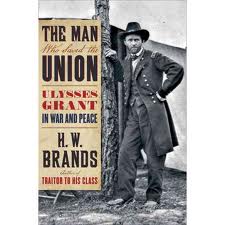
Historian Brands takes nothing away from the great emancipator. To the contrary, he highlights Lincoln’s wisdom in plucking Grant from the western theater of the Civil War and rapidly promoting him to command all Union forces.  Brands forcefully makes the case for Lincoln’s stubborn confidence in General Grant amid repeated periods of doubt, chaos and defeat. Following the war, Lincoln relied on General Grant to carry out the challenge of reconstruction it’s the South including its return to civil order.

Spielberg’s  Lincoln, is based in part of Doris Kerns Goodwin’s book Team of Rivals.  Brands’ biography of Grant portrays how together, two of the greatest figures in American history, Lincoln and Grant, crafted an outcome that did indeed preserve the union. Ironically, through an act of fate, it was the hand-picked military general who carried out the brilliant politicians foresight. The movie Lincoln, and the books Team of Rivals and The Man Who Saved The Union embrace the same cast of historical figures.  Following a biographical review of Grant’s early and then wartime years, Brands continues his narrative after Lincoln’s assassination and the debacle of Andrew Johnson’s ascension to the presidency, leading to Grant’s election as president.

Brands leaves no doubt that General Grant, as the overseer of reconstruction while Johnson was president, used every tool within his power as commanding general, to carry out Lincoln’s philosophy toward bringing the rebel states back into the union. Grant’s zeal was equal to Lincoln’s regarding equality and the rights of full-citizenship for the recently emancipated slaves, while at the same time finding the way to keep the Southern States in The Union.   Lincoln ‘s death and the Johnson presidency made the task nearly impossible.  It was during this period that Grant came to fully understand and embrace Lincoln’s intellect which laid the foundation  for a Grant presidency that would bring into fruition Lincoln’s dream.

General Ulysses Grant, the man who disavowed politics and  as General in Chief refused an office in Washington, casts aside his disdain for public office and accepts the nomination of the Republican Party for President of the United States. It is Grant who carries forth the Lincoln legacy by navigating  passage of the, Fourteenth and Fifteenth Amendments to the Constitution through a bitterly divided congress.  In order, these amendments granted equal citizenship under the U.S. Constitution and created the voting rights act.  Brands details Grant’s deft handling of reconstruction during his two terms in the White House utilizing diplomacy and the military to neutralize the Klu Klux Clan and other White Citizens Organizations.  You see in Grant’s ability do deal with the disparate forces in congress much of the same political savvy wielded  by Lyndon Johnson over a half century later!

I caution readers not to look here for a battlefield  history of the Civil War although there is substantial detail on the capture by Grant of Fort Donelson and Fort Henry in the west and the epic battle at Spotsylvania in Virginia.  While the military overview of the war is complete, this book is mainly about Grant, the man, the general and the president.  You will find many of Lincoln’s Team of Rivals still in play while Grant begins his ascendency and assumes the presidency.

Team of Rivals by Doris Kerns Goodwin is an obvious read before seeing Lincoln.  The Man Who Saved The Union by H.W. Brands is a must sequel.  Brands is also the author of the great FDR biography Traitor to his Class.
BAILOUT- WHERE DID THE TARP MONEY GO? EYE-OPENING, FRIGHTENINGLY PERSUASIVE

Neil Barofsky’s book  BAILOUT An Inside Account of How Washington Abandoned Main Street while rescuing Wall Street, leaves no doubt that in his mind the American taxpayers have struck out and the big banks continue their winning streak. He also casts a large vote of no-confidence in Treasury Secretary Tim Geithner.


From December 2008 until March of 2011 Barofsky served as the Special Inspector General in charge of the oversight of TARP ( SIG-TRAP).  The primary purpose of  SIG-TARP, created by an act of Congress, was to monitor the flow of TARP funds to prevent fraud and misuse of the appropriations.  Barofsky,  appointed by President Bush was later re-appointed by President Obama. His three years of overseeing and reporting to Congress on the administration of TARP played out in an almost daily adversarial relationship with Treasury Secretary Geithner.

In a book, the first chapter of which is titled  Fraud 101! , Barofsky’s conclusions come as no surprise to the reader.  In a prescient view on the day that he accepted the assignment he writes, ” I had no idea what I was in for and what I’d learn. I hadn’t yet understood the degree to which the entire crisis was unleashed by the greed of a small handful of executives who exploited a financial system that guaranteed that no matter what risks they took, they’d be able to keep the profits and lavish pay those risks generated with the assurance that if their outsized bets went wrong, the U.S. taxpayer would cover their loses. ” 

BAILOUT  is well written, to the point and Barofsky  successfully reduces complex issues in layman’s terms.  The book is also a lesson in how Washington insiders operate and why the system is broken. It is a disturbing read, not only because of  enlightenment about what went wrong with TARP, but moreover, Barofsky makes a case that nothing has changed and that the banking system is heading back down the same disastrous road. It is important to remember that the author resigned from his position and was not fired, which adds objectivity to the writing

Barofsky holds out little hope that the watered down Dodd- Frank legislation will make a difference. “As recent history has repeatedly shown, through massive campaign contributions, relentless lobbying, and multi-million dollar payouts awaiting government officials who join Wall Street firms, no legislation can confer the necessary fortitude upon the regulators. ”

Not an optimistic outlook for the nation’s ability to deal with financial institutions that are “Too Big To Fail,” particularly when some used TARP money to purchase additional banks!

BAILOUT is an important read, particularly during this election cycle.   Ironically TARP is not a campaign issue but Barofsky leaves little doubt that ” To Big To Fail” remains a looming disaster for the U.S. economy and American taxpayers.

Another important book on this general subject is Reckless Endangerment by Gretchen Morgenson and Joshua Rosner. See gordonsgoodreads October 19, 2011.


COMING TO GGR

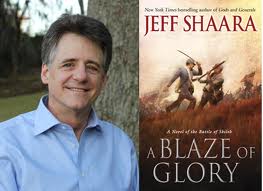
Two new books on subjects frequently followed by GGR. Jeff Shaara’s A Blaze of Glory, a novel of the Battle of Shiloh and BAILOUT  by Neil Barofsky an inside account of the Wall Street bailout.

IN THE GARDEN OF BEASTS. A DIPLOMAT AND HIS DAUGHTER DURING THE RISE OF NAZI GERMANY. ECHOES OF CABARET!

 This work of non-fiction  by Erik Larson is a remarkable  historical perspective  of  William E. Dodd, U.S. Ambassador to Germany during Hitler’s rise to power.

With the ear of FDR,  Dodd is given the posting to Berlin over the objections of Secretary of State Hull and the insiders of the ” Pretty Good Club,” who ruled the bureaucracy at the U.S. State Department prior to WW II.   Dodd further distanced himself from “ the club” with his frugality, conservative approach and his unwillingness to bend the truth in his actions in Germany and resulting communications with his superiors.  Dodd was a Diplomat by accident. He was a scholar, a Jeffersonian Democrat, a farmer who loved the history of old Germany where he had studied as a young man. He was shocked by the changes taking place  as Hitler rose to power.

Dodd and his family arrived in Germany in 1933.  His daughter Martha, abandoning a husband in New York,  joins her father,  brother Bill, Jr. and Dodd’s wife as the family establishes residency in Berlin. While Dodd is hard at work trying to understand Hitler and the Nazi Party, Martha joins the social whirl and conducts affairs with what became dozens of lovers of all rank in the diplomatic circle. On the contrary, Bill, Jr. and Dodd’s wife maintain a low profile, while Ambassador Dodd tries to fathom the complexities of a sea change in the German government.

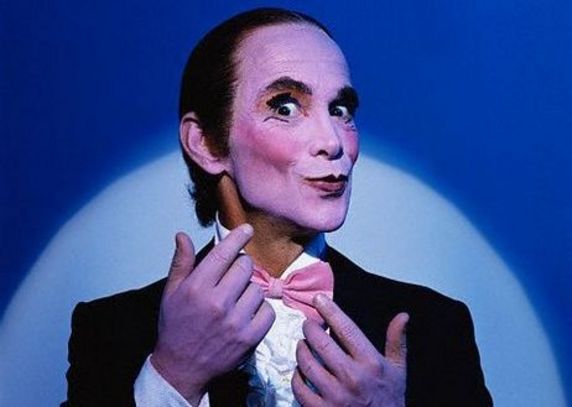
Erik Larson’s work is engrossing from the first page. Beginning with the faint echoes of  jack-boots, through Ambassador Dodd’s perception, you envision the steps of the evolution of  the coming blood and terror of Nazism.  Meanwhile, Martha adopts the party line of a “New Germany!”  At the turn of every page, I could faintly hear Joel Grey in clown make-up singing from Cabaret, Wilkomen, I am Cabaret. Do you feel good? Leave your troubles outside, in here, life is beautiful!

Life was not beautiful and Dodd knew it. Germany was living an orchestrated lie.  He stood firm against the rising abuse, publicly chided the Third Reich and enraged his detractors in Washington, D.C.  Said Secretary Hull, “Why can’t you just get along!” Dodd would have no part of the establishment in D.C. or the Third Reich. His was a voice crying in the wilderness of  Nazi propaganda and U.S. isolationism.

 Then came the “ Night of the Long Knives.”  Hundreds of Hitler’s adversaries were murdered, in their homes, hanged in prisons,  guillotined, while others were shot and left to die only to be discovered by their children.  Hitler deemed his victims enemies of the state, justifying cold blooded murder.The persecution of Jews had already begun. Kristallnacht was on the horizon. The policy of appeasement toward Hitler, which Dodd fought so hard against, continued. No government recalled its ambassador or filed a protest. This was the beginning of Hitler’s rise to total power. To no avail, Dodd warned of a march toward war. Ironically, Roosevelt shared his view but most Americans had no stomach for involvement in European conflicts. In the end, FDR acquiesced to Dodd’s detractors and a member of the “Pretty Good Club” replaced him.

In The Garden of Beasts reads like a novel.  The multiple themes are intriguing.  It is no surprise that it rose to the number one ranking on the New York Times Bestseller List. Martha wrote her own memoir of her life in Germany titled Through Embassy Eyes. Marthaand Bill, Jr. edited and published Ambassador Dodd’s Diary.

 How could the world stand by and watch this all happen?  Read In The Garden of Beasts and you will discover the book is aptly titled. Contrary to the Cabaret lyric, life was not good, it was merely an illusion, clown face and all. 

Erik LArson also wrote The Devil in the White City.


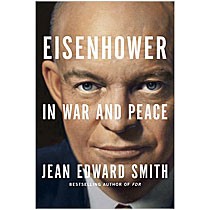
EISENHOWER IN WAR AND PEACE-ANOTHER GREAT VICTORY FOR JEAN EDWARD SMITH!

The passage of time is the greatest gift to the biographer possessing the brilliance  and patience to seize upon that window to bring to readers a modern-day perspective of iconic historical figures and events. 

Jean Edward Smith has accomplished in EISENHOWER IN WAR AND PEACE, exactly what he offered his readers in his remarkable works Grant and FDR. Historian and biographer Jean Edward Smith is rightfully in the company of  historians Robert Caro, Edmund Morris, David McCullough and Max HastingsEISENHOWER IN WAR AND PEACE, places Eisenhower in  an objective perspective within his military career, the presidency and his personal life.  Don’t look for an in-depth history of D-Day.  While there is plenty of  detail of  the European Theater in WW II, this book steps back to place the  enormity of the impact of Eisenhower’s  approach to leadership  in a sweeping overview of the war in Europe .

Smith takes a similar approach to the eight years of Eisenhower’s presidency and the manner in which he organized and staffed the White House, dealt with both political supporters and opponents and world affairs.  There is vivid detail on decisions, relevant today, (The building of the Interstate Highway System as a stimulus to help reverse a post Korean War recession), school desegregation in Little Rock, Vietnam, Formosa, China and the Cold War. 

Readers of EISENHOWER IN WAR AND PEACE will be left with no doubt about Ike’s  intimate relationship with Kay Summersby and the impact on his marriage to Mamie. Smith writes this narrative in a most factual manner and details the openness with which Eisenhower and Summersby were together publicly and privately throughout the war. Smith also details Eisenhower’s  changing relationship with his wife Mamie over the course of four decades.

The book clearly reveals that Eisenhower’s brilliance as Supreme Commander of the Allied Expeditionary Forces was in his political dexterity in contrast to his grasp of battlefield strategy. With the exception of marginal success ( that may be a generous assessment) in the North Africa Campaign, Eisenhower had no battlefield command experience prior to D-Day!  However, his ability to bring discordant bigger than life individuals together and promote cooperation ( Churchill, FDR, Montgomery, Patton,  Bradley, de Gaulle)  was exactly why FDR chose Eisenhower over Marshall to lead the European Campaign.

I have previously read considerably about Eisenhower, but just as in Smith’s  biography Grant, I now have a  view through a twenty-first-century lens of the two famous generals who became two-term presidents.  Many popular conceptions and mis-conceptions are clarified.  Smith peels away the Eisenhower myths and reveals his brilliant mind and the thought processes by which as a leader, not a battlefield commander, Eisenhower established his legacy.

Some interesting insight from EISENHOWER IN WAR AND PEACE:

Ike was not the first president to embrace golf.  Actually Woodrow Wilson secretly played more rounds during his president than Eisenhower!  However, Eisenhower made no secret of his love of golf and is credited with the explosion of the national popularity of the game.

In his first term in office, Eisenhower increased the budget of the National Institute of Health ten-fold.

Eisenhower may have prevented World War III by forcing Britain and France to withdraw from its invasion of Egypt over the closing of the Suez Canal.

A coalition of Democrats led by Senate Majority Leader Lyndon Johnson was responsible for the passage of most of Eisenhower’s domestic programs.  Ike was considered “too liberal ”  by the old guard right-wing of the Republican Party.

It was Eisenhower who  carried out Harry Truman’s earlier attempts to desegregate all branches of the U.S. Armed Forces.

At the end of the war Ike wrote in a letter to his boss General Marshall that he planned to return to the U.S., divorce Mamie and marry Kay Summersby. Marshall in the strongest terms admonished him not to destroy his reputation and career! Eisenhower took the advice. Later, out of respect for Eisenhower and fearful that if the letter became public it would become a campaign issue in 1952,  President Truman, who was at that time at  political and personal odds with Ike, ordered the letter destroyed!

There is much, much more! Look for many literary honors for EISENHOWER IN WAR AND PEACE

THE FIRST ” CITY UPON A HILL ” EDEN ON THE CHARLES THE MAKING OF BOSTON

The contemporary reference to  City Upon A Hill  is Ronald Reagan’s famous quote, Shining City Upon A Hill.  His comment was sourced all the way back to Massachusetts Bay Colony Puritan founder John Winthrop. When  Winthrop spoke these memorable words ( minus the word shining) , he was poised to disembark on the American shore on land that is now Boston. The man who eventually became governor of the Massachusetts Bay Colony accurately predicted that the new community would be a City Upon a Hill to be watched by the world. I think Winthrop would have liked Reagan’s addition of shining!

Winthrop’s inspiration came from Matthew 5:14. In the Sermon on the Mount, Jesus tells his listeners: You are the light of the world. A city on a hill cannot be hidden. Neither do people light a lamp and put it under a bowl. Instead they put it on its stand and it gives light to everyone in the house. In the same way, let your light shine before men, that they may see your good deeds and praise your Father in heaven. From this scripture comes the ethos of Michael Rawson’s Eden On The Charles THE MAKING OF BOSTON, a work of non-fiction that was a finalist in the 2010 Pulitzer competition.

Eden on The Charles is very different from a typical historical perspective of the founding of the Massachusetts Bay Colony.  It is the story of how over two and one half centuries a community with an enormously varied socio-economic strata came together to build America’s first great city in harmony with the natural environment.  It is a study of how within a political structure of fierce independence and private enterprise a community used the forces of government to act in behalf of the well-being of the citizenry and the natural environment.  Boston was indeed the very first American city to recognize that the  new world’s resources were not unlimited. From the mid-seventeenth century establishment of Boston Common as public land for everyone’s benefit there came a cascade of new ideas and concepts that established development patterns for cities throughout America.  These far-sighted yet fiercely independent citizens of varied rank established a pattern over two centuries wherby Boston Common went from cow pasture to the nation’s first public park,  Boston Harbor was saved from encroachment and destruction, greenways were established to prevent urban sprawl,  huge public parks were created on the outskirts of the city, and perhaps most important of all as early as the 19th century Boston built a public water supply providing free water for the city’s burgeoning population. It also built a public sewer system. There is some irony in the fact that the wealthy industrialists who became the Boston Brahmins were many of the most ardent environmentalists of the time. One of Boston’s early reformers and leaders of the public water supply movement, Walter Channing said,  Whatever a society judged to be essential to the health and happiness of its people must never be the responsibility of a profit-driven entity. It must ,instead, be made the responsibility of government.  Channing’s 175 year-old concept still rings loudly in contemporary political discourse.

Eden On The Charles  falls within a text-book reference and yet it reads so easily that concepts which are now fundamental  to the nation’s conversation regarding the preservation of the natural environment are easily understood and eye-opening. My being a New Englander and having spent a considerable amount of time in Boston made the book even more vivid.

In the closing paragraph of Eden On The Charles Rawson issues a wonderful challenge.  We should aim our sights high, as nineteenth century Bostonians did, and work to new environmental relationships that are worthy of a City Upon A Hill.

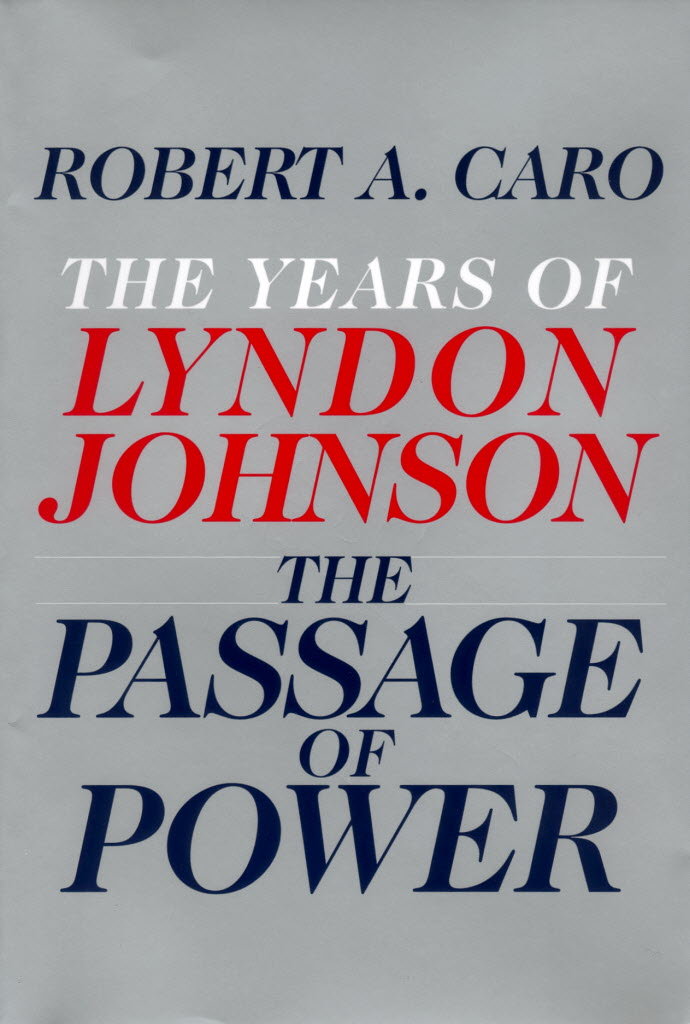
ROBERT CARO’S PASSAGE OF POWER-HISTORICALLY IMPECCABLE-RELEVANT TODAY

My immediate take-away after completing all 605 pages of Robert Caro’s The Years of  Lyndon Johnson The Passage of Power  is both awe and marvel at Lyndon Johnson’s  accidental presence at the pinnacle of power from November, 1963 through 1965.  If Lyndon Johnson was president or senate majority leader in today’s political environment, for better or worse, there would likely be no gridlock in Washington D.C.  Never in the modern presidency has more of significance been accomplished in such short period then what transpired in the year and a half  of the Lyndon Johnson  presidency following the assassination of President  John F. Kennedy.

This incomparable work by Caro illuminates, for both the student of history and the observer, that regardless of a like or dislike of his tactics or the man himself, Lyndon Johnson’s accomplishment in moving historic legislation through a gridlocked congress is beyond comparison.  The Civil Rights Act of 1964 and the Voting Rights Act of 1965 turned years of political rhetoric and decades of delay into law, and Lyndon Johnson made that happen during a most improbable time in  American history.  LBJ with all of his ruthlessness,  cajoling, bravado, insecurity, impatience and meanness did what no other president had done.  Deeply seeded in the memory of the poverty of his youth, LBJ’s empathy for the poor and underprivileged surfaced, often with a vengeance, to overcome the impossible obstacles standing before these two pieces of landmark legislation. For this reader, understanding how the  aforementioned was accomplished became the centerpiece of this Pulitzer destined work.  But, there is so much more.

The mutual hatred that existed between Lyndon Johnson and Robert Kennedy and the inordinate effect that it had upon a functioning government is made manifest throughout the book. Robert Kennedy’s unsuccessful multiple efforts to convince Johnson to withdraw from  his brother’s selection of Johnson as the vice-presidential candidate in 1960 depicts a near maniacal RFK. The relegation of LBJ’s vice-presidency to a meaningless and often humiliating position often punctuated by RFK’s ” corn pone vice-president” references are almost unimaginable and would normally be thought relegated to a school-yard bully.  While LBJ is often lionized in Caro’s pages, Robert Kennedy is given faint if any praise at all in this carefully researched book.

Caro details the brilliance with which Johnson handled the passage of power upon Kennedy’s assassination . How LBJ managed the emotional devastation of the Kennedy team  is a remarkable story in itself. He convinced the great majority of them to stay on because , ” I need you , the country needs you and John  Kennedy’s legacy needs you.”  The overnight transformation of the ruthless master of the senate and insignificant, irrelevant  vice-president to become the nation’s hope, healer and steady hand is so magnificently detailed by Caro, so real, that it places the reader in the midst of a current event, not a bygone era!

You will learn from Caro’s research sources that  it was widely speculated that Robert Kennedy’s inability to move beyond the grief over his brother’s death may have been tied to a feeling of self guilt; that he and the president’s pursuit of  the assassination of Fidel Castro ( Operation Moongose) and the Mafia  may have in  fact been  a direct retaliation that killed President Kennedy.  Caro, despite the Warren Commission report, raises that speculation to the level of plausibility.

The Passage of Power  at times elevates Johnson to the heroic level but the narrative is equally balanced with the reality of the often brutal, threatening and unforgiving methods by which LBJ accomplished his goals.  From Johnson’s euphoric highs and the compassion demonstrated for minorities and the downtrodden surrounding of the passage of the Civil Rights and Voting Rights Acts, Caro, concludes Passage of Power with bombs dropping upon helpless villagers in Vietnam.  That era is left for another telling.

This is the fourth in Caro’s  The Years of Lyndon Johnson. The Passage of Power will have even greater meaning if you have already consumed The Path to Power ( 1982), Means of Ascent ( 1990) and Master of the Senate ( 2002).  However, Caro does such a good job in placing The Passage of Power in the context of Johnson’s lifetime that it is easily stand-alone read.  Throughout the book, Caro makes numerous references to another great work on Lyndon Johnson which I wholeheartedly commend to you, Lyndon Johnson and the American Dream by Doris Kearns Goodwin. I also recommend This Time,This Place, by Johnson aid and confidant Jack Valenti, who later left government for a distinguished career as the president on the Motion Picture Association of America. ( Check Gordon’s Good Reads Archives).

A  Robert Caro book of equal substance and a Pulitzer honoree  is his The Power Broker, Robert Moses and the Fall of New York.   Use of power to accomplish common good or abuse of power for personal gain; both books in a different time and place tell a significantly similar story.

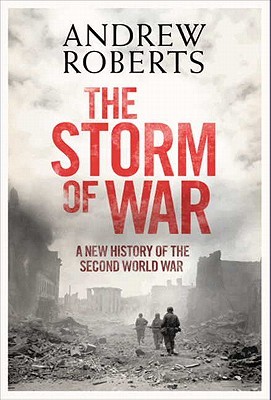
THE STORM OF WAR- PROFOUNDLY ACCOMPLISHED OVERVIEW OF WORLD WAR II

Andrew Roberts The Storm of War is without question the best and most complete overview of World War II that I have read. Extraordinary research, crammed with detail and revelations that  even well read students of the war will find enlightening.

Roberts, Britain’s  premiere military historian, writes with clarity and transforms this enormous subject into an understandable read that  links nearly every facet of the war to a logical conclusion. His penchant for detail and numbers easily falls into place making the narrative more exciting, eye-opening and impactful.  He clearly demonstrates that this two theater war,   based upon what he terms “false ideologies,”  is what led to the ultimate downfall of both Germany and Japan. Beginning with the rationale for Hitler’s failure to seize a victory at Dunkirk, the fall of France ( more French fought on the side of the Axis than the Allies,)  an explanation as to why Operation Sealion ( the invasion of Britain) was never carried out , the catastrophic blunder of Germany declaring War on the United States giving Roosevelt the green light to enter the war in  Europe, Roberts courses each twist and turn and his story is  often explosive and emotionally disturbing.  

Aficionados of military statistics are led through details of  comparison of  weapons, tanks, airplanes, submarines, troop strength.  In 1943, just over a year after Pearl Harbor the United States was building  98,000 war planes per year compared to Germany’s 40,000.  The Russians suffered 2-million casualties at Stalingrad and replaced the loses in a month. Germany lost 238,000 but had exhausted its reserves. His use of facts, rather than confuse, come together to strengthen the forcefulness of the book.

All of the major players are front and center, Churchill,  Roosevelt, Hitler, Hirohito, Eisenhower, Montgomery, Nimitz, Rommel, and the Nazi  cast of Field Marshalls, SS Officers plus  Goebbels, Goring, and Rundstedt. The author’s denunciation of the murder of millions of Jews is carefully calibrated and leaves absolutely no avenue for anyone involved to escape responsibility. 

Roberts brings insight into the Eastern front and Russia’s stalwart defence of Moscow, the  battle of Stalingrad and the siege of Leningrad.  The author outlines the impact of the failure of Hitler’s Operation Barbarossa ( the conquest of Russia based upon his ideological hatred of  Bolshevism.)  To highlight the fallacy of Hitler’s fanatical focus on Russia, the German’s lost 2.4 million men killed in Operation Barbarossa as compared to 202,000 fighting the Allies on the Western front. Despite these losses  on the Eastern front, Hitler maintained a “stand and die policy” nearly to the end. Ideology again!

The war in Pacific receives equal attention. From Pearl Harbor  through the dropping of the atomic bombs the reader learns why the great battles in the Pacific were won and lost in many cases  because the ideological leaders in Japan, like Germany, refused to listen to the generals on the ground. “The awakening of the sleeping giant.” ” The miracle at Midway.”

If I were asked to recommend just one volume as an overview of the Second World War my choice would be The Storm of War. However, this work will be appreciated even more  by those who have read extensively individual works by other renowned World War Two Historians such as Max Hastings , who is referenced throughout the volume by Roberts.

I met Andrew Roberts at a lecture in New York City. It became immediately clear that The Storm of War  would require reading every page, packed with facts and few wasted words. No quick read here and definitely not a historical novel. However, despite the immersion in detail, this epic story is profound and the conclusions logical because in the end Andrew Roberts seems to have missed nothing.

For W Roberts history on the World War II Western front, read Masters and Commanders: How Four Titans Won The War in the West ( 1941-1945)


NEW FROM ROBERT CARO- GREAT NEW YORK TIMES PREVIEW PERSPECTIVE

I am an unabashed fan of Pulitzer Prize winning historian Robert Caro.  Ever since first reading The Path to Power, the beginning of his epic study of the life of Lyndon Johnson. My second and equally enlightening exposure to Caro’s work was The Power Broker his Pulitzer prize-winning biography of Robert Moses. Next month the fourth book in Caro’s study of Johnson , The Path to Power will be published, in a process that began in 1976. Caro’s other Johnson volumes are in order of publication are Means of Ascent and Master of the Senate.

I commend to all Robert Caro fans a marvelous article by Charles McGrath published in The New York Times on April 14 putting all of Caro’s works in an insightful perspective.  A most worthwhile article for those of us anticipating The Path to Power.

SEYMOUR HERSH GOT IT RIGHT IN 1997! DARK SIDE OF CAMELOT

Pulitzer Prize winning journalist Seymour Hersh received heavy criticism for his 1997 book The Dark Side of Camelot ,which is filled with assertions regarding the sexual exploitations of JFK , both in and outside the White House. Some of his critics went so far as to say  Hersh “ made it up.”   Well, it appears not that he was right on!

Mimi Alford’s Once Upon a Secret: My Affair with President John F. Kennedy and its Aftermath largely substantiates  Hersh’ s reporting in The Dark Side of Camelot, including the pool parties and the interns.   Hersh’ s writing also includes much inside detail on more substantative political subjects including the Bay of Pigs Invasion and  Kennedy’s  relationships with mob boss Sam Giancana.  

Hersh may be best known when in 1969, he broke the story of the My Lai Massacre, in which hundreds of unarmed Vietnamese civilians were murdered by US soldiers in March 1968. The report prompted widespread condemnation around the world and reduced public support for the Vietnam War in the United States.  He received the Pulitzer Prize for International Reporting.

So if you have doubts about Mimi Alford’s account and want to establish a  base line reference add The Dark Side of Camelot to your reading. Truthfully, in The Dark Side of Camelot the sexual exploits are a side bar to a very well written inside look at the Kennedy Administration and all of the players in the cast.  A “ good read.”