Doris Kearns Goodwin Gets Another President’s Week Nod

Yesterday we noted Doris Kearns Goodwin’s No Ordinary Time, during our President’s Week picks.  Today she gets another nod with Team of Rivals  the wonderfully chronicled story of Lincoln’s bringing into his cabinet his four leading opponents for the Republican Party presidential nomination in 1860.  William Seward was named Secretary of State, Edwin Stanton, Secretary of War, Edward Bates, Attorney General and Salmon Chase, Treasury Secretary.  

What is considered a brilliant move by some historians was not without its acrimony and behind the scenes dealings not altogether helpful to the new president.  Goodwin is brilliant in telling this story as it unfolds during the lead-up to the Civil  War.  It is a wonderful look at this period of American History from inside the president’s cabinet and offers tremendous insight into Lincoln’s thought process during the war.

Like to much of Goodwin’s writing and research Team of Rivals is relevant in its lessons for today.

It is no surprise that Team of Rivals brought Goodwin another Pulitzer.

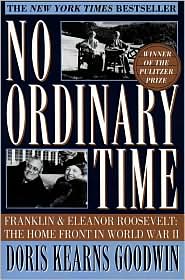
No Ordinary Time

 This Pulitzer Prize for History winner  dates back to 1995 but if you love history and have not read this one you have missed one of the best on the  Franklin and Eleanor Roosevelt years.  The insight that Doris Kearns Goodwin has developed in No Ordinary Time is truly riveting.   Linda Gordon writing for the Boston Globe in 2005 said it so very well. ” The Roosevelt marriage is endlessly gripping because it was so consequestial….The reader feels like a resident in the White House.”  This volume is  one of Goodwin’s very best.  You will enjoy every page. It is so relevent and the characters are so vital that you might believe that Franklin and Eleanor were alive today.

President’s Week

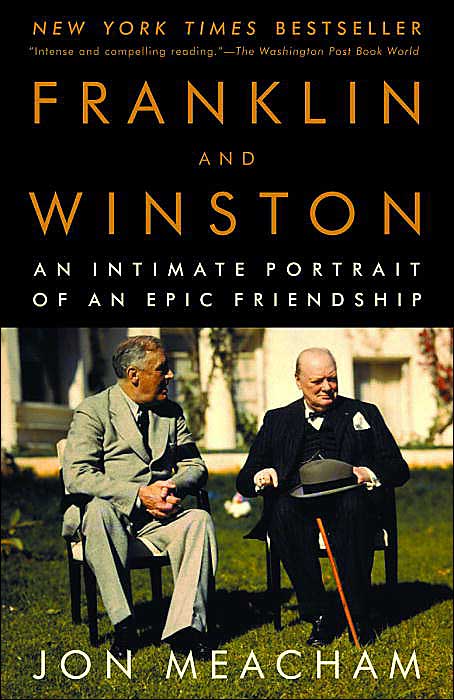
Beginning on President’s Day, tomorrow, I am going to post my thoughts on books I have enjoyed regarding the presidency.  They will not all be biographies or autobiographies but rather some very interesting takes on the presidency itself and how relationships have had lasting impact on our democracy. As an example, one of the most fascinating books I have enjoyed regarding the modern presidency is Franklin and Winston by Jon Meacham.  This incredible personal relationship may have saved the free world!

I would also love to hear your thoughts on great books you have enjoyed relating to the presidency. Just scroll down to the comments and join in.

Empire of Liberty-More Timely Than Ever

With the revolution for freedom and democracy sweeping the Middle East, I can think of no better backdrop to recommend Empire of Liberty by Pulitzer Prize Historian Gordon S. Wood.   The work is part of the Oxford Series on American History and covers the period 1787 through the War of 1812.

This scholarly book traces the evolution of  the American Republic from the end of the Revolutionary War  into the great debates over the writing and ratification of the United States Constitution including the paradox of slavery, states rights, foreign influence and the very nature of the presidency.

What quickly becomes evident is the enormity of the issues surrounding establishing a society and government free from the old ways of European monarchies. Washington, Jefferson, Madison, Hamilton play leading roles in establishing a workable, permanent and cohesive  national government replacing the  looseness of the Articles of Confederation. 

Wood carefully brings alive individual contributions  and  the give and take,  often antagonistic, to reach compromise.  Jefferson and  Madison are  Wood’s  central figures with the contributions of John Adams  in my view somewhat marginalized.   Adams has his day in the sunshine in David McCulloch’s  biography, John Adams.

The more background the reader has in American history the easier the immersion into Empire of Liberty but that should not dissuade anyone with a love of our country’s history from tackling this landmark work. Despite the depth of the subject Wood has made his book an enjoyable journey and there is a clear and logical roadmap for the reader.  Yes, Empire of Liberty is a good read!

RUSTPROOF! Holden Caulfield, Scout Finch, Jody Baxter

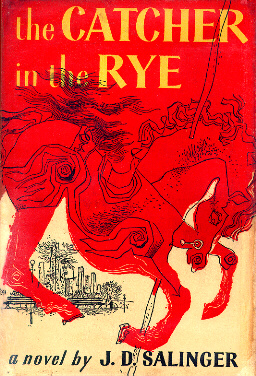
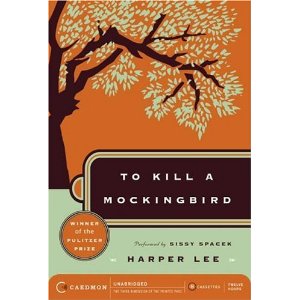
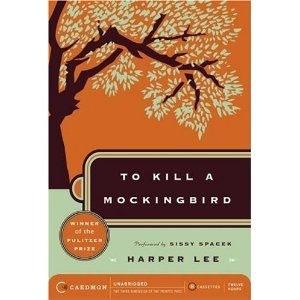
The newly released J. D. Salinger biography written by Kenneth Slawenski just a year after Salinger’s death will bring Catcher in the Rye (1951) and Holden Caulfield to the forefront again.    The same is true of the recent revived interest in Harper Lee’s To Kill a Mockingbird (1960) on the occasion of last year’s 50th anniversary of its publication.  

Salinger’s death prompted me to revisit Catcher in the Rye and the publicity surrounding To Kill a Mockingbird’s anniversary placed me back in the center of those pages.  A wonderful experience reading these works as an adult!

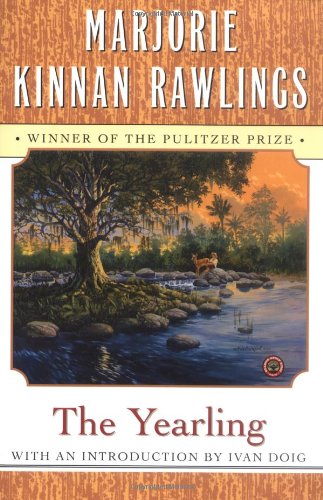
While hunting for Catcher in the Rye in the   “Classics” section of my bookstore I found another gem, one which I  had not read,  The Yearling, written in 1939  by Marjorie Kinnan  Rawlings. 

The novel won a Pulitzer and was an instant best seller. Jody Baxter, growing up in back woods Florida “cracker” country with a father and mother preparing him for a life, which would be as difficult as their own. Originally it was labeled a children’s book but do not be fooled by the title, its message, descriptions and dialogue is a worthy read for all ages. The film The Yearling was released in 1946 and added tremendously to Rawlings fame.

The reference to “rustproof” in this  blog title is credited to Ivan Doig, author of House in the Sky, who wrote a wonderful prologue for the The Yearling’s paperback re-issue in 2002.  He is a well-known novelist raised on a ranch in Montana.

I believe the term “rustproof” is a wonderful description of so many great reads we have overlooked or forgotten. This blog aims to re Kindle the memory! Rawlings first novel; South Moon Under was published in 1933.

A New York Trilogy

Several years ago I had the privilege of an e-mail communication with Mike Wallace the co-author of Gotham just after I read the book. I shared my enthusiasm for this incredible volume and when I told him I actually read the 1236 pages sequentially he allowed that I might be the only person in captivity who did that!  This Pulitzer winner, written with Edwin G. Burrows, is the quintessential history of New York through the end of the 19th Century.

This preamble places in perspective my enthusiasm for New York the novel by Edward Rutherford.  Rutherford tells the New York story from the time of the city’s origins through the beginning of the twenty-first century through the lives of the fictional Van Dyck and Masters families. The story masterfully unfolds generation by generation.

Rutherford is every bit as captivating as is the standard-bearer of historical novels James Michener.  Every cell of Rutherford’s characters are believable as they wind, twist, love, fight, succeed and negotiate their lives through all of New York’s epic development. The Dutch settlement, Native Americans, independence, immigration, the classes, Civil War, financial booms and busts, politics, loyalists, revolutionaries, unions, heroes and villains, the swells and near-do-wells, all play a role.  You can taste the oysters at Frances Tavern!   Rutherford’s New York is comparable to the writing and character development in Michener’s Centennial, Chesapeake and Texas with the exception of Michener’s penchant for geological evolution! New York has earned a place on my Deserving of a Pulitzer shelf! New York will not give you the detail of Gotham but in living with the generations of the Van Dyck and Masters Families, you will  personally experience the story of the great city. 
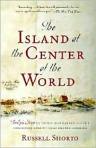
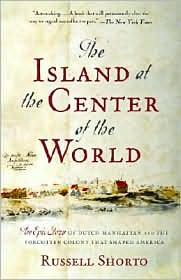
Complete your New York historical journey  by gaining a full understanding of the Dutch societal impact on the founding and ethos of the city by reading The Island in the Center of the World by Russell Shorto. This is a necessary read for all lovers of New York told through the voices of those that built the city and opened the New World long before the Pilgrims. You will come away with a deeper understanding of Peter Stuyvesant  an all of the other prevailing Dutch names and places rich in New York’s history.  You will learn why New York has always been open to new people, ideas, commerce and opportunity. Best of all you will enjoy more great storytelling.