Gordon’s Good Reads appears in the July-August issue of VENU Magazine now available at choice cultural and retail establishments in Fairfield and Westchester Counties. This issue of VENU also contains a fabulous review of the Woody Allen movie Midnight in Paris among other great articles on art, automobiles, entertainment and fashion. Enjoy!
Category Archives: Uncategorized
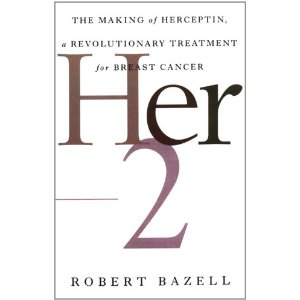
Her2 by Robert Bazell. Similarities to the Avastin Controversy
 A book on the subject of breast cancer does not properly fall under the category of Good Reads and therefore for the purpose of this blog allow me to change the appellation to Important Reads.
The Alliance for Cancer Gene Therapy is a national organization based in Connecticut that funds research and clinical trials to find new treatments for all types of cancer through gene and cell therapy. (acgtfoundation.org) The organization has in excess of $25-million dollars invested in research. A friend at ACGT brought to my attention an important book, written 15 years ago by NBC’s Chief Scientific Journalist Robert Bazell. The work is Her2 The Making of Herceptin, A Revolutionary Treatment for Breast Cancer. Her2 is the name of a cancer-causing gene. The book renews its relevance today in light of the current controversy over FDA withdrawal of Avastin as a treatment for advanced breast cancer.
Her 2 is the story of the development of the breast cancer treatment drug Herceptin, developed in conjunction with and manufactured by Genentech, the same company that is making news today with Avastin. Like Herceptin, Avastin was taken to human clinical trials and made available to cancer patients after a long and arduous process. The FDA has withdrawn Avastin as a treatment for advanced breast cancer, and emotions ran high as the FDA listened to testimony from patients. “I owe my life to Avastin,” said Patricia Howard, age 66, of New York, who has been treated for breast cancer since 2005. “I’m not just a piece of anecdotal evidence. I’m a wife, mother, sister, aunt, friend, and grammy.” Sadly, you will find dozens of similar quotations in Her2 before Herceptin was made available to terminally ill breast cancer patients.
If you have a personal connection with breast cancer, I urge you to read Her2, The Making of Herceptin. Bazell places in laser focus the science, politics, ego’s, emotion, corporate and government bureaucracy, jealously and the economics of getting a drug from the laboratory to market. It is both a clinical and human story written with extraordinary care. It is a very human story indeed.
When you read Her2, you will recognize in the Herceptin story the same emotions as being played out with Avastin and you will find it difficult not to share the frustration of those scientists, patients and doctors who are desperately waiting for new cancer fighting drugs to become readily available.
THE FINAL STORM-JEFF SHAARA
During this week as we reflect upon the 67th anniversary of D-Day I completed the fourth book in Jeff Shaara’s historical novels on World War Two.

The Final Storm, which has just been released is the story of the War in the Pacific culminating and with the greatest emphasis on the battle for the island of Okinawa. Okinawa was to be the last stepping stone before an invasion of Japan. The Japanese land invasion was of course preempted by the decision to drop the Atomic Bomb.
Shaara , as always, magnificently tells his war epochs by placing the reader in the boots of the soldier, slogging through the life and death drama of war. It would be impossible to put down The Final Storm without the greatest empathy and understanding of the men who gave everything to defeat the Japanese, not only on Okinawa ,but on all of the Japanese held Pacific Islands. The book also provides dramatic personalized insight into the decision and the actual dropping of the Atomic Bomb on Hiroshima.
 The earlier books in this Shaara collection concern the North Africa Campaign and an introduction to Eisenhower and Rommel in The Rising Tide, the European Invasion and D-Day in The Steel Wave, and the great march across Europe including the Ardennes and the Battle of the Bulge in No Less Than Victory.
It would be difficult for anyone with an interest in WWII to overlook these four volumes.
Shaara’s portrayal of the reality of war through the prism of historical fiction is in my view unequaled. Then again, having read his father Michael Shaara’s Killer Angels, you know it is in the genes.
If your interest lies with the Civil War you will want to read Jeff Shaara’s Gods and Generals and The Last Full Measure. Also do not overlook his great novel on the American Revolution, Rise to Rebellion.
Here is a promise. After reading a Shaara novel you will regard all service men and women with awe, respect and gratitude. An important thought during this period encompassing Memorial Day, D-Day and the Fourth of July.
CHANGES AT THE NEW YORK TIMES! WHAT WOULD MCGOWAN THINK?

The announcement of Bill Keller stepping down as Executive Editor of the New York Times makes reading McGowan’s Grey Lady Down even more timely! See my earlier post of May 15. Keller will be replaced by Jil Abramson. The news makes reading McGowan’s writing even more compelling. America needs a strong, vibrant, objective New York Times and time will tell if Abramson is up to the task. It will also be very interesting to read Keller’s work as an op-ed contributor.
VENU MAGAZINE PUBLISHES GORDON’S GOOD READS
VENU, the highly acclaimed Arts/Culture/Style magazine serving Fairfield County, Connecticut and Westchester County, New York has chosen Gordon’s Good Reads as a regular feature in this celebrated bi-monthly publication.

The current May/June, 2011 issue of VENU is available this week at leading arts, culture and style locations throughout the two counties. Gordon’s Good Reads appears beginning on page 20. The year-old publication noted for its excellent content and rich layout was co-founded by Creative Director Michael Woodside and Executive Director Tracey Thomas.
Among the features in the May/June issue of VENU are articles on music including Rod Washburn, The Norwalk Symphony Orchestra and Songwriter’s Showcase. Other features include Off the Vine in Spain, and a most enjoyable short story, Spontaneous Combustion by Stephen Rhoades. The Motoring section features Ferrari’s Little GTO and Boating highlights The Intermarine 55 Luxury Yacht.
Pick up a copy of VENU and you will quickly see why we are proud to be included in this excellent and prestigious publication.
WikiLeaks,The Brooklyn Bridge,Suspension
The New York Times revealed on Wednesday April 26th that the latest WikiLeaks distribution tells a story of plots to bring down the Brooklyn Bridge. “Al Qaeda has long had a fascination with suspension bridges, especially the Brooklyn Bridge. New documents reveal that before Sept. 11, 2001, methods for bringing down bridges were being taught at a terrorist training camp in Afghanistan, ” says the Times.
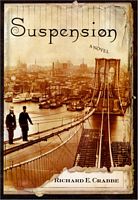
The longer I write this blog the more flashbacks I have to books I have read that connect with current events. If you are interested in reading of terrorist plots, sabotage and sophisticated murder mysteries written on the level of Caleb Carr and wish at the same time to connect with the glorious history and construction of the Brooklyn Bridge I commend Suspension, a novel by Richard Crabbe. You will also discover an important Civil War connection with the bridge.
Written in 2010, Crabbe builds his story around a murder mystery that leads to a plot to sabotage the bridge by seven former Confederate soldiers who labored for years to hatch a plot to destroy the bridge because of a deep hatred for the Yankees who vanquished them in the Civil War. The Brooklyn Bridge? Of Course! Washington Roebling the son of Brooklyn Bridge designer John Roebling was placed in charge of the project upon the death of his father. Washington Roebling was a distinguished Union Army Civil War officer having served with particular distinction at the Battle of Gettysburg. Thus Roebling’s ” Yankee-Bridge” became an even more meaningful target!
A wonderful mystery with vivid details on the construction and history of the most famous bridge in the world. Crabbe’s first novel qualifies as excellent in both plot and storytelling.
GOOD READS AT THE MOVIES
Two movies open in the next week that I am hopeful are worthy of the book Water for Elephants and the subject of many great reads the Lincoln assassination. Robert Redford’s The Conspirator opens on April 15 and Water for Elephants opens on April 22. Should be good films from good reads! I know, it is not always the case but lets be hopeful.
Civil War/ Lincoln Assassination/ Anniversary Week

 Today, April 12, marks the 150th anniversary of the beginning of the Civil War with the firing on Fort Sumter, South Carolina. April 15, Friday, marks the 146 anniversary of the assassination of Abraham Lincoln. Earlier this week I commended to you Jay Winik’s April 1865, an important work of non-fiction on the assassination and the tumultuous period that followed.
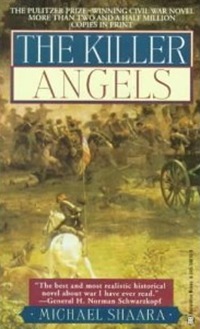
Hundreds of volumes have been written on the Civil War. On this anniversary I suggest to you three writings of fiction that I believe will give the reader the most vivid portrait of this monumental period in American History. If you choose to read them all, I would suggest the following order. Jeff Shaara’s Gods & Generals, Michael Shaara’s Killer Angels ( The battle at Gettysburg) and then Jeff Shaara’s The Last Full Measure. Jeff Shaara is the son of Michael Shaara.
These three historical novels describe the Civil War from the viewpoint of those who fought in and directed the great battles. You will be present at the siege of Richmond, at Pickett’s Charge and on Little Round Top with the 20th Maine at Gettysburg and at the Confederate surrender at Appomattox Courthouse .
The knowledge of the Civil War that you will gain from these three works of historical fiction is priceless!
Jay Winik, April 1865 The Month That Saved America
Robert Redford’s latest offering as a movie director, The Conspirator opens across the country on April 15, which is the 146th anniversary of the assassination of Abraham Lincoln. The movie encompasses the trial of four accused conspirators including Mary Surratt. The publicity surrounding the release of this film, which I intend to see, caused my immediate recall of Jay Winik’s fabulous 2001 book April 1865, The Month That Saved America.
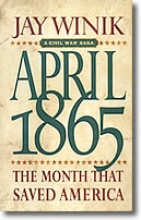
Winik’s insightful analysis of what really happened during that last month of the Civil War and following Lincoln’s assassination is frightening. He writes in detail of what occurred as the country fell into chaos and how a few statesman turned to the United States Constitution to maintain order and establish a transition not only of the presidency but for the country itself.
Whether you read April 1865 in conjunction with the movie or separately it is most worthy of the time of all who have a passion for American History.
FOR DAVID BROOKS, A DEBT OF GRATITUDE
The writing in the dust cover of David Brook’s The Social Animal concludes with these words ” The Social Animal is a moving and nuanced intellectual adventure, a story of achievement and a defense of progress. Impossible to put down, it is an essential book for our time. ”

That brief summary, though accurate, misses thousands of emotion packed paragraphs and words that help the reader understand the human condition and the conscious but more importantly the unconscious actions and perceptions of the human mind. You will ask yourself time and again, ” Is that me?”
You may keep turning back to the cover just to check if David Brooks wrote this book! That is not criticism but rather a joyful revelation into the depth of a writer whom I have always admired but on a more superficial level. The Social Animal, among all he has written , is in my view the most profound of his literary accomplishments.
It is sheer brilliance that Brook’s enlightens the reader on the evolution of human emotion , combines theory with impeccable research and tells the story in the narrative of the lives of two very different people, Erica and Harold. Just when the facts and scientific detail becomes almost overwhelming, Erica and Harold reappear and alas reality, at the breakfast table , the office, in bed. I see now! I get it!
Here is my The Social Animal index but do not look for page numbers. You will make the discoveries yourself. Love, Sex, Marriage, Children, Pride, Fear, Career, Egos, Bosses, Corporations, Politics, Glass Ceilings, Retirement, Aging, God.
During your The Social Animal journey you may quip to yourself, ” Am I reading Dr. Spock or Alvin Toffler? Did David McCulloch ghost write a paragraph or two? Is this book auto-biographical?”
I have sent a fatherly note to all of my children titled ” Command Performance” which is usually a reference to appearances at holiday dinners. This command is to read The Social Animal!
I was moved to leave you with a few lines from the last page of The Social Animal . Erica and Harold are in the autumn of their years and Harold is near death. Brooks writes, “In his last moments there were neither boundaries nor features. He was unable to wield the power of self-consciousness but was also freed from its shackles. He made some gestures and twitches, which the doctors would call involuntary but which in this case were more deeply felt than any other gesture could be. And one of them was a long squeeze of the hand, which Erica took to mean goodbye. What had been there at the start was there at the end, the tangle of sensations, perceptions, drives, and needs that we call, antiseptically, the unconscious. “