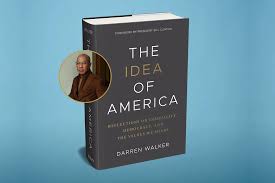
THE IDEA OF AMERICA/DARREN WALKER

I have not read a more incisive overview of inequality in all of its forms than in Darren Walker’s THE IDEA OF AMERICA.

The book is a series of speeches and essays written and delivered by Walker during his tenure as president of the Ford Foundation. It is the embodiment of his work in transforming the foundation’s mission from grant making to addressing the issues of inequality and social justice in America.

In many ways THE IDEA OF AMERICA is a history lesson based upon the premise that the founding father’s, however flawed, enshrined a fluid document of promise and hope for democracy’s future. That even, “All men are created equal,” allowed for a promise for a better future, even though codified by all white men over half of which were slaveholders and all women were excluded. Of the founders Walker adds, “They initiated a grand, complicated experiment in self-government. It led to abolition and suffrage and worker’s rights and women’s rights-however slowly, however unevenly.”

The book is not an optimistic treatise. Many thoughts are foreboding. Walker sees an America diminished by division in a climate worsening daily. ” As certain democratic norms fall away it becomes harder to motivate oneself to act. We get exhausted by, even acclimated to, the daily onslaught.”

Walker is cautious about America’s future. ” In the not-too-distant past the American people would turn to their elected leader’s the president- for guidance and moral clarity. Today, in a vacuum of such moral leadership, fear temps many Americans to hunker down , protect themselves and their interests and withdraw for the purposes of safety and self-preservation .”

Walter Isaacson casts an optimistic note in his praise for THE IDEA OF AMERICA. “Darren Walker summons us, on the 250th anniversary of our founding, to remember our higher calling.”

I commend to you this very important read on the 250th anniversary of our nation’s founding.

“`

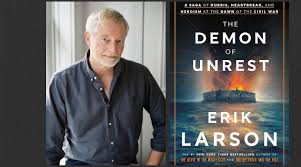
THE DEMON OF UNREST/ERIK LARSON/CODE DUELLO!

An enjoyable, readable academic approach to the lead up of the firing on Fort Sumter in Charleston, South Carolina Harbor and the beginning of the Civil War. THE DEMON OF UNREST by Erik Larson begins with Lincoln’s election and is a study of the pro-war extremists in the South, their hubris and misguided efforts to preserve slavery and the Cotton Kingdom. Cotton was the radicals scepter. A simple agricultural product could bring the North to its knees.

Ironically and timely, Larson also details the southern efforts to derail the counting of the electoral votes that ultimately ensured Lincoln’s victory. Often history proves that nothing is new.

Larson’s storytelling expertly reveals the heroism of Major Robert Anderson, Sumter’s commander and his beleaguered troops. The insight into Lincoln’s thought processes, often overwhelmed and extremely frustrating to his subordinates, is studied in detail. The workings of his ” Team of Rivals” cabinet is revealed as is President Buchanan’s duplicity. The plot to kill Lincoln before he took office somewhere on that long journey from Springfield, Illinois to Washington D.C. was real. Read of the ” real” life of Abner Doubleday.

Those of us who came to know diarist Mary Boykin Chesnut from Ken Burn’s Civil War will read her observations and understand her personality and the Southern pre-war mentality in even greater detail.

My takeaway from this best seller is to recommend it for those who will appreciate it’s detail and come to a greater understanding of Lincoln and the false sense of reality that drove South Carolina and the ultimate secession from the Union of the states that followed.

Also read and recommended by Gordon’s Good Reads, Erik Larson’s IN THE GARDEN OF BEASTS

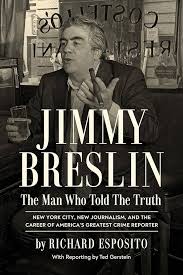
JIMMY BRESLIN/The Man Who Told The Truth

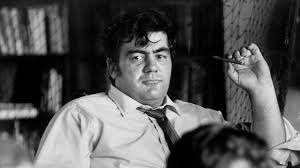
He created ” New Journalism”. He changed the work of a columnist from punditry to storytelling. Jimmy Breslin was unique, one of a kind, and the biography by Richard Esposito JIMMY BRESLIN The Man Who Told The Truth is excellent. Son of Sam, Kennedy Assassination, The Central Park Five, the big stories and those of the lessor known that make up the fabric of New York City.

Breslin was not an easy man to either live or work with and Esposito defines him perfectly. ” Nearly everyone who met him has a Breslin story: Pugnacious, Passionate, Bombastic, Bully Buffoon, Heavy drinking, Grandstanding miserable bastard. With all of this baggage Breslin was the very best at The Trib, The Herald, The Herald Tribune, The Daily News, New York Newsday. He wrote in great company, Pete Hamill, Tom Wolfe, and in the shadow of Damon Runyon.

His columns rose from the neighborhoods of New York, especially his home turf in Queens. Tips and clues came from neighborhood bars eschewing news releases. He was a street reporter disappearing into where the stories and truths morphed into his columns. Breslin was rarely in the newsroom and then only at deadline. With whom did Son of Sam communicate? J.B. of course. Who had the insight to enlighten us of the “Gravedigger” and of the Priest who gave the Last Rights upon the death and burial of John Kennedy. Breslin with his great “storytelling” so often missed by others in a sea of ink, photos and noise.

In many ways JIMMY BRESLIN is a story of New York, by a New Yorker, for New Yorkers. It is a kaleidoscope of the 1960s, 1970s, 1980s and Esposito doesn’t miss an important player of scene. One great storyteller recognizes another.

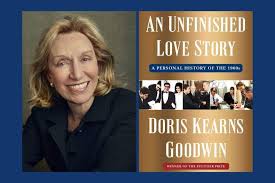
AN UNFINISHED LOVE STORY/DORIS KEARNS GOODWIN

Anderson Cooper gave the perfect description of Doris Kearns Goodwin when he called her a national treasure. His quote appears on the dust cover of Kearns Goodwin’s new book AN UNFINISHED LOVE STORY, A PERSONAL HISTORY OF THE 1960S.

Richard Goodwin while in his twenties and early thirties was a speechwriter and inner circle advisor to Presidents Kennedy and Johnson and then later to Robert F. Kennedy. For years, all of Goodwin’s personal papers of the era sat collected in some thirty boxes stored in the Kearns Goodwin home at Concord, Massachusetts. In their later years after over 40 years of marriage Richard in his 80s and Kearns in her seventies decided it was time to open the boxes and write his personal history. By this time Kearns had established herself as among the most prestigious of presidential Pulitzer Prize winning historians. ( Search Gordons GoodReads).

What is remarkable about this book is the insiders look behind the scenes of the personalities and the inner workings of the campaigns and administrations of John F. Kennedy and Lyndon Johnson. Added to the narrative is the disruptive force of Robert Kennedy and how Richard Goodwin navigated his mixed loyalties. Those loyalties of course spilled over into the Kearns/Goodwin love story, she being an ardent loyalist of Johnson and Richard having left the Johnson inner circle for Bobby Kennedy’s ill fated primary campaign against LBJ.

The reader learns of the beginnings of the Peace Corps ( an off the cuff-JFK speech in Michigan), the LBJ Great Society the inside strategy of the Voting Rights Act, The Civil Rights Act and LBJ’s famous joint session of Congress speech in which Goodwin co-opted Martin Luther King’s We shall overcome. Insight into the transition from the Kennedy to the Johnson administration after JFK’s death evoke a combination of anger and empathy. The Robert Kennedy personality for all of its strength and weaknesses is on abundant display.

A remarkable aspect of AN UNFINISHED LOVE STORY is the lesson learned of how great writers and politicians learn how complicated and controversial legislation can be properly packaged and themed to insure success. Kennedy, Goodwin and LBJ were a brilliant combination in fulfilling this task.

As readers of Gordons Good Reads surely know I too elevate Doris Kearns Goodwin as a National Treasure. AN UNFINISHED LOVE STORY IS a must read for those interested in American political history of the 1960S.

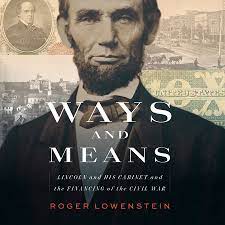
WAYS AND MEANS/ROGER LOWENSTEIN

Roger Lowenstein has researched and written an excellent analysis of an often overlooked battlefield of the Civil War. ” Money” This in depth academic work explores in great detail the complexity and drama of exactly how both the Confederacy and the Union financed the war. In Lowenstein’s account, the battle for financing may have equaled and even surpassed the importance of outcomes from the horrendous military clashes.

Taking a page from Doris Kern Goodwin’s Team of Rivals, Lowenstein places Salmon P. Chase’s selection by President Lincoln as Treasury Secretary at the very center of finding the money to finance the prolonged conflict, rightfully called America’s Second Revolution. In the north money for the war effort was a daily struggle but in the Confederate south the impossibility and mismanagement of securing funding became the most significant factor in the Confederacy’s final defeat.

Often overlooked during the passions of the war in 1862 the Republican 37th Congress, following succession by the Democratic southern states, enacted some of the most progressive legislation in the nation’s history. The Homestead Act, the Land Grant College Act, the Transcontinental Railroad, creation of the Agriculture Department, the Legal Tender Act, making paper money legal tender for all debts public and private. The same congress established the nation’s first Graduated Income Tax to provide critical financing for the war effort.

Lowenstein’s narrative ties together how the critical role the divergent approaches to financing the war were a determining factor in the final outcome at Appomattox. Additionally, the book is a study of the expansion of the power of the federal government acting as a nation.

BUNKER HILL- A FIGHT FOR LIBERTY BECOMES A WAR FOR INDEPENDENCE

Nathaniel Philbrick’s new non-fiction work  BUNKER HILL, A CITY, A SIEGE, A REVOLUTION is a rewarding  history of the early stages of the American Revolution including the battles of Lexington and Concord,  Breeds Hill/Bunker Hill and the siege and eventual evacuation of Boston by the  British.  Philbrick, as was his style in his previous books Mayflower and  The Last Stand,  Custer, Sitting Bull and the Battle of Little Big Horn ( see review at gordonsgoodreads.com ) , is focused. His  historical research is precise  and the development of the characters of the  historical figures adds new dimension to this period of American History.

16158546

Set in 1775 and 1776, Philbrick explores the passions and the conflicts between Patriots , Loyalists and the multitude of  views  of those suspended in the middle. Many Patriots remained loyal to King George but simultaneously reviled against the British Parliament, clearly defining the difference between a call for “Liberty”  and the pursuit of  “Independence.”   In the ensuing American Revolutionary War, liberty and independence became synonymous.

Readers will meet a key revolutionary who stands unique among the better-known  Sam Adams , John Adams, John Hancock and Paul Revere.  Thirty three-year-old physician Joseph Warren cobbled together a group of independent thinking community leaders  and often unmanageable  farmers turned militiamen  into what would become the Continental Army.  Warren was  a self-styled political and military leader.  If it were not for Warren’s  death at the Battle of Bunker Hill,  Philbrick  speculates that relatively obscure George Washington may never have been called  upon to assume  leadership  of the Patriot  forces, which  of course ultimately lead to Washington becoming the nation’s first president. Thus , Bunker Hill gains even greater historical importance.

The Battle of Bunker Hill  ( June 17, 1775) , which came two  months after  Concord and Lexington  ( April 19, 1775  “The Shot Heard Round the World” ) , is considered the actual beginning of the Revolutionary War.  Concord and Lexington are referred to as ” skirmishes.”  British loses were so great at Bunker Hill, despite a technical victory, General Howe concluded that the British had in fact lost the battle for Boston, and was later forced to withdraw to Halifax, Nova Scotia following  a winter long siege of the city .

I greatly appreciate well researched non-fiction  like BUNKER HILL that focuses on specific events and the individuals  that played a vital role in the larger story.   Another example is David McCullough’s  biography  John Adams , critical to understanding  the American Revolution, the  drafting of the Declaration  of Independence and the Constitution.  An enlightening part of the puzzle pertaining to  George Washington and the Revolutionary War  is David Clary’s book Washington Lafayette, and the Friendship That Saved the Revolution. The book details the relationship between  the childless George Washington and a glory seeking teenage French Aristocrat,  Marquis de Lafayette. They become unlikely comrades-in-arms , forming  an unbreakable trust with great impact on  the war’s outcome and the forming of a new nation.  

BUNKER HILL, A CITY, A SIEGE, A REVOLUTION is worthy of your time and your library.

DAN BROWN’S INFERNO

The Da Vinci Code, The Lost Symbol and now  Dan Brown’s Inferno, another thrilling novel that will surely fly off the shelves and dominate downloads in the days and weeks ahead.

images

Inferno is art, history, science and a travelogue through Florence and  Venice worthy of being transplanted to the pages of a Fodors Guide.   For fans of Dan Brown, Inferno is so fast paced that the book is a three or four session read, thrilled to follow the familiar exploits of Harvard University professor of symbology  Robert Langdon.

Brown’s multiple short chapter writing style  keeps the reader connected  despite the speed with which the plot evolves.   Fair warning, assume nothing and expect to be deceived again and again as this thriller develops.  Typical of Brown you will never know who is friend or foe until the very conclusion. Paging ahead is forbidden!  You will learn more about Dante Alighieri’s  The Inferno, and the seven rings of Hell than previously imagined and be exposed to Italy’s art and architectural treasures that are alive in the narrative.  Those who have traveled to Florence ,Venice  and Istanbul will be transplanted, imagining the  tale with even greater intensity.

Beyond the expected suspense and surprises, Inferno adds a Transhumanist dimension of  cutting edge scientific technologies that are unimaginable,  calling into question enormous moral and ethical issues in facing  threats to the world’s population. ” You know that nature has always found a way to keep the human population in check–plagues, famines, floods. But let me ask you this–isn’t it possible that nature found a different way this time?”

With the  popularity of The Da Vinci Code , The Lost Symbol, Angels and Demons,   and now Inferno  do not overlook an earlier great Brown novel, Digital Fortress.  Familiar themes and an ever-present ” mystery container” that can wreak havoc on the world. Brown also wrote Deception Point, which I have not read.

When I return to Venice I am convinced I will see Robert Langdon in St. Marks Square and just perhaps,  as the violins play, he will be holding Sienna’s hand.  I hope so!  You will understand.

Another Anya Seton Classic

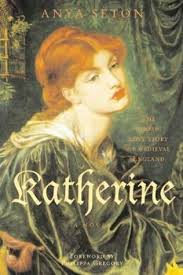
British historical novelist Philippa Gregory in her foreword to Anya Seton’s Katherine  is correct in identifying Seton among those writers who  ” Dominated historical fiction  following World War II.”   In the opinion of Gordon’s Good Reads,  Seton’s historical novel  Katherine , a huge best seller in the 1950s ,  is perhaps her very best.  Katherine is without doubt a love story, a romantic novel indeed, but the attention to the detailed setting in  Medieval  England in the 1300s , gives this book high marks as a classic historical novel. Just as she did with Winthrop Women, Seton traveled to the novel’s setting and has marvelously recreated a world that only a novelist of her calibre could bring to life.

images-1

Katherine , from rags to riches , Knights in shining armor ( John of Gaunt, Duke of Lancaster), serfs, England’s feudal system, bastard children, the Black Death,  kept woman, love triumphs!  All of the elements of a great romantic novel are here but with page after page the reader is placed in a time and place of Fourteenth Century squalor, chivalry and treachery amid riches , castles and jeweled crowns beyond imagination.    Arranged marriages enthroned Kings an Queens  including  12-year-old King Richard, while the lower classes begin an epoch march to freedom, long before Cromwell and Henry the Eighth dashed all hopes of equality.  Seton gets the history right and delivers the lesson  within the framework of a wonderful love story well outside the confining lines of a text-book. Add to this novel the poetry and presence of Geoffrey Chaucer!

Put Katherine on your reading list. Anya Seton ( 1906-1990), through all of the years will, never disappoint.  See my previous reviews here at gordonsgoodreads of Seton’s Winthrop  Women and Dragonwick.  Also by Anya Seton:  Avalon, Devil Water, Foxfire, Green Darkness and My. Theodosia.

COOLIDGE, REVISIONIST OR ACCURATE PORTRAIT OF THE PRESIDENT?

Amity Shlaes new biography COOLIDGE  has received its share of controversial reviews including  charges of  a “white-washed” Coolidge presidency. There is little doubt that Shlaes places  ” silent Cal” in a favorable light. However, that is not at all unusual as historians review a presidency in a perspective from a hundred years distance.  Perhaps the best example of the retrospective is David McCullough’s  reincarnation  of John Adams.  I am not suggesting that the two books or presidencies are comparable but the passage of time allows authors the opportunity to look through a different prism.  Be assured that Shales portrait of Calvin Coolidge does not attempt to elevate him to John Adams status, however, she clearly establishes the image of a strong, independent thinking president capable of making unpopular decisions that he deemed correct for the country.

images

Coolidge served as president, during the roaring 20s, from 1923 to 1929.  He remains famous for small government, balanced budgets and ” the business of America is business.”   Unlike some reviews, I do not think Coolidge is a whitewash of the administration, but rather an overview of the thinking in America following the First World War and the national desire to return to ” normalcy.”  Ironically, Coolidge came into his political career as an acolyte of Teddy Roosevelt  progressivism and acted accordingly during his tenure as Governor of Massachusetts.  Coolidge was a reluctant recruit as Warren Harding’s Vice-President, he disliked the position, but his New England work ethic underscored his making a best effort to support Harding’s policies.  The two were exact opposites, Harding the gregarious politician telling the electorate what they wanted to hear,  Coolidge, quiet and reserved.

Shlaes does an excellent job in depicting Coolidge’s transition to the presidency following Harding’s unexpected death.  He moves into the oval office with no great fanfare and picks up the reins of governing turning quickly to his zeal for a balanced budget, eliminating the war-time bureaucracy and establishing the concept of reducing taxes to stimulate the economy out of a post war recession.  Shlaes makes a case that Coolidge handed off a strong economy to Herbert Hoover after Coolidge kept his commitment that he would not run  for a second term.  However, Shlaes  book makes no mention of the rampant speculation on Wall Street that occurred during the later years of the Coolidge Administration which lead to the crash of 1929 and the beginning of the Great Depression.  Does Coolidge share the blame or does it all fall at the feet of  Herbert Hoover?

A most interesting part of the book is that once again we go back over 100 years to discover recurring themes facing today’s American economy:  The fairness of the tax policy, protective tariffs, balanced federal budget, government spending, the deficits of war-time spending, and the overriding argument of  big government versus small government.

COOLIDGE is well written and for lovers of history it is a look back at a presidency almost forgotten.  COOLIDGE  offers a  glimpse at the expectations of life in America following  World War I , the “War to end all wars. ”  It was the period of the first automobiles produced on the Ford assembly line, electrification,  the birth of the aviation industry, Lindbergh and the  passage of the Kellogg-Briand international treaty, the successor to the failed  Woodrow Wilson League of Nations.

You will learn much about Coolidge the family man, his wife Grace and the tragedy of the death of his son  Calvin, Jr. while Coolidge was in office.  The journey— from his birth in  Plymouth Notch, Vermont  to Amherst College, small town attorney in Northampton, Massachusetts, Massachusetts Senate, Massachusetts Governor,  Vice-President and President of the United States–a remarkable life.


GRAND CENTRAL-THE BOOK-A DESTINATION UNTO ITSELF

It is fitting that my son who has just begun a daily commute to Grand Central gave me a copy of Sam Roberts  book Grand Central, How A Train Station Transformed America.

images

During the better part of four decades , I commuted through Grand Central during periods of its greatest decay and glorious rebirth.  For me, and millions of others, the book is personal and the FOREWORD by Pete Hamill gives the work a New York City imprimatur that only Hamill could provide. Hamill: ” It was a week before Christmas in 1945.  Wait my mother said. I want to show you something. And she led me into the largest space I had ever seen. There were people moving across shiny marble floors in many directions, a gigantic clock, and a large board with numbers and the names of cities. A deep voice kept speaking from somewhere, the voice echoing off gleaming walls. We were in a place called Grand Central Station.”

The name is technically not Grand Central Station but rather Grand Central Terminal although few have ever called it anything but the former. The short-lived original named Grand Central Station, located nearby on 42nd Street,  was demolished  when the brilliant New York Central Railroad Chief Engineer William Wilgus convinced Commodore Cornelius Vanderbilt’s son, William, that the future  of railroading was electric locomotives that would allow the Park Avenue rail lines to be placed underground leading to a new two tiered Grand Central Terminal.

Roberts brings the detail of the construction of the terminal into a readable and understandable epic, with a coupling of wonderful photography.  The magic and glamour of long distance train travel abounded in Grand Central long before it became a commuter hub. Track 34, today a common departure point for the Harlem Line, was where nightly they rolled out the celebrity red carpet for the 20th Century Limited to Chicago. The train with speeds up to 123 miles per hour made the trip in 20 hours, therefore the name.  The 20th Century made its inaugural trip on June 17, 1902 and its last on December 2, 1967. By that time the once glorious Grand Central along with long-distance train travel had fallen into disrepair and neglect and the terminal was  only a  shadow of the wonder in Pete Hamill’s youthful eyes back in 1945.

Robert’s history of  Grand Central is complete,  but the excitement surrounding  the terminal’s renewal,  in  many ways, lays the foundation of the renewal of New York City itself,  and the indomitable spirit of  New Yorker’s following the city-wide declines during the 1970s. This spirit, prevalent  today, harkens back to the introduction of a popular radio program in the 1940s on NBC titled Grand Central Station. See if you don’t agree that even though the 20th Century Limited and Empire Express are distant memories,  the preamble to each radio show remains real  as you walk through Grand Central today.

As a bullet seeks its target, shining rails in every part of our great country are aimed at Grand Central Station, heart of the nations greatest city. Drawn by the magnetic force of the fantastic metropolis, day and night great trains rush toward the Hudson River, sweep down its eastern bank for 140 miles, flash briefly by the long red row of tenement houses south of 125th Street, dive with a roar into the two-and-one-haf-mile tunnel which burrows beneath the glitter and swank of Park Avenue, and then…Grand Central Station! Crossroads of a million private lives! Gigantic stage on which are played a thousand dramas daily. 

Sam Roberts has given anyone who has ever paced the marble floors of Grand Central a great gift.  Beyond rails, renovation, railroad barons , conductors, porters and engineers, this is the story of how for over 100 years a building   has played such a huge role in defining New York City.  For those of us for whom Grand Central has been part of our lives we owe Sam Roberts a special debt of gratitude. Grand Central celebrates a victory for a city we love.

Sam Roberts has covered New York City for the Daily News and the New York Times for over 40 years. He has written seven books of non-fiction including The Changing Face of America in the 21st Century.