DARK FIRE—C.J.SANSOM-TUDOR ENGLAND

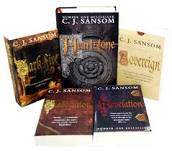
Dark Fire is the second  of the Matthew Shardlake Mystery Series written by the acclaimed historical fiction novelist C.J. Sansom.  If one is looking for a painless way to enjoy the history of Tudor England ( Henry VIII)  read all of this wonderful Sansom series which begins with Dissolution and currently ends with Heartstone.

images

The search for the secret of Dark Fire, desperately sought by Thomas Cromwell on behalf of Henry VIII ,leads  lawyer Shardlake through the perils of  multiple murders and further intrigue.  Anne Boleyn has already been beheaded and  Anne of Cleves, the fourth wife of Henry , is about to be dethroned in favor of  Catherine Howard.  Amidst the turmoil of the king’s wives, Cromwell seeks to protect his own position by providing the monarchy with the formula for Dark-Fire, an ancient form of flame thrower, which in its day, in warfare,  was akin to a modern-day nuclear missile.  He turns to Shardlake to unravel the mystery and find this weapon for the king.

As is usual with Sansom, there is a parallel plot, this time involving  Shardlake trying to keep a young woman falsely accused of murder from death by torture, of course in the Tower of London.

Dark Fire is a highly recommended  gordonsgoodread!  If you are new to Sansom pick up his work and read them in the following order: Dissolution, Dark Fire, Sovereign, Revelation and Heartstone.  Overviews of these Sansom books can be searched at gordonsgoodreads.com.

images-1

Finish these and you will be a well-informed conversationalist regarding Tudor England.The  Sansom novels present history and humanity folded together in perfect form.

HOW THE OTHER HALF LIVES- KEEP PRINT JOURNALISM ALIVE AND WELL!

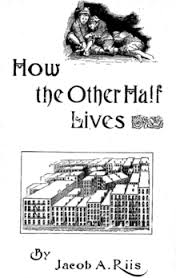
Jacob Riis’s book How The Other Half Lives, written in 1890, remains an outstanding example of the importance of investigative journalism and the continued vitality of the Fourth Estate.

images-3

Jacob Riis was among the earliest of what Theodore Roosevelt later termed ” muckraker”, “taking the rake to uncover the most unpleasant conditions in American society.”  In Riis’s case, the issue was the plight of thousands of immigrants living and working in horrid conditions in the New York City tenements of the late 19th century. How The Other Half Lives is not a historical novel but rather a work of non-fiction, well researched reporting, personally witnessed by the journalist.

Riis was himself an  immigrant, born in Denmark among a family of fifteen children. He apprenticed as a carpenter in Copenhagen but discouraged by job availability he immigrated to the United States in 1870 at age  21.  Having caught a brief glimpse of the squalid living conditions among immigrants in New York’s tenement district, he left for western Pennsylvania and found work there as a carpenter. Perceived as being taken advantage of by his employers, he returned to New York as a salesman of flat irons whereupon he saw an advertisement for a Long Island newspaper looking for an editor. Thus, with no experience as a writer, he began his career in journalism.  He later accepted a position as a reporter for The New York News Association where he began writing with assignments covering both the rich and the impoverished. Riss was aware of conditions among the extremely poor in New York from his previous brief stay in and around the notorious Five Points. However, his job at the NYNA, the New York Sun and later in a big step up to the New York Tribune , he found a pulpit from which to begin informing the public on How The Other Half Lives .  Riis turned his print platform into a personal crusade, attempting  to alleviate the bad living and working conditions of the poor by exposing their horrid circumstances to the people who could make a difference, the middle and upper class of the city and its political establishment. Riis was perfectly willing to hold both the upper class and politicians accountable for the exploitation of men, women and children in both employment and housing. The pages of his early articles for Scribner’s Magazine and later in the complete volume How The Other Half Lives  are so vivid that uninformed critics, in disbelief, termed the details of his reporting an exaggeration and sensationalism.

Surely this work is an early reformist look at income inequality but  Riis referred to this large percentage of the New York City population as a class  unto itself, literally without identity or voice, enslaved by landlords who exploited their fears. The same people were recruited as the machinery of piecework in the early garment and cigar making industry at wages below any standards of decency.  The tenement  districts in New York exploded with thousands of men, women and children crowded into one or two rooms often without ventilation, sanitation or running water. Riss estimated that at one fifth of the city’s population lived under these conditions.

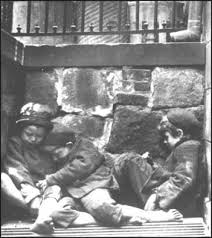
There is a major difference between Riis’s reporting and sensationalism. Riis spent months in the tenements, which were factories by day and barely livable sleeping quarters by night.  His research was impeccable and he was among the very first reporters to incorporate photo journalism into his stories, utilizing the newly invented flash to photograph his subjects in their darkened rooms. His work was the beginning of photo journalism, adding documentation to the written word.  The photos and editorial content had dramatic impact with his readers  and ultimately gained the attention of New York’s newly elected Police Commissioner, Theodore Roosevelt.  Riis became an advisor to Roosevelt, escorting him on nighttime  tours for the commissioner to see for himself how the poor were forced to live.  Many credit this educational relationship with Roosevelt as the beginning of the Progressive Movement, a hallmark of TR’s future  presidency.

After Roosevelt’s election he wrote this tribute to Riis. ” Recently a man, well  qualified to pass judgement, alluded to Mr. Jacob Riis as  ‘ the most useful citizen of New York.’  The countless evils which lurk in the dark corners of our civic institutions, which stalk abroad in the slums, and have their permanent abode in the  crowded tenement houses, have met in Mr. Riis the most formidable opponent  ever encountered by them in New York  City.”

How The Other Half Lives was first published as an article in Scribner’s  Magazine in 1889, but  while working for the New York Sun, Riis expanded the work into the book, complete with his photographs and published it a year later.  A much less famous work by Riis, Children of the Poor was published as a sequel in 1892. In it Riis wrote of children he had encountered while researching How The Other Half Lives.

images-2

Riis was not alone among a new breed of investigative {muckraker) journalists.  In 1872 Julius Chambers wrote an expose of institutional horrors in Bloomingdale Asylum  and in 1887 Nellie Bly wrote Ten Days in a Madhouse a story of patient abuse in Bellevue Hospital.   By the turn of the 20th century McClure’s Magazine had assembled a group of new muckrakers including Ida Tarbell, Lincoln Steffens and Ray Stannard Baker, exposing the Standard Oil Trusts and labor unrest in the coal mines and steel mills.

One wonders  how slowly  reform among the immigrants of New York’s tenements may have come without the reporting of Jacob Riis.  How The Other Half Lives  punctuates the importance of  investigative journalism in the fabric of a democracy. In the 20th Century we saw the results of the journalistic work of the Washington Post’s  Ben Bradlee, Bob Woodward and Carl Bernstein in their reporting of Watergate.  Currently we are witnessing excellent journalism in the New York Time’s recent series Invisible Child, the brilliant work of reporter Andrea Elliott and the ongoing reporting of Times business journalist Gretchen Morgenson,  together with her book Reckless Endangerment.  

In this readers view, Television, the 24-hour cable news cycle and the endless world of blogs have a long distance to travel before coming close to the credibility and impact  of the work of Jacob Riis and those following in his footsteps.  If you are a  student of New York, treat yourself to a journey back to the nineteenth century and read How The Other Half Lives.  It will make you want to keep buying a newspaper, print or digital!

THE BOOK THIEF-THE NOVEL-STEAL WHATEVER TIME NECESSARY!

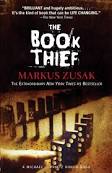
With a prodigious use of allegory, Marcus Zusak has written an enthralling human story of ordinary people caught in the trauma of  Second World War Germany.  In each of the captivating pages of The Book Thief,  an ethos and optimism arises from the hearts of children, momentarily displacing the horrors of the war.

images-1

Zusak chose Death, The Grim Reaper, as the narrator of his story. The protagonist is  a young girl, Liesel Meminger, handed off  by her mother to German  foster parents after Liesel’s brother dies in her arms on the floor of an unheated rail car.  At her brother’s  burial Liesel recovers the only memory available, an abandoned copy of The Grave Diggers Handbook. Thus The Book Thief  is born. This is a story of words, an accordionist, fanatical Germans, a Jewish fist fighter, thievery, friendships, love and family and above all a relationship between a daughter and step-father.

The Book Thief is a portrait of how war and the Holocaust causes ordinary people and families  to reshape their lives to survive.  Meet Liesel’s step-father and mother Hans and Rosa Hubermann, her best friend and partner in book thievery Rudy and the Jew Max, hidden from  the Nazis for two years in the basement of the Hubermann home.   Zusak is such a marvelous story-teller that the journey is never predictable, even as death himself narrates the tale. The story is told so beautifully that the reader may consider clearing the time for the final 200 pages in one sitting.

A word from the Narrator: “I wanted to tell the book thief many things about beauty and brutality. But what could I tell her about those things that she didn’t already know? I wanted to explain that I am constantly overestimating and underestimating the human race-that rarely do I simply estimate it. I wanted to ask her how the same thing could be so ugly and so glorious, and its words and stories so damning and brilliant.”

I have not seen the motion picture but as stated many times before, a good rule of thumb is to always read the book first!

I highly recommend The Book Thief for readers of any age. Other books by  Markus Zusak are Fighting Ruben Wolfe, Getting the Girl and I Am the Messenger.

Enjoy!

COMMAND AUTHORITY-CLANCY’S LAST STAND

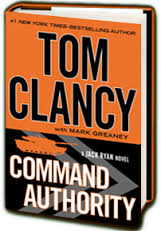
So much written in the Tom Clancy novels is prescient and his final book, Command Authority, written before his death in late 2013 , is no  exception.  The latest Jack Ryan novel written with fellow writer and researcher Mark Greaney is all about the future aims of Russia connected to the emergence of the Russian mob following the collapse of the USSR.  Who fills the vacuum and what are the aims of Clancy’s new villains?

images

Clancy casts a wide net in Command Authority including  Swiss bankers and secret organizations formed from the remnants of the old KGB.  There is government corporate takeovers with millions of unaccounted funds to trail to money laundering though numbered  Swiss accounts.  Topping the  greed list is the lust for power by the new elite in the Kremlin eager to reclaim lost Russian territory and international prestige. Of course there is abundant hardware in hand and in the air.

In the middle of all of the intrigue is President Jack Ryan, Jack Ryan Jr. and of course  important roles for John Clark, Ding Chavez, Dominic Caruso and Sam Driscoll. Clancy cleverly creates a flash back sub-plot to Jack Ryan Sr’s  former career at CIA in England which directly connects to the present day un coverings there by his son Jack Ryan Jr.   The stories intersect perfectly in typical Clancy fashion.

For Clancy fans, place me at the top of the list, it is sad contemplate the end off this wonderful series.  It has always been difficult to choose favorites because each resonates with its place in time.  Tom Clancy was brilliant in introducing his characters squarely in the middle of the action , always on the edge of reality.  I will miss wondering if the Clancy story unfolding in his novels will be on the front page of the morning paper.  In many cases Tom Clancy has come very close!

Enjoy Command Authority and reflect on the previous seventeen wonderful Tom Clancy adventures.

Nebraska-No, Not The Movie

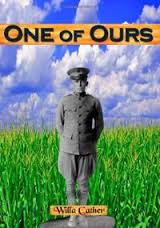
When I finished reading Willa  Cather’s  novel One Of Ours it came as no surprise that in 1923 the novel was awarded a Pulitzer Prize. Cather lived from 1873  to 1947.  She was born in West Virginia but grew up in Nebraska thus the wonderfully evocative setting for this novel.

At the turn of the 20th century the generation  that inherited the pioneering industry of Nebraska’s homesteaders found themselves prospering beyond the dreams of their forebears. Fortunes were made and the Wheeler family was among the most successful with hundreds of acres of wheat, corn and abundant range. Wheeler son Claude, by the time he was 21,images had attained everything imaginable, a wife, beautiful home and a future inheritance. However, within this young man there was an emptiness , a feeling of failure, a lack of romance and a predictability that would surely deny an unfulfilled destiny.

Cather’s beautiful writing flows through the seasons on the great plains in Technicolor but though it all evolves a restlessness within Claude that separates him from the ordinary. So the evolution of this young man unfolds , carrying him to France and then the trenches  of Verdun.

Of  course, there must be much of Cather herself in these pages remembering that she lived out her life in New York City, far from the fields of Nebraska where she grew up in this pre-war era. The gathering storm of the First World War was glorified by  Over There  and The Yanks Are  Coming and  Claude, the  boy from the plains, now a young man, heard in the call to war  a glimpse of his destiny and made his decision to enlist, to see what life in a larger world might offer. Your time will be well spent  joining Claude on his journey, one that many make in their lifetime.

Willa Cather wrote 12 novels, including One of  Ours.  Others of note are O Pioneers, My Antonia and Death Comes for the Archbishop. Cather may be an author you have overlooked.  Find the time to enjoy her writing.

PETE HAMILL- BROOKLYN STORIES-NOT ALL SWEETNESS

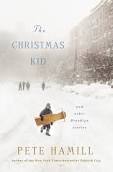
Pete Hamill’s The Christmas Kid is but one title in this collection of  36 short works of fiction.  Don’t look for sentimentality or the aroma from bread baking in a long forgotten local bakery. Hard times and hard lives abound.  This body of work was compiled from stories Hamill published, mostly in the New York Daily News. Many are set in post WWII Brooklyn neighborhoods near where Hamill has lived.

images

With the exception of the title story, The Christmas Kid , these are sad tales about troubled lives in very tough neighborhoods. Street Gangs, lost loves, beleaguered drunks,  revenge , missed opportunities and no way to break the cycle.  Hamill often gives the reader a glint of optimism, then hope plummets off a cliff. Gripping, wonderful fiction for aficionados of New York lore . No one does it better than Hamill. Many of the stories could be the beginning of a novel unto themselves!

The Christmas Kid was first published in 2012 and released in paperback this year.

THE BULLY PULPIT –NOT JUST TEDDY–A NEW LOOK AT TAFT–THE RISE OF THE MUCKRAKERS

Who would place in the same context Teddy Roosevelt and William Howard Taft?

images-2

Doris Kearns Goodwin, just as she did with Lyndon Johnson and the American Dream, No Ordinary Time (FDR and Eleanor), Team of Rivals (Lincoln) has humanized Teddy Roosevelt and William Howard Taft in The Bully Pulpit, Theodore Roosevelt, William Howard Taft and the Golden Age of Journalism.  It is remarkable that by comparing these two very different personalities, Goodwin has been able to create a finite understanding of the birth of the Progressive era in American politics.

This extremely well researched work probes so deeply into the personalities of the two that the reader is left wondering who might have been the better to successfully carry out the reforms of the Progressive Movement, TR or Taft! The book captures the two friends joined at the hip, partners in a mission of reform, and then torn apart by TR’s un-checked ” Bull Moose” ambition; finally coming together again after self-imposed mutual defeat. It reminds me of the deathbed reconciliation of Thomas Jefferson and John Adams so emotionally detailed in David McCulloch’s, John Adams.


The Bully Pulpit is four books in one! The reader is served up two great biographies, one of Theodore Roosevelt, the other of William Howard Taft. The other two Goodwin gifts are an understanding of the birth of the Progressive Movement in America and not by any means in descending order, the advent of investigative and advocacy journalism, Muckraking, in American politics. The Bully Pulpit establishes the critical role played by the press in determining public policy at the turn of the 20th Century. The term Muckraker has a new meaning in Goodwin’s book and the role of S.S. McClure’s  McClure’s magazine in promoting progressivism is a book unto itself.

Read about muckraker journalists Ida Tarbell, Ray Stannard Baker, Lincoln Steffens and William Allen White, including the unique relationships they established with both Roosevelt and Taft. The insight given into Publisher Sam McClure’s ambitious role of investigative journalism shaping national policy can be projected into the 21st Century. When asked by Sam McClure to embark on a series of investigative articles on labor strife, journalist Ray Baker replied, ” Why bother with fictional characters and plots when the world was full of more marvelous stories that were true: and characters so powerful, so fresh, so new that they stepped into the narratives under their own power.”

Great books stimulate and The Bully Pulpit, while is has the greatest emphasis on Teddy Roosevelt, raises dramatically the profile of President Taft and his wife Nellie. Taft defies a Progressive, Liberal or Conservative label. He could not be easily categorized in the 21st Century political vernacular. His wife Nellie, unlike Edith Roosevelt, played a large role in Taft’s decisions which was prescient indeed for the relationship that followed between his successor Woodrow Wilson and his wife, Edith.

One of the reasons that The Bully Pulpit is so compelling is that the philosophies, conflicts and important social issues of the time could just as well have been written about the beginning of this century.

The following paraphrase from The Bully Pulpit was made by President Roosevelt in 1905 at the beginning of his presidency, in effect separating the Republican Party into Progressive and Conservative factions. ” If the people at large perceived that the Republican Party had become unduly subservient to the so-called Wall Street men–to the men of mere wealth, the plutocracy, it would result in a dreadful calamity. To see the nation divided into two parties, one containing the bulk of the property owners and conservative people, the other the bulk of the wage workers and the less prosperous people generally, each party sullen and angered by real and fancied grievances would bring a calamitous future.”

With that perspective, in the spirit of Ray Baker’s ” why bother with fiction,” there is more grist for the mill for historians and Muckrakers to ponder in today’s America.

Note: For lovers of history one good read prompts another. I will seek out the biography  William Howard Taft by Louis Gould and one of Sam McClure, The Muckrakers by John Simkin.

THE BULLY PULPIT-HISTORY LESSONS FOR TODAY!

It is rare that I blog about a book with 400 pages still to read but if you or a member of your family loves history then place The Bully Pulpit, Theodore Roosevelt, William Howard Taft and the Golden Age of Journalism at the top of your  holiday list.

images-2

Doris Kearns Goodwin has outdone herself by telling the story of these two presidents at the turn of the 20th century  in an economic enviornment which is very relevant today.  Early on, this  prodigious work of history will place the reader both then and in 2013!  Goodwin lays the groundwork of the lives of TR and Taft , one most famous and the other mostly forgotten. Her research leads to a greater understanding of how the power of the presidency combined with investigative journalism can dictate  national policy.  There is no bully pulpit without the press. This of course is a lesson  learned long before the internet and cable news! Learn of the tremendous influence of McClure’s magazine during TR’s rise.   Of course , during this period of reflection on Abraham Lincoln, do not overlook  Goodwin’s Team of Rivals. 

THE FRIENDS OF EDDIE COYLE- WITH SHADES OF BRESLIN AND HIAASEN

I had not read any books by  George V. Higgins who wrote over 30 wonderful works of fiction including the Jerry Kennedy Series, A City On A Hill, The Sins of the Fathers and The Agent.  Higgins died on 1999 and left behind a treasure  of novels and THE FRIENDS OF EDDIE COYLE sets itself apart as a “game changer.”  THE FRIENDS OF EDDIE COYLE is considered by some reviewers as one of the greatest crime novels ever written!

images-1

Set in Boston in the 1960s, the book is 80 percent dialogue bringing together a cast of second and third-rate mobsters, informers and undercover cops with the  irony that Eddie Coyle in fact has  no friends and neither does anyone else the Boston underworld.

I draw a comparison  to Carl Hiaasen’s Lucky You in that there is a certain similarity between the helplessness of Eddie and the bumbling lottery ticket thieves in Hiaasen’s novel. The book also connects with Jimmy Breslin’s The God Rat, the true story about the informer in the famous New York City  bad cop trial in the Gotti and Genovese era.  By the way, I recommend both of these references as additional great reads. Of course Breslin and Hiaasen each have long lists of additional wonderfully worthy books.

THE FRIENDS OF EDDIE COYLE is a photograph in brilliantly written evocative dialogue within the Boston  criminal underworld, reflecting the mentality of the players and engaging the reader in the inevitable outcome.

If you enjoy this genre dig more deeply into the writing of Georg V. Higgins. The book was also made into a highly acclaimed movie starring Robert Mitchum in 1973.

SYCAMORE ROW FOLLOWS A TIME TO KILL-THRILLING!

If you have been anticipating the newest novel from John Grisham get Sycamore Row now. You will not be disappointed but rather overjoyed!

images

No, I do not think it attains the level of suspense of  A Time To Kill  however, the story line is captivating and grabs the reader on every page.  Grisham is never laborious and writes in a captivating an energetic manner.   The Sycamore Row plot and story line is wonderfully developed and as always his characters are  alive and real, including  the manner in which he brings forward Jake and Lucian from a  Time To Kill.  You are rooting for another victory from the first page  and Judge Atlee becomes as fascinating as Judge Noose!

I rank Sycamore Row along side another of my all time Grisham favorites Pelican Brief and The Firm. A Time to Kill remains at the top of the list. Enjoy!