 ploration and the South
Pole.
Belgium, as described by author Julian Sancton, is an unlikely contender
in the race for glory in charting the icy subcontinent. The same is true for
the expedition’s leader, Adrien de Gerlache, well-intentioned but severely
lacking in seamanship and funding. Despite his shortcomings, de Gerlache
manages to raise funds and crew the refitted Belgica. Among those recruited for
the expedition, Roald Amundsen who would later out race the ill-fated Robert
Scott quest for claiming the South Pole. Also aboard was one American, Dr.
Frederick Cook who later in 1908 would claim to have reached the North Pole.
MADHOUSE AT THE END OF THE EARTH is an exact description of what occurs when
dreams of glory steer a ship deep into the polar ice of the Bellingshausen Sea.
The outcome is inevitable, months locked in the Antarctic ice, worsened by the disappearance
of daylight. Sancton’s book becomes a study of the day by day, hour by hour
mental and physical deterioration of all on board. Miraculously, only two
members of the expedition would die, one of whom fell overboard in a storm,
prior to the ship’s entombment. Author Sancton poured over personal diaries
and the ships logs and emerged from his research with vivid detail of how loneliness,
hopelessness and physical deterioration effect humans. His telling of the story takes on the character
of a well written novel.
Sunlight returned, the pack ice relented, and after nearly a three years journey,
despite failing to reach the South Pole, the Belgica returned to a glorious reception
in Belgium. Survival had become the goal.
For more reads on Arctic exploration search Gordon’s Good Reads for The
Endurance, Robert Peary, Jeannette.
ploration and the South
Pole.
Belgium, as described by author Julian Sancton, is an unlikely contender
in the race for glory in charting the icy subcontinent. The same is true for
the expedition’s leader, Adrien de Gerlache, well-intentioned but severely
lacking in seamanship and funding. Despite his shortcomings, de Gerlache
manages to raise funds and crew the refitted Belgica. Among those recruited for
the expedition, Roald Amundsen who would later out race the ill-fated Robert
Scott quest for claiming the South Pole. Also aboard was one American, Dr.
Frederick Cook who later in 1908 would claim to have reached the North Pole.
MADHOUSE AT THE END OF THE EARTH is an exact description of what occurs when
dreams of glory steer a ship deep into the polar ice of the Bellingshausen Sea.
The outcome is inevitable, months locked in the Antarctic ice, worsened by the disappearance
of daylight. Sancton’s book becomes a study of the day by day, hour by hour
mental and physical deterioration of all on board. Miraculously, only two
members of the expedition would die, one of whom fell overboard in a storm,
prior to the ship’s entombment. Author Sancton poured over personal diaries
and the ships logs and emerged from his research with vivid detail of how loneliness,
hopelessness and physical deterioration effect humans. His telling of the story takes on the character
of a well written novel.
Sunlight returned, the pack ice relented, and after nearly a three years journey,
despite failing to reach the South Pole, the Belgica returned to a glorious reception
in Belgium. Survival had become the goal.
For more reads on Arctic exploration search Gordon’s Good Reads for The
Endurance, Robert Peary, Jeannette.
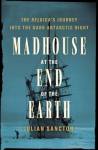
MADHOUSE AT THE END OF THE EARTH
Don’t look in these pages for another Ernest Shackleton adventure
or for a repeat of the Jeannette disaster. This is a different story of death
and survival in an ego driven pursuit of Antarctic exploration and the South
Pole.
Belgium, as described by author Julian Sancton, is an unlikely contender
in the race for glory in charting the icy subcontinent. The same is true for
the expedition’s leader, Adrien de Gerlache, well-intentioned but severely
lacking in seamanship and funding. Despite his shortcomings, de Gerlache
manages to raise funds and crew the refitted Belgica. Among those recruited for
the expedition, Roald Amundsen who would later out race the ill-fated Robert
Scott quest for claiming the South Pole. Also aboard was one American, Dr.
Frederick Cook who later in 1908 would claim to have reached the North Pole.
MADHOUSE AT THE END OF THE EARTH is an exact description of what occurs when
dreams of glory steer a ship deep into the polar ice of the Bellingshausen Sea.
The outcome is inevitable, months locked in the Antarctic ice, worsened by the disappearance
of daylight. Sancton’s book becomes a study of the day by day, hour by hour
mental and physical deterioration of all on board. Miraculously, only two
members of the expedition would die, one of whom fell overboard in a storm,
prior to the ship’s entombment. Author Sancton poured over personal diaries
and the ships logs and emerged from his research with vivid detail of how loneliness,
hopelessness and physical deterioration effect humans. His telling of the story takes on the character
of a well written novel.
Sunlight returned, the pack ice relented, and after nearly a three years journey,
despite failing to reach the South Pole, the Belgica returned to a glorious reception
in Belgium. Survival had become the goal.
For more reads on Arctic exploration search Gordon’s Good Reads for The
Endurance, Robert Peary, Jeannette.
ploration and the South
Pole.
Belgium, as described by author Julian Sancton, is an unlikely contender
in the race for glory in charting the icy subcontinent. The same is true for
the expedition’s leader, Adrien de Gerlache, well-intentioned but severely
lacking in seamanship and funding. Despite his shortcomings, de Gerlache
manages to raise funds and crew the refitted Belgica. Among those recruited for
the expedition, Roald Amundsen who would later out race the ill-fated Robert
Scott quest for claiming the South Pole. Also aboard was one American, Dr.
Frederick Cook who later in 1908 would claim to have reached the North Pole.
MADHOUSE AT THE END OF THE EARTH is an exact description of what occurs when
dreams of glory steer a ship deep into the polar ice of the Bellingshausen Sea.
The outcome is inevitable, months locked in the Antarctic ice, worsened by the disappearance
of daylight. Sancton’s book becomes a study of the day by day, hour by hour
mental and physical deterioration of all on board. Miraculously, only two
members of the expedition would die, one of whom fell overboard in a storm,
prior to the ship’s entombment. Author Sancton poured over personal diaries
and the ships logs and emerged from his research with vivid detail of how loneliness,
hopelessness and physical deterioration effect humans. His telling of the story takes on the character
of a well written novel.
Sunlight returned, the pack ice relented, and after nearly a three years journey,
despite failing to reach the South Pole, the Belgica returned to a glorious reception
in Belgium. Survival had become the goal.
For more reads on Arctic exploration search Gordon’s Good Reads for The
Endurance, Robert Peary, Jeannette.