To The Lighthouse-Virginia Woolf

No matter what list, Woolf’s To The Lighthouse appears as one of the 100 Best Novels of the Twentieth Century!  Surely many of you have already enjoyed this heralded work but  did so at a time in life when it would have been impossible to appreciate the book’s insight into family relationships, love, estrangement, the unspoken word, jealously, empathy and hope.
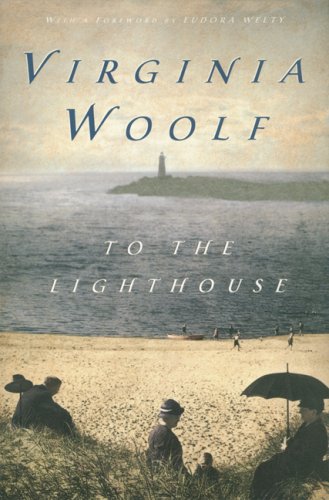
A summer home gathers an annual collection of family and friends.  Generations  explore common interests, new love, old hatreds, bad habits, disappointments and the expanse of silence and misunderstanding that can exist  within the close proximity of summer rituals.

Allegory and metaphor play an extraordinary role in  Woolf’s story.  Those that know personally of these gatherings  will see in the mirror the silent spaces that exist even in the most intimate relationships. Kind words never spoken, emotions not expressed, anger never stated, forgiveness withheld, passion restrained, while  life goes on  around the missed opportunities found in a perfectly orchestrated daily schedule and of course the every-present constant of the lighthouse.

To The Lighthouse is about the human spirit and this 1927 novel set on the coast of Scotland could very well be a 21st Century family gathering in Quogue, Blue Hill, Montauk or Kennebunkport.  Journey To The Lighthouse with Virginia Woolf. You could not ask for a better companion.

ONE WEEK TO READ THE HELP BEFORE MOVIE RELEASE!

Just as I had recommended that you read Water for Elephants before seeing the movie I am making an educated guess that the same will be true for The Help by Kathryn Stockett. Based on the number of weeks of the NY Times Best Seller List, many have already done so, but I believe it will make a huge difference in appreciating the movie.  Go for it while there is still time!

LONESOME DOVE SERIES-GOOD FOR AN ENTIRE SUMMER!

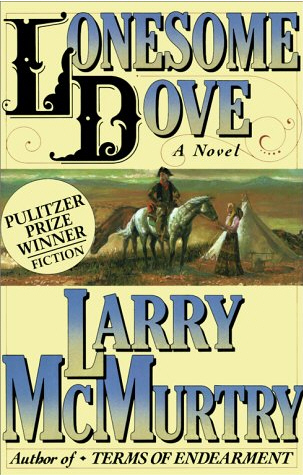
On the top shelf, back in the upper right hand corner sits Lonesome Dove, the 1985 Pulitzer Prize winner by Larry McMurtry.  Who could forget Lonesome Dove?  A blockbuster movie, television series, country music iconic song all attributed to McMurtry’s storytelling.  All of the elements of a great western epic are incorporated in Lonesome Dove. Texas Rangers, a love story, Indians, a lawless frontier, and the sheer beauty and adventure of a cattle drive from Texas to Montana.  Recalling the pleasure of reading Lonesome Dove brings into focus the entire Lonesome Dove Series. 

Lonesome Dove (1985), Streets of Laredo (1989) Dead Man’s Walk (1996) Comanche Moon (2008). Although written in the aforementioned order, if you wish to read them in the chronological order of the plot setting you would begin with Dead Man’s Walk  ( set in the 1840s) dealing with the earliest adventures of  Texas Rangers Augustus McRae and Woodrow Call set around the Santa Fe Expedition of 1841.  You will also be introduced to Comanche worrier Buffalo Hump and several other important characters that appear in the later novels.

Comanche Moon is set in the 1850s-1860s with McRae and Call in pursuit of the Comanche horse thief Kicking Wolf. Also entering the storyline is McRae’s love interest Clara Forsythe, and his rival Bob Allen. Buffalo Hump leads the Comanche Nation to war with a detailed plot of characters and twist and turns moving through the Civil War and to Lonesome Dove.

Streets of Laredo is the fourth and final book in the series, set in the 1890s.  Texas Ranger Woodrow Call is now a bounty hunter tracks a Mexican Bandit who is praying on the railroads. Gus McRae appears protecting settlers from renegade Indians and bad folks in general. Loves are won and lost; the paternity of certain children is surprisingly identified. Judge Roy Bean, “The Law West of thePecos” is hanged.

I read Lonesome Dove first, set in the mid to late 1870s but having done so my next step is to return to the beginning of the chronological order of the plots and pick up Dead Man’s Walk.

McMurtry’s ability to establish and carry forward characters reminds me of Tom Clancy with Jack Ryan, Jack Ryan Jr., et al.   McMurtry has given us Augustus  Gus” McCrae, Woodrow F. Call, Joshua Deets, Pea Eye Parker, Jake Spoon, Clara Forsythe Allen, Maggie Tilton, Lorena Wood Parker, Blue Duck, and Buffalo Hump. You will be fascinated with all of them.

AGAINST ALL ENEMIES-A STAND ALONE TOM CLANCY!

I have previously referenced in an earlier post the pleasure of reading fourteen Tom Clancy novels in sequence! The characters appear and re-appear and of course there is the ever-present Jack Ryan as in the case of last year’s Dead or Alive.( See earlier Tom Clancy Blog).  Against All Enemies is written with Peter Telep

I have just completed Against All Enemies sans Jack Ryan but ex-Navy-Seal  Maxwell Moore carries forward Clancy’s genius for crafting fabulous thrillers. A warning, when you arrive at Chapter 42 clear your schedule because you will not be able to put this book down until the last page.  If you love Tom Clancy do not leave for summer vacation without Against All Enemies.

Those of us who have already read Dead or Alive will have to wait for the next Clancy volume to find out who wins the election!

THE WINGS OF THE DOVE/ HENRY JAMES IS PRODIGIOUS!

Those of you who have paged through Gordon’s Good Reads know that I have a penchant for playing catch-up with great writers who have escaped my time and attention. 

Henry James, the American born  novelist ( 1843-1916) whose most prolific years were spent living and writing in England, is a classic example of a novelist for whom anyone who has a love for the form will find his work a Good Read. In making my “classic” Henry James selection I chose The Wings of the Dove (1902) a book credited by many as among the best novels of the 20th Century.

Henry James writes in a unique style. His sentence and paragraph structure is complex and his character development is intricate. The characters are  the narrators of the story. The Wings of the Dove is typical of many James novels in that it pits American and British traditions and values against one another.  James creates eight central characters that interact in life’s dramas of love, greed, envy and deception.  The book travels from  America to England and Venice.

Henry James has been described as an “Impressionist” in his ability to create characters and then with the minutest attention to personality cast them in relationships and enviornments that are so complex that they sometimes defy a “Now I understand!” moment. One is constantly required to turn yet another page for answers which often lead to more questions.

The reader of Henry James ought to be prepared to  traverse a hundred pages to become accustomed to the rhythm of his prose. However, once you find the tempo the paragraphs become lyrical.  You will come to be accustomed to sentence structure where a half-dozen commas and a few added semi-colons are commonplace! The complexity has a magnetic effect that draws the reader to make every word count. No skimming in reading The Wings of the Dove!

James wrote his greatest works during three periods, the 1880s, 1890s and 1900s.  The first period culminated with The Portrait of a Lady (1881), which remains his most popular work of fiction.  In 1886 James wrote The Bostonians themed around the early feminist movement in America.  Following The Wings of the Dove, James wrote The Ambassadors (1903), and then the famous short story The Turn of the Screw, later adapted for the stage.

I have often said in these pages “The best new book is one you have not read.”  Henry James, The Wings of the Dove is no easy literary undertaking but I found it to be worth every minute.

Like many writers, James has favorite words which reappear throughout his work. In The Wings of the Dove you will come upon “prodigious,” again and again.   It is a fitting description of The Wings of the Dove.  “Impressively great in size, force and extent. Marvelous.”

TABLOID CITY, PETE HAMILL

Long ago I joined the chorus calling Pete Hamill a New York City Treasure. I enthusiastically expand the geography to a National Treasure!  Pete Hamill again  earns those accolades  with  his new novel Tabloid City!  If you have an ounce of New York City in your DNA you will  be captured by Hamill’s intimacy with his beloved turf.

Tabloid City  is set within 24-hours of life in New York. Terrorist plot, a daily afternoon newspaper in its last days, the legendary editor, typewriters, reporters who can not write without a cigarette, society ladies, an embittered disabled veteran, lost love, misplaced affection and a very old man who in his dying days does the right thing!  There is a line in Tabloid City that perfectly describes Hamill.  The copy refers to Sam Briscoe, editor of the The World.   ” You’re such a lucky man, Sam. You didn’t get the world secondhand. You didn’t take a course in it.  You Lived it! ” That is Pete Hamill!  The Wood! ( You will see).

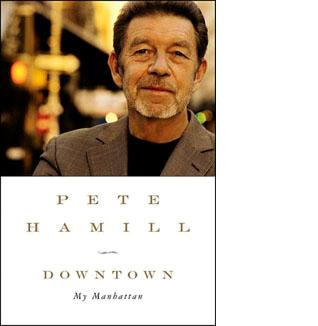
There are three other Pete Hamill books which I relished with wonder. Downtown, My Manhattan. The title says it all!  A moving memoir of Hamill’s days and nights in New York from Times Square to the tip of Manhattan.  Street corners, movie theaters,  the pulse of anger, rebellion, hope, enterprise, greed  and celebration. The writing of a newspaperman. Not a wasted word!

One of Pete’s greatest treasures is PIECEWORK (1996) a compendium of his best writings dating back to 1970. Men and women, small pleasures, lost cities within the city, Gotti, Sinatra, Vietnam, Lebanon, Tyson, Madonna, cigarettes, typewriters, linotype , deadlines and headlines.

Hamill’s novel Snow in August, ( 1997)  is a fabulous read.  A story that could only unfold in New York where people who shouldn’t get along do so and where relationships blossom out of  fear and mis-understanding.  Snow in August is about Catholics and Jews, hope and transformation through the creation of characters in a plot that is entwined in the culture of Hamill’s  town. These are just four of Pete Hamill ” treasures.” Others include North River, Forever, A Drinking Life and Why Sinatra Matters.   Summer is coming. Go for them all!
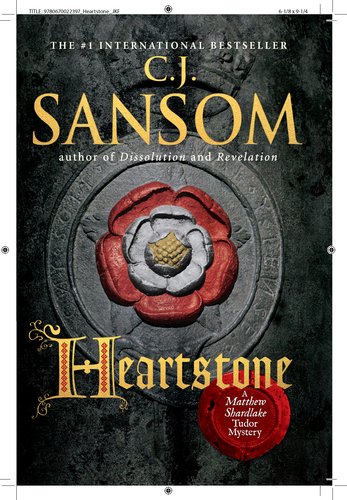
HEARTSTONE/C.J. SANSOM

Heartstone, the latest in the C.J. Sansom Shardlake, Tudor England mysteries carries forward the authors great images and twists and turns of the reign of Henry VIII and the characters developed that  are always tangential to the Throne, the Queen and the Court. 

Heartstone is no exception and those of you who were introduced to this series by my earlier blog  ( April 2, 2011) will not be disappointed. Sovereign, and Revelation are  also excellent reads but my choice from among the series remains Dissolution. 

From a historical point of view, Heartstone is set against a background of Henry  VIII embarking on yet another war with France. Yes, there is the usual Sansom twist in the plot that I doubt you will guess until the very end.

Did Stephen Holden of the NYTimes Read/See The Same Water for Elephants?

Last week I suggested you read Water For Elephants by Sara Gruen then see the movie.  I had read the book then happened to read Stephen Holden’s New York Times review  of the movie before I went to the theater.  I came away from the movie asking myself if Holden read the same book and saw the same movie I did?  I also ask, did he have a bad day on April 22 when the review was posted?

All of us who love books have read and enjoyed a wide variety of authors ranging from great novels, memoirs , to non-fiction and biographies.  Books have vastly different appeal to different audiences. However, for Holden to call Gruen’s work Water for Elephants a lightweight page-turner  is a travesty.  Certainly the work may not be of the calibre of Gone with the Wind, Grapes of Wrath  or For Whom the Bell Tolls but neither are many books that are great reads! 

When I read Holden’s overly negative review of the movie Water for Elephants my enthusiasm  for seeing the picture was diminished. However, when I left the theater I realized Holden was wrong on all counts! 

Water for Elephants the movie  did in fact capture Gruen’s book, certainly not in every detail, but a film seldom does.  Contrary to Holden’s view, the nitty-gritty and cruelty of the world of a traveling circus was abundant, as was the  survival instinct of a circus family.  Hal Holbrook as narrator did in fact place the movie in perspective and drove home the book’s message that at the end of the day, good or bad, the circus, Marlena and Rosie was the only family that Jacob had!  I only regret that time on the screen did not allow further development of the aged Jacob in the nursing home prior to the circus’ arrival in town, thus opening the flashback with  even greater impact.

Before putting a wrap on this I must express my amazement at Holden’s  comment  that the love scene between Marlena and Jacob was disappointing because is was “dimly lighted!”   In retrospect that remark  revealed that Holden missed it all, the book, the movie and the message.

Reese Witherspoon and Robert Pattinson played extremely well both individually and in their roles together.  Surely the characters  we create in our minds from a book can never be totally replicated on-screen but that is why people read books! Despite Stephen Holden’s view,  I think Witherspoon did create an authentic period character and to suggest she was directed to do otherwise is foolishness!

If you have read  Water for Elephants you will enjoy the movie even more but see it whether you have read the book or not.   Don’t believe a word  of Stephen’s Holden’s review. I think he had a bad day and took it out on an enjoyable ” good read ” and a movie that did an admirable job with Sara Gruen’s novel.

WikiLeaks,The Brooklyn Bridge,Suspension

The New York Times revealed on Wednesday April 26th that the latest WikiLeaks distribution tells a story of plots to bring down the Brooklyn Bridge. “Al Qaeda has long had a fascination with suspension bridges, especially the Brooklyn Bridge. New documents reveal that before Sept. 11, 2001, methods for bringing down bridges were being taught at a terrorist training camp in Afghanistan, ” says the Times.

The longer I write this blog the more flashbacks I have to books I have read that connect with current events.  If you are interested in reading of terrorist plots, sabotage and sophisticated murder mysteries written on the level of Caleb Carr and wish at the same time to connect with the glorious history and construction of the Brooklyn Bridge I commend Suspension, a novel by Richard Crabbe. You will also discover an important Civil War connection with the bridge.

Written in 2010, Crabbe builds his story around a murder mystery that leads to a plot to sabotage the bridge by seven former Confederate soldiers who labored for years to hatch a plot to destroy the bridge because of a deep hatred for the Yankees who vanquished them in the Civil War. The Brooklyn Bridge?  Of Course! Washington Roebling the son of  Brooklyn Bridge designer John Roebling was placed in charge of the project upon the death of his father.  Washington Roebling was a distinguished Union Army Civil War officer having served with particular distinction at the Battle of  Gettysburg.  Thus Roebling’s ” Yankee-Bridge” became an even more meaningful target!

A wonderful mystery with vivid details on the construction and history of the most famous bridge in the world. Crabbe’s first novel qualifies as excellent in both plot and storytelling.

Water for Elephants Movie Vs. Book

You may have seen my previous comments on this blog concerning Water for Elephants, the book, by Sara Gruen. I urged those that had the time to read the book before seeing the movie.  Since the film opened last Friday I would be interested in your comments and comparisons.  If you like, please take the time to post your comments here on the blog.