BUSH 41 UPDATES ALL THE BEST-MY LIFE IN LETTERS AND OTHER WRITINGS

You may have caught the news that President George H.W Bush has updated the 1999 compendium All The Best, My Life in Letters and Other Writings. The new volume includes correspondence between father and son during the two terms of the George W. Bush presidency, including poignant comments regarding the war in Iraq and insight into Bush 41’s friendship with former President Clinton.

images-1

George H.W. Bush has been a life-long writer of letters.  I received a personally autographed copy of the original All The Best when the then former president visited his hometown of Greenwich at a breakfast conducted by Just Books,  a prominent book store at the time that has since closed.  During Bush’s comments it became quickly apparent how emotionally involved he is when referencing his children and grandchildren. He readily admits and it was in evidence that he finds it difficult to read his own personal letters without tears.

I became aware of this up-dated version of All The Best while reading Richard Ben Cramer’s  What it Takes a wonderful work of non-fiction regarding the 1988 presidential election and Bush’s victory over Bob Dole and then Michael Dukakis.   Cramer credits Bush’s great communications skills as a key ingredient in the Bush victory.  Never in the course of that campaign was an opportunity missed to write a personal letter to thank a donor, to accompany a photograph or recognize a favor or personal introduction. That same discipline served Bush during his presidency and over a fifty year career in public life.

Letter writing is of course a lost art, replaced by e-mail and text messaging. It seems to me however that neither of the aforementioned leave the indelible impact of a hand-written letter. Letter writing is as inspiring for the author and the recipient.   Each of my children, grandchildren, loved ones and personal friends have received a letter upon all of the important occasions, accomplishments and challenges in their lives.  I have discovered that despite all of the e-mails, telephone calls and texts, it is these letters  that remain in their possession and often rekindle the importance of love, milestones and friendships. They become a landmark in an otherwise sea of words.  No surprise that All The Best strikes a chord with me!

Thoughts penned by one’s own hand are permanent fingerprints of the mind, ethos and soul. All The Best  may  define George H.W. Bush better than the  thousands of words written about him by others.

February, 10, 1997: Former President George H.W. Bush writing to a young girl whose Dad was killed while serving in the United states Army in Panama: All The Best, pp: 597 excerpts)

Dear Britnay,” You never knew your Dad. I didn’t know him either. I had to make the call that sent him into battle.— Your father was one of the ones that made the ultimate sacrifice. He gave his life. I think  your Dad felt he might die for he wrote a most beautiful letter to your grandmother, a letter that said among other things, ‘I am frightened by what lays beyond the fog, and yet do not mourn for me. Revel in the life that I have died to give you.’ — I shared this letter with our entire nation during my State of the Union Address on January 31, 1990. As I did I choked up because I knew your entire family was hurting.— I wish I had known your Dad personally. I think I would be a better man if I had known him, for his kind of courage lifts men up and inspires them. May God bless you in your life ahead.

George Bush.
WHAT IT TAKES-RICHARD BEN CRAMER -DOES MUCH CHANGE IN AMERICAN POLITICS ?

Pulitzer Prize winning author and journalist Richard Ben Cramer died in January of this year. Cramer is considered by many insiders to have been the best student of American presidential politics. His death brought to my attention the 1992 book What It Takes, The Way To The White House.  I can only express regrets for not having devoured this magnificent work sooner.

images

What it Takes, the detailed narrative of the 1988 presidential primary and election,  is not for the casual reader. Its 1000-plus pages has been quoted as ” The ultimate insiders book on presidential politics.” Richard Ben Cramer places under a microscope the inner thinking and personalities of those who would place themselves into the 1988 race to become President of the United States. What makes the work even more provocative  is the relevancy of the 1988 election, including a bitter Democratic Primary that resembled in great part the divisive Republican Primary of 2012.

Cramer details with precision the backgrounds, personalities and political aspirations of George H.W. Bush, Bob Dole, Michael Dukakis, Gary Hart, Richard Gephardt, Joe Biden, Jesse Jackson and the lesser players as well.  Of particular contemporary interest is the insight into the mind and ambitions of Joe Biden that may well play out again in the 2016 campaign for the White House. Cramer’s research into the Biden personality is so complete that these pages of What It Takes could well qualify as a Biden biography!  More on that to follow.

The 1988 Republican primary election is a match up between  Vice-President George H.W. Bush and Senator Bob Dole which results in an ultimate  November face-off between Bush and Democrat Michael Dukakis.  While we think we know Bush better his having had What It Takes to win the presidency in 1988,  Cramer’s insight into how the Bush personality and family background made certain that victory is remarkable.  Bush had spent a lifetime building friendships, communicating and never burning a bridge.  He maintained a big picture view of the oval office.   The comparison with Dukakis is stark.  The Massachusetts Governor prided himself on being a micro manager and believed right up until election night that the job of the president what that of a manager with the words “leader and vision” rarely in his campaign vocabulary.

In many ways What it Takes is a series of biographies. While the book is commendable for this reason alone, don’t look for neat compartmentalized chapters on each personality. Cramer’s prose and story telling is much more sophisticated.  The reader will learn why Bob Dole, the “Bobster” became the “Hatchet Man,” why Gary Hart’s personality demanded that even after withdrawing over the Donna Rice scandal, he re-entered the race in denial that he had no chance. Joe Biden withdrew over a plagiarism scandal and re-entered the campaign only to be sidelined a second time by a nearly fatal aneurism.  Richard Gephardt worked harder than any Democratic candidate but failed to find a message. There is Kitty Dukakis, Barbara Bush, Jill Biden, Lee Hart, Lee Gephardt and of course Elizabeth Dole.

Along with all of the candidates the “press” and of course the  handlers, consultants and political advisors  have a constant presence in the narrative bringing out the often shameless  positions that candidates take to win elections.  Paraphrasing Cramer, the presidential election process ” cheapens the issues or ignores them,  reduces the dialogue to noise, is spendthrift, exhausting and hurtful.” Cramer leaves no doubt the attaining the presidency is a brutal obsession and leaving little left of individuality. Winning the presidency and moving into the bubble changes very little.

A most memorable reference from What it Takes concerns  the first Gulf War, Desert Storm.  How  did President Bush manage to put together the coalition to force Saddam Hussein out of Kuwait?  “He was the only man alive who had  personal  friends as the heads of states in 30 countries. ” He called in the favors.

My takeaway is that George H.W. Bush was the only candidate in 1988 who understood in totality what was required to be elected president and  who was willing to make the sacrifices to attain the goal. He had learned that from a life-time in public service and from his family’s heritage.  Ironically, four years later Bush 41 may not have had the willingness to repeat the same sacrifices necessary to defeat Bill Clinton in 1992. Yet,  after the fray, they became good friends.

What it Takes is a big commitment of time but if you love the American political system and wish to gain a rare biographical insight into the minds of the players in 1988 your investment will be rewarding. Like all good historical research and writing the knowledge gained is relevent in the present.   Listen to what Bob Dole said at a convention  of Young Republicans in Seattle in 1988. ” Conservative does not mean callous. I’d like to see fifty wheelchairs in this audience, fifty black faces, fifty Hispanics, fifty Asian Americans. We have a responsibility to open up the doors of this party.”  Did anyone in the 2012 GOP inner circle hear the Bobster or were his words simply lost in the cacophony of just another campaign?

Other books by  Richard Ben Cramer: Ted Williams: The Seasons of the Kid (1991), Bob Dole (1994), Joe DiMaggio: The Hero’s Life (2000), What Do You Think of Ted Williams Now? A Remembrance (2002), How Israel Lost: The Four Questions (2004)


DISCOVER- ISLAND BENEATH THE SEA- THE NOVEL

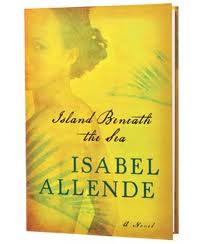
Isabel Allende was born in Peru and raised in Chile. Her her 2009 novel Island Beneath The Sea, translated from its original Spanish, is the story of the evolution of slavery  in Saint-Dominque,  modern-day Haiti.  Allende,  like James Michener, establishes characters  so compelling that the reader becomes associated with every aspect of their lives.  Like Michener’s book Caribbean , Island Beneath The Sea begins with the saga of the annihilation by the Spaniards of the island’s Arawak Indians followed by the establishment of slavery as the economic  driver of the sugar industry throughout the Antilles.

imgres

The devastation and human suffering caused by the Spanish  is compounded when the French replace Spanish rule by establishing a permanent colony on Saint-Dominque.  The story of the great sugar plantations and the abhorrent treatment of the slaves imported from Africa is told through the life of a slave girl, Zarite’,  born of an African mother and a white sailor, neither of whom she never knew.

Island Beneath the Sea is a generational saga of the children of mixed black and white blood, that was so prevalent in plantation life.  Young girls became the forced lovers of the plantation masters and overseers with offspring by the hundreds bought and sold in the cycle of human bondage.  The story of Zarite’s survival is riveting , bringing to the reader an understanding of the plantation slave culture, later imported to the American south. In broad terms, I would classify Island Beneath the Sea as a historical novel.

In the early 1800s with the great slave revolts devastating the island’s plantations, the slave culture of the Caribbean migrated to America.  The economic driver expanded to include cotton and rice. The novel captures reality as Zarite, having been transported by circumstance from Saint Dominque ( Haiti)  to New Orleans  discovers that her emancipation and freedom, even in America, is a glass only half full, as an entire sub culture of mixed race ethnicity evolves and plantation life for the slave does not change.

Our contemporary discourse regarding slavery, heightened by the release of the movie Lincoln, makes this novel even more timely. Throughout its pages lies the heritage of the greatest issue faced by American’s transcending the 19th and 20th centuries.

Isabel Allende is the author of nine novels including Ines of My Soul, Daughter of Fortune and Portrait in Sepia., all of which were New York Times best sellers.  I am thankful for the introduction to Allende by my daughter much in the same way as I was grateful to a good friend for recommending Anya Seton’s Winthrop Women.  You too will not be disappointed!

A FALSE DAWN FOR FREE MARKETS- LAISSEZ-FAIRE?

John Gray is among Britain’s  ” former ” conservative  thinkers who had major influence on Margaret Thatcher during her tenure as British Prime Minister.

imgres

Gray, a long-standing  unfettered free enterprise advocate , had an epiphany regarding his economic views and in 1998 published False Dawn, a highly academic discussion and prediction as to why a laissez-faire global economic system was unworkable and forecast the economic calamity that fell upon the U.S. and the world in 2008. Gray’s thesis in  False Dawn is that  the American-style unregulated free market system was the major contributor leading up to the world economic implosion of 2008!

False Dawn is a heavy reading assignment!  However, the perspective Gray brings to the discussion of  government’s role in the free enterprise system is both provocative and startling.  Of particular note is his reasoned analysis of why he now conversely believes that only government involvement in the framework of free-enterprise can prevent the income disparity that exists in both the U.S. and  international economic system.  Gray makes the case that income disparity, now seen in largely un-regulated world-wide free-enterprise economies, has led to economic perdition.  He  warns of the danger of the IMF for trying to impose the US economic model on the world.

So what is the take-away?  Has Gray gone from a Thatcher conservative to socialist?  I think not, but he is a strong advocate for the necessity of some government role in fostering growth and regulating free enterprise. The growth side of the Gray proposition comes from his advocacy of government  investment in infrastructure, scientific research and new technologies, all of which is  part of the contemporary economic and political dialogue!

Ironically, as I was finishing False Dawn  the January 12, 2012 issue of The Economist arrived with a cover story The Great Innovation Debate. While the article does not focus upon income disparity, it makes a strong case for government spending on infrastructure and basic research. As might be expected, the government investment advocacy does not come without The Economist warning of too much regulation “getting in the way of the 21st century’s innovative juices.” Many sides to a complex issue.

False Dawn is a great companion read to those fans of Tom Friedman, in particular Hot-Flat and Crowded and Robert Wright’s Non Zero. In all three cases you may wish to take notes!

GONE GIRL-GONE GUY- ALL GONE

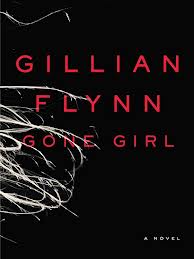
Gillian Flynn’s Gone Girl is all over every best seller list.

Image

Never having read Flynn before I said why not and what a surprise! Forget the substance for the moment, I will get to that but the format, diary like, allows the reader to quickly churn through this fast paced thriller.  No need to reference backward as each chapter begins with its own initiative, clues, blind sides and revelations to keep the reader guessing.  Without this format you may need MapQuest!

A troubled marriage, sinister plot, duplicity and murder travel this fast paced highway.  Yes, you may get lost before finding your way and I doubt very much you will predict the ending!  Flynn weaves social issues into the story including aging parents, Alzheimer’s, Colombo like cops and a female TV crime show host ever so anxious for the next accused man to vilify.  One thing is for sure, Flynn leaves few local folks in Carthage Missouri with little if any dignity!

So the perfect New York City romance ends in a thriller along the banks of the Mississippi! Can you ever go home again?   Just read this bit of copy to whet your appetite and if you are lucky enough to be heading to a warm weather beach this winter, bring along Gone Girl.

Nick Dunne ( husband) ‘”I am finally a match for Amy ( protagonist ). I was a callow boy, and then a man good and bad. Now at last I am the hero. I am the one to root for in the never ending war story of our marriage.  We are one long fighting climax.

Also by Gillian Flynn Dark Places, Sharp Objects.

TOM CLANCY THREAT VECTOR-ON THE EDGE OF REALITY!

Tom Clancy teams with close range combat expert Mark Greaney to bring fans a new  work of fiction that touches the edge of reality in a world of cyber warfare!  The players from his previous best seller Locked On return in the new Clancy book Threat Vector.  Jack Ryan is now president, his son Jack Jr. is even more deeply involved in The Campus black ops.  Hendley, Mary Patricia Foley, Ding Chavez, John Clark and Sam Driscoll carry on.

images

The new bad guys are the Chinese Communists operating a cyber warfare ghost ship called The Center, run by a Dr No like character, Dr. Tong Kwok Kwan.  Kwan infects U.S. military computer networks, takes control of U.S. Air Force drone aircraft, invades CIA secret files, destabilizes a U.S. nuclear power plant and shuts down America’s power grid with the click of a mouse.

No Clancy fan will be disappointed with the pace of the novel and all will admire the accuracy of the military, scientific and cyber research provided by co-author Greaney.


President Ryan is faced with an all out land war against the Chinese Communists  as they re-claim the South China Sea and threaten U.S. Military presence in the region, all in preparation of an elaborate plan to capture Taiwan!  The threat is escalated when it is discovered that The Campus itself has been compromised, with The Center bad guys one step ahead of The Campus good guys. Who, where, when, why and how could that happen? For Jack Ryan Jr., it may be closer than he could imagine.

Enjoy every page as the authors pull together all of the elements of good against evil to develop a plan and strike force involving assassinations , Taiwanese Air Force planes secretly flown by U.S. Pilots, a surgical bombing in the center of Beijing and the tactical planting and withdrawal of the Campus black-ops including the president’s son Jack Ryan Jr.

Clancy is the master in turning contemporary issues  into reality. Who but Clancy would have cyber hackers hijack drone aircraft?  What is the level of vulnerability of U.S. top-secret communications networks?  Are nuclear power plants subject to cyber attacks?  The good guys in Threat Vector win but many of the issues raised remain outside the pages of the novel. Suspense from the master, and high marks from this Tom Clancy fan.


LINCOLN-NARROW FOCUS-TIMELY MESSAGE

Gordon’s Good Reads does not make a practice of reviewing movies but when a film is based upon a book that I have enjoyed, written by an author in whom I have the highest regard, I broaden my license. Doris Kerns Goodwin is among the country’s most respected presidential historians. Goodwin’s book Team of Rivals, upon which the movie Lincoln is loosely based, falls into the category of an intimate study not only of Lincoln but also of those with whom he surrounded himself in his cabinet.

images

I read the Goodwin book and also the early reviews of the movie Lincoln so I had some idea of what to expect before seeing the picture. I understand that the movie was about Lincoln’s political genius but I left the theater wondering what impression anyone who had not read Team of Rivals would have come away with. They certainly saw an excellent performance by Daniel-Day Lewis and learned how the Thirteenth Amendment was passed, but was this the Lincoln they expected to see? Did the movie leave too narrow an impression for such a broad title? I think so.

Lincoln is depicted as a brilliant politician pursuing whatever tactics necessary to pass the Thirteenth Amendment, abolishing slavery. Missing from Lincoln was the remarkable story of the end of the Whig Party and the evolution of the anti-slavery Republican Party. Goodwin’s book fills in the important detail that positioned Lincoln for the 1860 presidential nomination including the Lincoln-Douglas debates of the 1858 senatorial campaign and Lincoln’s Cooper Union address in New York  in 1860. Equal to Lincoln’s brilliant political strategy in getting the Thirteenth Amendment passed was the fact that he won the Republican nomination by defeating the heir apparent, William Seward, which laid the basis for Lincoln bringing all of his challengers for the presidential nomination into his cabinet. The Goodwin book details how the interaction of this disparate group influenced Lincoln’s conduct of the Civil War. The film’s short clips of Lincoln viewing battlefields and Lee’s surrender did little to place the enormity of the Lincoln presidency and his team of rivals in context.

images-1

There is no doubt that Daniel Day-Lewis is on track for a Best Actor nomination and that the film will be among the nominees for Best Picture but the title Lincoln was a huge reach and likely a disappointment for many. Would you title a movie The Civil War and only tell the story of Gettysburg?  On the other hand, if Spielberg had instead titled the movie The Passing of the Thirteenth Amendment, would anyone have come? I get it. It will take a five-part Ken Burns PBS Series titled Lincoln to fill this history buff’s canvas.

One thing for sure, the film has provoked a great deal of talk from the pundits about a president’s need to be very much a politician in order to attain lofty goals.  As the nation again approaches the edge of the partisan fiscal cliff the timing of the release of the film and renewed interest in Team of Rivals could not be better! Maybe the narrow focus of the movie is a good thing after all!  Required congressional viewing?


BACK TO BLOOD-MIAMI-PAINTED BY TOM WOLFE

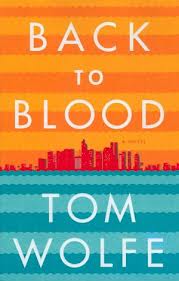
I opened Tom Wolfe’s Back To Blood  on Thursday afternoon!  It is now Saturday afternoon and every word on each of the 704 pages has been digested!  I guess I could simply end my overview with that!  However, it can not go unsaid that Tom Wolfe engages the reader from the first page whetheimages-2r it be Bonfire of the Vanities or my favorite Wolfe novel, I am Charlotte Simmons.

Back to Blood catapults the reader into the political and social structure of Miami.  There is little left out of this vivid painting. A WASP publisher of the Miami Herald seeks to avoid controversy at all costs. Add to the mix a young aspiring  reporter, A black chief of police, a Cuban mayor, and a police officer, also Cuban, who with great consistency finds himself in the middle of  two huge stories that threaten the delicate balance between all of the competing constituencies within this cosmopolitan melting pot. There is also plenty of  humor, bringing back images of Lucky You by Carl Hiaasen, another Miami based novel.

With great skill, Wolfe introduces the ethnic beauty of the women of Miami who play a major role adding to the complexity of relationships as played out by the protagonist police officer Nestor Camacho.  There are dozens of contemporary themes as a video of a police drug take down goes viral, a local psychiatrist specializing in pornographic addiction becomes a high-profile TV Doctor, a stunning light-skinned Haitian woman of French heritage is a love interest.  Miami Art Basel and a new Miami Art Museum become a focal point in a fake painting fraud perpetuated by a Russian Oligarch and his entourage.   Wolfe carefully  and with great creativity brings all of these factions together in a tumultuous conclusion.

images-3

Place Back to Blood on the Christmas gift list for friends who enjoy a good read.  Pick up the hard cover as any Tom Wolfe novel is worth a permanent place in a book lovers library. Luckily, Back to Blood arrived when the family was traveling and I only had my dog to offend with my face in a book for two days. What pleasure great writing can bring and the new Tom Clancy novel Threat Vector is on the way December 4th!

Timothy Egan’s Fascinating Read For Those Who Watched Dust Bowl on PBS

The Ken Burns PBS special Dust Bowl could well have been based upon Tim Egan’s book The Worst Hard Time. Although Egan appeared in the  television special, his book takes the reader on an even more vivid journey.  Of course it is also in the Dust Bowl that begins Steinbeck’s The Grapes of Wrath.

The Worst Hard Time bTimothy Egan dramatizes remarkable similarities between the Great Depression of the 1920s and the 1930s and the Great Recession of 2008-2011. The land grab in the High Plains, the breaking of the virgin sod, and the rampant speculation in wheat by homesteaders and suitcase farmers alike all fueled by easy money.  Sounds a lot like no income check mortgages home equity loans!

If you interchange  a few names: Housing Bubble for High Plains land, wheat speculation for Mortgage Backed Securities and suitcase farmers for real estate and Wall Street speculators Tim Egan could have very well been describing today’s financial crisis.

Egan wrote The Worst Hard Time in 2005 and uncannily described exactly what was coming in the next Worst Hard Time! 

Another fine Tim Egan book is The Big Burn which includes many additional lessons on what happens when financial speculation and politics trumps common sense. It is all about Teddy Roosevelt, the environment and our National Parks.

Both books are timely reads.

THE MAN WHO SAVED THE UNION-ULYSSES GRANT IN WAR AND PEACE

In the excitement of  the release of  the Steven Spielberg  movie Lincoln, I have coincidentally just completed H.W. Brands’ The Man Who Saved The Union , Ulysses Grant in War and Peace.  Grant, not Lincoln, the man who saved the union?  On the surface, the book’s title is a dichotomy of  enormous proportion. In reality, Grant accomplished much of Lincoln’s vision and the movie Lincoln  should encourage renewed interest in the presidency of Ulysses Grant.

Historian Brands takes nothing away from the great emancipator. To the contrary, he highlights Lincoln’s wisdom in plucking Grant from the western theater of the Civil War and rapidly promoting him to command all Union forces.  Brands forcefully makes the case for Lincoln’s stubborn confidence in General Grant amid repeated periods of doubt, chaos and defeat. Following the war, Lincoln relied on General Grant to carry out the challenge of reconstruction it’s the South including its return to civil order.

Spielberg’s  Lincoln, is based in part of Doris Kerns Goodwin’s book Team of Rivals.  Brands’ biography of Grant portrays how together, two of the greatest figures in American history, Lincoln and Grant, crafted an outcome that did indeed preserve the union. Ironically, through an act of fate, it was the hand-picked military general who carried out the brilliant politicians foresight. The movie Lincoln, and the books Team of Rivals and The Man Who Saved The Union embrace the same cast of historical figures.  Following a biographical review of Grant’s early and then wartime years, Brands continues his narrative after Lincoln’s assassination and the debacle of Andrew Johnson’s ascension to the presidency, leading to Grant’s election as president.

Brands leaves no doubt that General Grant, as the overseer of reconstruction while Johnson was president, used every tool within his power as commanding general, to carry out Lincoln’s philosophy toward bringing the rebel states back into the union. Grant’s zeal was equal to Lincoln’s regarding equality and the rights of full-citizenship for the recently emancipated slaves, while at the same time finding the way to keep the Southern States in The Union.   Lincoln ‘s death and the Johnson presidency made the task nearly impossible.  It was during this period that Grant came to fully understand and embrace Lincoln’s intellect which laid the foundation  for a Grant presidency that would bring into fruition Lincoln’s dream.

General Ulysses Grant, the man who disavowed politics and  as General in Chief refused an office in Washington, casts aside his disdain for public office and accepts the nomination of the Republican Party for President of the United States. It is Grant who carries forth the Lincoln legacy by navigating  passage of the, Fourteenth and Fifteenth Amendments to the Constitution through a bitterly divided congress.  In order, these amendments granted equal citizenship under the U.S. Constitution and created the voting rights act.  Brands details Grant’s deft handling of reconstruction during his two terms in the White House utilizing diplomacy and the military to neutralize the Klu Klux Clan and other White Citizens Organizations.  You see in Grant’s ability do deal with the disparate forces in congress much of the same political savvy wielded  by Lyndon Johnson over a half century later!

I caution readers not to look here for a battlefield  history of the Civil War although there is substantial detail on the capture by Grant of Fort Donelson and Fort Henry in the west and the epic battle at Spotsylvania in Virginia.  While the military overview of the war is complete, this book is mainly about Grant, the man, the general and the president.  You will find many of Lincoln’s Team of Rivals still in play while Grant begins his ascendency and assumes the presidency.

Team of Rivals by Doris Kerns Goodwin is an obvious read before seeing Lincoln.  The Man Who Saved The Union by H.W. Brands is a must sequel.  Brands is also the author of the great FDR biography Traitor to his Class.