A MONUMENTAL WEEK IN CIVIL WAR HISTORY!

The first week of July, 2013 commemorates the 150 anniversary of the Civil War Battle of Gettysburg, considered by many historians as the greatest battle of the war and the fateful turning point leading to the ultimate defeat  and surrender of Robert E. Lee and the demise of the Confederacy.  The great battle took place in three engagements on July 1, 2 and concluding with the disastrous Confederate Pickett’s Charge on July 3rd, 1863.  The sun rose on July 4th over a battlefield that witnessed over 5,700 killed and more than 27,000  wounded, thousands of whom died from wounds in the ensuing weeks.  More has been written regarding this great battle than any other in history, including  D-Day.
15981669

This week another new book,  Gettysburg by Allen C. Guelzo is added to the library of Gettysburg non-fiction.  Simultaneous to the release of Guelzo’s book and in conjunction with the Gettysburg 150th anniversary, the Smithsonian has released a fabulous interactive map that helps explain why General Lee made a critical mistake in underestimating the depth of the Union Forces he faced. The map addresses the issue of the extreme lack of intelligence and reconnaissance on behalf of either side during all of the Civil War engagements.  Prior to the commencement of hostilities, Lee climbed to the top of  cupolas, one at the Lutheran Seminary and the other at Gettysburg College to survey Union troops.  The Smithsonian GIS generated map, together with the research of Middlebury College professor Anne Knowles, clearly shows that deceptive terrain made it impossible for Lee to judge the magnitude of the Union forces. Lee’s problems were of course magnified  by the absence of his cavalry led be Jeb  Stuart. To examine the new GIS map of the Gettysburg battlefield go to : http://bit.ly/1crQWYd

DO NOT OVERLOOK VICKSBURG!

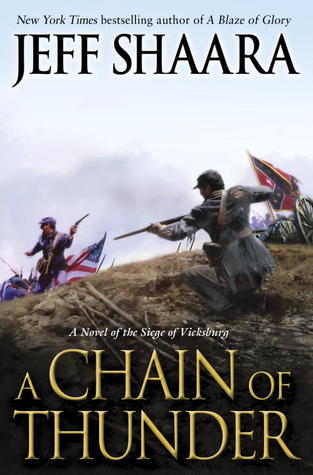
With the natural focus this week on the Gettysburg anniversary it is easy to overlook yet another monumental Civil War battle that historically may equal and in some sense eclipse the great Gettysburg turning point. General  U.S. Grant’s victory at Vicksburg  which culminated on July 3, ( the same day as Pickett’s Charge) in some sense had a greater impact on the war’s outcome than Gettysburg.  

Following two weeks of battle including fierce fighting at Jackson Mississippi and Champion Hill  Grant turned his forces West to Vicksburg, the last remaining Confederate obstacle to opening the entire Mississippi River to Union control.  Following days of brutal fighting and bombardment Grant laid siege to the city and finally on July 4th, 1863 accepted the surrender of General Pemberton’s  Confederate forces and took control of  what had been an impregnable citadel above the river.

While there  continues to be much debate over the work of Civil War historians  ( See David Blight’s  article That a Nation Might Live in the July 1 Book Section of  New York Times ), it will come as no surprise to followers of Gordon’s Good Reads  that I have turned to historical fiction and Jeff Shaara’s new Civil War book A Chain of Thunder, A Novel of the Siege of Vicksburg. Jeff Shaara is the son of Michael Shaara, author of Killer Angels, the story of  the Gettysburg battle. Like the writing of the father, Jeff Shaara places the reader in the boots of the front line soldiers and additionally, in the case of A Chain of Thunder the devastated lives of the Vicksburg’s citizens.

Why does Vicksburg equal the historical importance of Gettysburg? The answer lies in President Lincoln’s recognition  that  he found in Grant following Vicksburg and his earlier victory at Ft. Donnelson,  a commander who could ” win.”!   There is little doubt that the victory at Vicksburg catapulted Grant into being named General In Chief of all Union Forces. In that capacity, Grant’s tenacity, with Lincoln’s unbridled support,  forged the final Confederate surrender at Appomattox Courthouse in 1865.   There is no doubt that the Grant Civil War legacy led to his becoming President of the United States, following the failed short-term of Vice President Andrew Johnson following Lincoln’s assassination.

Whether you prefer non-fiction or historical fiction of any combination thereof, The Civil War is an epic human story that changed the future of not only the nation, but the world.

Other Civil War historical novels by Jeff Shaara”  Gods and Generals, The Last Full Measure, A Blaze of Glory.


DAUGHTER OF FORTUNE-ISABEL ALLENDE

I first became acquainted with novelist Isabel Allende when her 2009 novel Island Beneath The Sea was recommended to me by my daughter.  See my overview  at gordonsgoodreads.com , January, 2013.  Allende is  talented and prolific , having written a dozen novels and three books for young adults. Island Beneath The Sea  is not only a good read but Allende combines a love story with a vivid  picture of events leading to the slave revolution on the great sugar plantations in Dominique , now Haiti.  The story culminates with the great slave migration to the United States, particularly New Orleans.

16527

Ten years prior to Island  Beneath The Sea, Allende published Daughter of Fortune another wonderful tale, this time beginning in Chile where she was raised.  Allende’s uncle Chilean President Salvatore Allende was assassinated in 1974, upon which Allende fled Chile for Venezuela, then moved to the United States.

Like Island, Daughter of Fortune is a complex love story set in the environment of what would  today be called a non-traditional family, the main character having been left as a foundling on the doorstep of prosperous British transplants in Valparaiso, Chile. Allende is generous in her portrait of  nineteenth century life in  this isolated outpost. It is here that her characters  evolve then embark on a journey to the gold fields of California in search of lost love and fortunes .   You will be fascinated with Eliza and even more so with Tao Chi’en.

Isabel Allende is an excellent storyteller, her work is enjoyable, engaging  and with a generous sharing of cultures and history always in the mix. Either of the books will make a good addition to your summer reading. Also by Isabel Allende Ines of my Soul, Aphrodite: A Memoir of the Senses.

DAN BROWN’S INFERNO

The Da Vinci Code, The Lost Symbol and now  Dan Brown’s Inferno, another thrilling novel that will surely fly off the shelves and dominate downloads in the days and weeks ahead.

images

Inferno is art, history, science and a travelogue through Florence and  Venice worthy of being transplanted to the pages of a Fodors Guide.   For fans of Dan Brown, Inferno is so fast paced that the book is a three or four session read, thrilled to follow the familiar exploits of Harvard University professor of symbology  Robert Langdon.

Brown’s multiple short chapter writing style  keeps the reader connected  despite the speed with which the plot evolves.   Fair warning, assume nothing and expect to be deceived again and again as this thriller develops.  Typical of Brown you will never know who is friend or foe until the very conclusion. Paging ahead is forbidden!  You will learn more about Dante Alighieri’s  The Inferno, and the seven rings of Hell than previously imagined and be exposed to Italy’s art and architectural treasures that are alive in the narrative.  Those who have traveled to Florence ,Venice  and Istanbul will be transplanted, imagining the  tale with even greater intensity.

Beyond the expected suspense and surprises, Inferno adds a Transhumanist dimension of  cutting edge scientific technologies that are unimaginable,  calling into question enormous moral and ethical issues in facing  threats to the world’s population. ” You know that nature has always found a way to keep the human population in check–plagues, famines, floods. But let me ask you this–isn’t it possible that nature found a different way this time?”

With the  popularity of The Da Vinci Code , The Lost Symbol, Angels and Demons,   and now Inferno  do not overlook an earlier great Brown novel, Digital Fortress.  Familiar themes and an ever-present ” mystery container” that can wreak havoc on the world. Brown also wrote Deception Point, which I have not read.

When I return to Venice I am convinced I will see Robert Langdon in St. Marks Square and just perhaps,  as the violins play, he will be holding Sienna’s hand.  I hope so!  You will understand.

Another Anya Seton Classic

British historical novelist Philippa Gregory in her foreword to Anya Seton’s Katherine  is correct in identifying Seton among those writers who  ” Dominated historical fiction  following World War II.”   In the opinion of Gordon’s Good Reads,  Seton’s historical novel  Katherine , a huge best seller in the 1950s ,  is perhaps her very best.  Katherine is without doubt a love story, a romantic novel indeed, but the attention to the detailed setting in  Medieval  England in the 1300s , gives this book high marks as a classic historical novel. Just as she did with Winthrop Women, Seton traveled to the novel’s setting and has marvelously recreated a world that only a novelist of her calibre could bring to life.

images-1

Katherine , from rags to riches , Knights in shining armor ( John of Gaunt, Duke of Lancaster), serfs, England’s feudal system, bastard children, the Black Death,  kept woman, love triumphs!  All of the elements of a great romantic novel are here but with page after page the reader is placed in a time and place of Fourteenth Century squalor, chivalry and treachery amid riches , castles and jeweled crowns beyond imagination.    Arranged marriages enthroned Kings an Queens  including  12-year-old King Richard, while the lower classes begin an epoch march to freedom, long before Cromwell and Henry the Eighth dashed all hopes of equality.  Seton gets the history right and delivers the lesson  within the framework of a wonderful love story well outside the confining lines of a text-book. Add to this novel the poetry and presence of Geoffrey Chaucer!

Put Katherine on your reading list. Anya Seton ( 1906-1990), through all of the years will, never disappoint.  See my previous reviews here at gordonsgoodreads of Seton’s Winthrop  Women and Dragonwick.  Also by Anya Seton:  Avalon, Devil Water, Foxfire, Green Darkness and My. Theodosia.

DISCOVER- ISLAND BENEATH THE SEA- THE NOVEL

Isabel Allende was born in Peru and raised in Chile. Her her 2009 novel Island Beneath The Sea, translated from its original Spanish, is the story of the evolution of slavery  in Saint-Dominque,  modern-day Haiti.  Allende,  like James Michener, establishes characters  so compelling that the reader becomes associated with every aspect of their lives.  Like Michener’s book Caribbean , Island Beneath The Sea begins with the saga of the annihilation by the Spaniards of the island’s Arawak Indians followed by the establishment of slavery as the economic  driver of the sugar industry throughout the Antilles.

imgres

The devastation and human suffering caused by the Spanish  is compounded when the French replace Spanish rule by establishing a permanent colony on Saint-Dominque.  The story of the great sugar plantations and the abhorrent treatment of the slaves imported from Africa is told through the life of a slave girl, Zarite’,  born of an African mother and a white sailor, neither of whom she never knew.

Island Beneath the Sea is a generational saga of the children of mixed black and white blood, that was so prevalent in plantation life.  Young girls became the forced lovers of the plantation masters and overseers with offspring by the hundreds bought and sold in the cycle of human bondage.  The story of Zarite’s survival is riveting , bringing to the reader an understanding of the plantation slave culture, later imported to the American south. In broad terms, I would classify Island Beneath the Sea as a historical novel.

In the early 1800s with the great slave revolts devastating the island’s plantations, the slave culture of the Caribbean migrated to America.  The economic driver expanded to include cotton and rice. The novel captures reality as Zarite, having been transported by circumstance from Saint Dominque ( Haiti)  to New Orleans  discovers that her emancipation and freedom, even in America, is a glass only half full, as an entire sub culture of mixed race ethnicity evolves and plantation life for the slave does not change.

Our contemporary discourse regarding slavery, heightened by the release of the movie Lincoln, makes this novel even more timely. Throughout its pages lies the heritage of the greatest issue faced by American’s transcending the 19th and 20th centuries.

Isabel Allende is the author of nine novels including Ines of My Soul, Daughter of Fortune and Portrait in Sepia., all of which were New York Times best sellers.  I am thankful for the introduction to Allende by my daughter much in the same way as I was grateful to a good friend for recommending Anya Seton’s Winthrop Women.  You too will not be disappointed!

GONE GIRL-GONE GUY- ALL GONE

Gillian Flynn’s Gone Girl is all over every best seller list.

Image

Never having read Flynn before I said why not and what a surprise! Forget the substance for the moment, I will get to that but the format, diary like, allows the reader to quickly churn through this fast paced thriller.  No need to reference backward as each chapter begins with its own initiative, clues, blind sides and revelations to keep the reader guessing.  Without this format you may need MapQuest!

A troubled marriage, sinister plot, duplicity and murder travel this fast paced highway.  Yes, you may get lost before finding your way and I doubt very much you will predict the ending!  Flynn weaves social issues into the story including aging parents, Alzheimer’s, Colombo like cops and a female TV crime show host ever so anxious for the next accused man to vilify.  One thing is for sure, Flynn leaves few local folks in Carthage Missouri with little if any dignity!

So the perfect New York City romance ends in a thriller along the banks of the Mississippi! Can you ever go home again?   Just read this bit of copy to whet your appetite and if you are lucky enough to be heading to a warm weather beach this winter, bring along Gone Girl.

Nick Dunne ( husband) ‘”I am finally a match for Amy ( protagonist ). I was a callow boy, and then a man good and bad. Now at last I am the hero. I am the one to root for in the never ending war story of our marriage.  We are one long fighting climax.

Also by Gillian Flynn Dark Places, Sharp Objects.

TOM CLANCY THREAT VECTOR-ON THE EDGE OF REALITY!

Tom Clancy teams with close range combat expert Mark Greaney to bring fans a new  work of fiction that touches the edge of reality in a world of cyber warfare!  The players from his previous best seller Locked On return in the new Clancy book Threat Vector.  Jack Ryan is now president, his son Jack Jr. is even more deeply involved in The Campus black ops.  Hendley, Mary Patricia Foley, Ding Chavez, John Clark and Sam Driscoll carry on.

images

The new bad guys are the Chinese Communists operating a cyber warfare ghost ship called The Center, run by a Dr No like character, Dr. Tong Kwok Kwan.  Kwan infects U.S. military computer networks, takes control of U.S. Air Force drone aircraft, invades CIA secret files, destabilizes a U.S. nuclear power plant and shuts down America’s power grid with the click of a mouse.

No Clancy fan will be disappointed with the pace of the novel and all will admire the accuracy of the military, scientific and cyber research provided by co-author Greaney.


President Ryan is faced with an all out land war against the Chinese Communists  as they re-claim the South China Sea and threaten U.S. Military presence in the region, all in preparation of an elaborate plan to capture Taiwan!  The threat is escalated when it is discovered that The Campus itself has been compromised, with The Center bad guys one step ahead of The Campus good guys. Who, where, when, why and how could that happen? For Jack Ryan Jr., it may be closer than he could imagine.

Enjoy every page as the authors pull together all of the elements of good against evil to develop a plan and strike force involving assassinations , Taiwanese Air Force planes secretly flown by U.S. Pilots, a surgical bombing in the center of Beijing and the tactical planting and withdrawal of the Campus black-ops including the president’s son Jack Ryan Jr.

Clancy is the master in turning contemporary issues  into reality. Who but Clancy would have cyber hackers hijack drone aircraft?  What is the level of vulnerability of U.S. top-secret communications networks?  Are nuclear power plants subject to cyber attacks?  The good guys in Threat Vector win but many of the issues raised remain outside the pages of the novel. Suspense from the master, and high marks from this Tom Clancy fan.


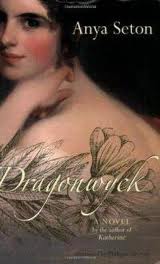
Dragonwyck-Sixty Years Before Fifty Shades of Grey!

Anya Seton’s novel Dragonwyck preceded E L James’ Fifty Shades of Grey by sixty years. However, Seton’s story was prescient of the current runaway best-selling trilogy!

I came upon Dragonwyck after reading Seton’s The Winthrop Women and was quickly drawn to the story of an innocent Connecticut farm girl being catapulted through circumstance into becoming the young wife of the wealthy and dominating patroon of Dragonwyck Manor. The similarities to the Fifty Shades of Grey plot become quickly evident.  Fifty Shades of Grey has Christian and Anastasia, Dragonwyck, Nicholas and Miranda!  Fast cars for Christian and Anastasia, a fine coach and six for Nicholas and Miranda. No bondage and handcuffs in Dragonwyck to be sure, however eighteen year old Miranda Wells quickly learns there is a tremendous price to be paid  for releasing the bonds of hardscrabble New England farm life for an aristocratic lifestyle of limitless wealth as the submissive mistress of Dragonwyck Manor. Dragonwyck emits echos of the great gothic novel Jane Eyre.

Set in the mid-nineteenth century, Dragonwyck begins in Connecticut, then moves to the wealthy estates of the Mid-Hudson region of New York and the social whirl of New York City.  Dragonwyck  is not a historical novel of the scope of The Winthrop Women but it does open to the reader much of the social and economic lifestyles of many of the founding Dutch families of New York as they shared their time between mansions in New York City and their castles on the Hudson. Landed gentry supported by an old world feudal system of subsistence tenant farmers who worked the land.

For further insight into Seton’s The Winthrop Women, see my September blog post. You may also wish to consider Seton’s novel Katherine  for which many overviews are available on-line. It was the most popular of all of her novels and is on my “futures” list.


ANYA SETON’S WINTHROP WOMEN, A TREASURE FROM THE 1950s

The republishing of the prodigious historical novels of Anya Seton in the first decade of this century brings to light the treasure trove encompassed in her work.

Winthrop Women, first published in 1958 and later released in 2006 is a particular gift for those whose interests lie in the history of the Puritans, the Massachusetts Bay Colony and the early settlement of the environs of Greenwich, Connecticut.  Above all, it is a great love story and the saga of a strong and independent woman richly entwined in the region’s history.

Winthrop Women  embraces a broad  historical web, set in the 1600s (1617-1655)  centered around the family of  John Winthrop, a fanatical practitioner of the Puritan faith  who became the first governor of the Massachusetts Bay Colony and his rebellious niece and daughter-in-law Elizabeth Fons. Their descendents  remain in Connecticut and  throughout New England.  Seton tells the Winthrop family and  Elizabeth Fons’  story in three parts: The early years in England living a near aristocratic lifestyle; the great Puritan migration to the New World with the establishment of the Massachusetts Bay Colony;  Elizabeth’s  banishment from Massachusetts and her emergence in Greenwich, Connecticut with husbands (correct) , lovers and children joining in the journey!

Anya Seton’s story of Elizabeth is written in ” high-definition.”  From childhood, “Bess”  is of independent thought and passionate in her views. She was born on a collision course with the beliefs of her Puritan elders, especially John  Winthrop.  Long before boarding the ship Lyon for the journey to  the New World, this child of luxury and  high social status had established herself as the Fons’ and Winthrop family non-conformist.

Proudly leading his flock beneath the banner of religious freedom to the colonies in New England,  far away from the dictates of King Charles, Cromwell and the ruling British establishment, John Winthrop becomes a  zealot and religious tyrant, ruling over his domain, with a wrathful “God” as his enforcer.

Elizabeth’s ever complicated life, saturated with her passion for men and her non-conformist beliefs, provides the framework for an abundant tableau of what life and love was like in 1630s New England. The drudgery of daily survival, the absence of  luxuries, disease and Indians both friend and foe. Foremost, the woman’s role of being, above all, a necessary  “good breeder,” upon which the future of the faith and the colony itself depended!

Elizabeth, having fallen in love with John Winthrop’s son, her cousin Henry, became pregnant and was hastily married before leaving England!  Henry, a kindred free spirit was not traveling with Elizabeth on the ship Lyon but was under his father’s supervision on the Arabella. Elizabeth learned  upon her arrival in Massachusetts that Henry had drowned in a boating accident upon landing. There would be two more husbands and many children, living and still-born before her story concludes thirty years later.

During a brief period when Winthrop had been ousted as Massachusetts Bay Colony Governor, the community rose up against Elizabeth’s behavior with rumors and  speculation that she and her Indian servant Telaka  were possessed by the devil. The outcry became witchcraft! Banishment from the colony, the final solution in those days short of hanging, saw Elizabeth, her family and Telaka ( whom Elizabeth had rescued from a slave auction) on their way to Greenwich where under Dutch law there was greater respect for individual freedom and religious beliefs. This novel is so wonderfully written and researched  that of course, Telaka, had ended up in Boston only after being kidnapped from her tribe, the Siwanoy Indians who populated the area in and around Greenwich! A homecoming for Telaka and a new most welcoming home for Elizabeth, her husband and brood?  Not quite that simple!

In the Greenwich chapters you will walk with Elizabeth on the white beaches of  Monakewago ( Tods Point), follow the Mianus River, witness the massacre of over 1000 Siwanoy Indians ( Telaka’s family) in what is today Cos Cob. There will be yet another husband and more “breeding, ”  and another banishment with the loss of thousands of acres of land that today encompass the entire Town of Greenwich.

History is taught in many ways and Seton is deserving of  high praise both as a novelist and historian for Winthrop Women.  Seton wrote Winthrop Women while living in Old Greenwich, Connecticut where she died in 1990 at age 86. She is buried there in Putnam cemetery.

Other highly acclaimed novels by Anya Seton  include, Foxfire ( 1950),  Katherine (1954),  The Mistletoe and the Sword (1956).

THE SHAARA TRADITION OF EXCELLENCE CONTINUES MOVING WEST TO SHILOH

Jeff Shaara continues his magnificent writing  with another Civil War historical novel.  A Blaze of Glory takes the reader to the western theater of the war and the battle of Shiloh. It is the first of  a new Shaara trilogy.  Jeff is the son of  Michael Shaara, author of  the Pulitzer Prize winning Killer Angels. 

Gordon’s Good Reads last reviewed Shaara’s The Final Storm , the World War II battle of Okinawa. (June, 2011)   A Blaze of Glory uses the same Shaara style by viewing the horror of battle through characters with boots on the ground. In this case, a Confederate Cavalry Lieutenant and a Union Private. Shaara holds nothing back in the vivid portrayal of the hand to combat and carnage that occurred when armies lined in formation across from one another enduring volleys of musket fire, artillery canister and grape-shot. He captures egos and indecision as well as bravery and heroism.

” The fight around Shiloh Church had come from the plans and ambitions of generals, and no matter the disaster of that, it was the foot soldiers who would still do the deed, who would be asked to decide the fate of the town, of the country, and more important to many, the fate of the men around them.”  You will walk in the footsteps of Lieutenant James Seeley and Private Fritz “Dutchie” Bauer.

April 6, 1862, 100,000 troops on the field of battle, 25,000 casualties,  including the death of a Confederate General that many say could have determined the outcome of the Civil War and the fate of the Union. Egos abound!  Grant, Beauregard, Johnston, Buell and Sherman are all present. A surprise Confederate attack on superior Union forces. Victory is in hand and then, a stunning decision that is the subject of discussion by Civil War historians to this day. Did  a need for personal glory determine the outcome at Shiloh?

Several years ago Shaara completed the initial Civil war trilogy begun by his father’s Killer Angels by writing Gods and Generals and The Last Full Measure. This new trilogy which begins with A Blaze of Glory will concentrate on the war in the western theater and follow Grant’s rise to his appointment by President Lincoln as General in Chief of all Union Forces.

Jeff  Shaara’s historical novels on World War II in addition to The Final Storm ( Okinawa and the dropping of the atomic bomb) are: No Less than Victory ( The Battle of the Bulge, and the fall of the Third Reich)The Steel Wave, ( The Normandy Invasion) and The Rising Tide ( The North Africa and Italy campaign).  He also wrote Gone for Soldiers a novel on the war with Mexico and two books on the American revolution Rise to Rebellion and The Glorious Cause. In Gone for Soldiers you will meet many of the Mexican War officers that later became the generals in Shaara’s Civil War novels.