SHORT NIGHTS OF THE SHADOW CATCHER

Author Timothy Egan in his book Short Nights of the Shadow Catcher  crafts a splendid and enjoyable biography of  world-renowned  American Indian anthropologist, photographer  and chronicler  Edward Curtis.

images


Egan captures the epic story of Curtis’s extraordinary creation of the 20-volume The North American Indian, an incomparable photographic and narrative now considered a work of art, documenting the complex and tragic story of the vanishing Native Americans. Egan writes in extensive detail of the thirty years during which Curtis became a slave to the completion of the work, capturing the personal sacrifices and near death adventures necessary for the narrative to be “preciously”  Edward Curtis. “This was a place like no other he had seen through three decades of portrait foraging, ”  writes Egan.  ” Think of it,”  Curtis wrote in his diary, ” At last, and for the first time in all my thirty years work with the natives, I have found a place where no  missionary has worked.”

Edward Curtis

Edward Curtis

At the Little Big Horn  battlefield and only after extensively interviewing Sioux who were present  that day, Edward Curtis uncovers a very different story of what actually happened at Custer’s Last Stand. ” Let them fight, there will be plenty of fighting left for us to do.”  George Armstrong Custer as told to Curtis by Crow Scout White Man Runs Him overlooking the  battlefield where General Marcus’s troops were slaughtered.

The reader will meet those who inspired Curtis to pursue his dream including Teddy Roosevelt, Gifford Pinchot, J.P. Morgan, George Bird Grinnell , Chief Joseph and Geronimo. Egan’s portrait of Curtis is explicit in that it would be impossible to find another American who sacrificed  to the extent of Edward  Curtis to pursue the documentation and preservation of the vanishing way of life of the first Americans.

More than a biography, Short Nights of the Shadow Catcher shares with the reader Curtis’s depth of knowledge and understanding of the widely different cultures, rituals, and beliefs of the various American Indian tribes.  It is also a wonderfully crafted story of how the creative work of those who possess incomparable talent and vision are often  lost in their own time only to attain rightful acclaim by future generations.

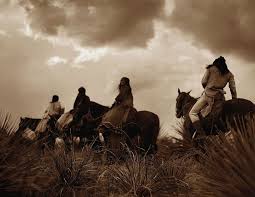
Before The Storm--Apache 1906--Edward Curtis

Before The Storm–Apache 1906–Edward Curtis

I commend Short Nights Of The Shadow Catcher to all who have interest in poignant literature surrounding our first Americans.

Other books I have posted on gordonsgoodreads by Timothy Egan include The Worst Hard Time and The Big Burn.  Utilize the search tab found here.

ALL THE LIGHT WE CANNOT SEE-WORTHY OF NYT BEST SELLER STATUS

Anthony Doerr’s novel All The Light We Cannot See is worthy of its New York Times Best Seller status.  This wonderfully written book , like The Book Thief, tells a story unfolding during World War II, primarily through the eyes of children.

imgres


Set in France and Germany, a blind girl raised by her locksmith father is brought into the middle of a search for a fabulous  jewel. The jewel is removed from the museum where her father works to keep it from the occupying Germans. Meanwhile a young German boy growing up in an orphanage with his sister is co-opted by Hitler Youth because of his demonstrated skills in working with radio receivers.

Lives intersect during the search for the missing jewel and for the location of a hidden French Resistance radio transmitter, located where else but in the attic of the young girls uncle’s home in Brittany where she has fled from the German occupation of Paris.

Doerr’s organization of the novel is pleasing to the reader.  The chapter construction  splendidly carries the story line filled with suspense, intrigue,  the realities of war and wonderfully portrays the love between a father and daughter. The book moves very quickly but the reader never feels pushed or rushed.

I highly recommend All The Light We Cannot See, a very good read  for teenagers and adults. I would predict that it will be among the best novels of  2014.  Anthony Doerr  is the author of the story collections Memory Wall and The Shell Collector and the memoir Four Seasons In Rome.  

AN ARMY AT DAWN-NORTH AFRICA-DRESS REHEARSAL FOR EUROPEAN INVASION

Rick Atkinson’s  first volume of his World War II Trilogy An Army At Dawn is an extraordinarily candid appraisal of the performance of the U.S. Military during its initial foray into the Second World War in North Africa.

imgres

This excellent historical work portrays the North Africa Campaign of 1942-1943 as a painful dress rehearsal for a green U.S. Command and Army, embarking on its first and often catastrophic combat missions since the First World War.  ” A great sorting out was underway: the competent from the incompetent, the courageous from the fearful, the lucky from the unlucky.”   Atkinson spares no one in his  harsh analysis of both the American and British forces and their leadership.  The takeaway is that if the Allies had invaded across the channel in 1942 as originally envisioned, D-Day would have been a disaster only rivaled by Dunkirk.  A move up the boot of Italy or into southern France according to Atkinson’s read would have also been doomed from the outset.

The North Africa Campaign learning curve was critical to the final Allied victory in Europe. ” Eisenhower had been naive, sycophantic,  unsure of his judgement, insufficiently vigorous and more a titular than actual commander.” Atkinson is blunt in his appraisal that North Africa taught the American Infantryman the necessity of  ” ruthless killer instinct”  in battle.”  ” A soldier is not effective until he has learned to hate. When he lives for one thing, to kill the enemy, he becomes of value. ”  The collaboration in the North Africa Campaign with the British under Montgomery  foretold difficulties to come in the invasion of Europe.

Eisenhower, Patton, Bradley, Montgomery, Rommel, all portrayed  by historian Atkinson at their very worst and very best. The book is scholarly in its approach and yet very readable, filled with humanity, heroism,  and battlefield reality. After months of failure with enormous and often needless casualties,  American forces finally morphed into fighting form and marched through the Kasserine Pass and on to the sea at Tunis.

An Army at Dawn was written in 2002. The remaining volumes in Atkinson’s trilogy are The Day of Battle, the war in  Sicily and Italy ( 2007 ),  from 1943-1944 and The Guns at Last Light, (2012),  the war in Western Europe, 1944-1945. Atkinson also authored The Long Grey Line and Crusade.

SAVAGELY BEAUTIFUL….NO! SAVAGELY BRUTAL YES! THE NARROW ROAD TO THE DEEP NORTH

The dust cover of Richard Flanagan’s new novel The NARROW ROAD to the  DEEP NORTH, describes the book as a ” Savagely beautiful novel.”  I think not, but who am I to disagree with the rave reviews from the New York Times, NPR, The Washington Post, The Sunday Times ( London) and a long list of other prestigious  publications.

imgresThe novel wraps itself around the story of prisoners in a World War II Japanese POW Camp being brutalized in forced slave labor  to construct  the infamous Thai-Burma Death Railway.  Flanagan’s protagonist is an Australian physician , whose assignment is to make every effort to keep the prisoners alive only so that they can be returned to depravity cutting an impossible railroad bed through the Burmese jungle.

Readers who absorbed the brutality in the Japanese POW camps in the non-fiction books Unbroken  by Laura Hillenbrand or Fly Boys by James Bradley  I think will have had quite enough, without slogging through the excessive deprivation and savagery in Flanagan’s novel.  Surely, there is a parallel story here, an adulterous love affair between the protagonist and his uncle’s wife  frustrated by his supposed devotion to his wife despite a lifetime of promiscuity.  For me, this narrative did not connect or remotely rise above the books excessively redundant brutality.

Sorry, but if there is redeeming virtue in The NARROW ROAD to the DEEP NORTH, I seem to have missed the sign posts.

Richard Flanagan also wrote five additionaL highly acclaimed novels, Death of  River Guide, The Sound of One Hand Clapping, Gould’s Book of Fish, The Unknown Terrorist and Wanting.  I have not read any of his aforementioned books.


TRAVERSE RICHARD RUSSO’S “BRIDGE OF SIGHS “

Richard Russo’s 2007 novel Bridge of Sighs, published six years after his Pulitzer Prize winning Empire Falls, captures the rhythms of small town life in Russo’s own inimitable style. In Bridge of Sighs Russo transports the reader to upstate New York where he delivers many of life’s complexities and social issues through a wide cast of characters whose lives are interconnected through intricate webs of relationships.

images

The menu of contemporary issues is complete: Racism, mental illness, bullying, teenage sex, tyrannical fathers, loyalty without love, love without loyalty, divorce, reconciliation, industrial pollution, Cancer, fathers and sons, mothers and daughters.

From this churning pot of small town contradictions emerges in Venice , a world renown artist, made famous by placing on canvas  mental images of the provincial place of his boyhood. A local legend says that lovers will be granted eternal love and bliss if they kiss on a gondolagat sunset under Venice’s Bridge of Sighs. Will unrequited love appear?  Without question a good read from a great American novelist.

Also by Richard Russo: Mohawk, The Risk Pool, Nobody’s Fool, Straight Man, The Whore’s Child

THE GUNS OF AUGUST- AN ANNIVERSARY READ BY A BRILLIANT HISTORIAN

August, 2014 marked the 100th Anniversary of the First World War , the perfect stimulus to read or reread Barbara Tuchman’s  The Guns of August.

images

While the French high command argued over whether to eliminate the crimson of their soldiers trousers, the Germans had already converted to olive-green and were building a mighty force and a thirty-six day offensive plan to bring France to a quick and tidy surrender and to regain German losses to both Russia and France from the war of 1870.  Barbara Tuchman in her Pulitzer Prize winning The Guns of August uncovers in great detail the misguided decisions and confusion among the French, German and British military and civilian leadership that led to the disastrous four years of carnage following the August 1914 outbreak of the First World War.

Tuchman’s meticulous research focuses upon the incredible errors made by all parties to the war by their failing to comprehend that warfare in the 20th Century had changed forever. Looking back on the  war’s 100th anniversary, the reader will be astonished to learn of the self-serving decisions and the indecisiveness  of politicians, generals, czars, prime ministers and presidents costing millions of lives on the battlefields of Belgium, France, Germany and Prussia . ” You will be home before the leaves have fallen from the trees, the Kaiser told departing troops in early August 1914.”

Tuchman leaves no stone unturned in the chronological detail leading up to the outbreak of the war. and its raging first month of battle. The Guns of August carries the reader through the German invasion of Belgium to the standoff on the outskirts of Paris and the Marne as the German Army, by only inches,  missed its opportunity to complete their 36 day plan for certain victory over France.

The French Army by mid-August had been in retreat since defeat at the Battle of the Frontiers on the Belgium border.  The Germans  army brutally pushed through Belgium, slaughtering civilians in their wake and then moved almost at will  into Northern France capturing not only territory but the rich natural resources that would help fuel its stamina through what would become four years of trench warfare. Meanwhile the British remained reluctant and confused in their commitment to both Belgium and France.  So much for French ” Élan” as their armies retreated in a desperate attempt to regroup before Paris fell.

Then occurred what German General Kluck termed a ” French miracle. ” Just four days before the Germans completed their 36 day schedule for decisive victory, the Battle of the Marne ended  with Germany in a startling reversal at the hands of a re-grouped French Army.  Said  Kluck, ” That men who have retreated for ten days , sleeping on the ground and half dead with fatigue, should be able to take up their rifles and attack when the bugle sounds is a thing upon which we never counted. It was a possibility not studied in our war academy.”

The Guns of August sets the stage for  what became The Western Front,  four years ( 1914-1918) of the most horrendous fighting in the history of the modern world.  Casualties at one point reached 50,000 per day.

Tuchman’s narrative style allows for assimilation of a trove of information and detail of an event the enormity of which forever changed the world.  Tuchman retains a rightful honored place among the great historians of her time. The Guns of August was published in 1962. She won a second Pulitzer in 1971  for ‘Stilwell and the American Experience in China, 1911-45.  Also by Barbara Tuchman, The Proud Tower, a look at the quarter century leading up to World War I, the clash between Olympian luxury of the wealthy and the uprising of the underclass. Additionally, The Zimmermann Telegram, the story of the German promises made to Mexico  to entice them to enter the First World War.  Her last book  The First Salute,  published in 1988, sets the American Revolution in international perspective and was on the New York Times best-seller list for 17 weeks.

Barbara Tuchman died in 1989 at age 77 after suffering a stroke at her home in Cos Cob, Connecticut. The cabin in which she wrote her prized works remains on a rocky rise overlooking the meadows of the family property.

David McCullough- Thirty Seven Years Later- A NYT Best Seller !

Yes, hundreds of other kindred spirits did the same as me!  On the occasion of the 100th anniversary of the opening of the Panama Canal we were reminded of  David McCullough’s  The Path Between The Seas  and rushed out to purchase this acclaimed historical work.  As a testament to its relevance,  the book again appeared on the New York Times Best Seller List on Sunday, September 7th, 2014,  37 years after its original publication in 1977!

images

The epic story of the building of the Panama Canal, started by the French, completed by the Americans, could not have been better told than through a David McCullough narrative.  The Path Between The Seas details every nuance of this unprecedented enterprise in world history.

Despite the enormity of the subject, McCullough’s story telling never gets bogged down in detail but rather enlightens  and educates the reader into understanding the complexities of the entire undertaking.  Meet the fascinating Frenchman Ferdinand deLesseps, the promoter of the Suez Canal, whose failure at Panama, ensured the ultimate completion by America of an enterprise the scale of which had never before been attempted by mankind. It literally required a revolution to reorganize the geography and power structure of the world.

McCullough masterfully tells the story of the canal. The politics, money, ego’s, intrigue and with great insight to the racial issues surrounding 45,000 West Indian black men and women whose manual labor made the building of the canal possible. The development of  the engineering skills and construction knowledge previously unknown and untested became miracles in their application.  ” We are facing a proposition greater than was ever undertaken in engineering history. ”

Combined with the enormity of the engineering and logistical challenge was the understanding the once the American’s bought out the failed French effort, the first priority would be ridding the Canal Zone of Yellow Fever and Malaria which had heretofore devastated the work force. The resulting benefit to medical research, while at the same time overcoming skeptical pedestrian medical views , would benefit populations worldwide for decades.  No single construction effort in American History had exacted a comparable  price in human lives and dollars and yet the scientific, social and economic rewards would ultimately dwarf the investment costs.

Just as in Truman, John Adams and Mornings on Horseback,  McCullough combines his skills as historian with those of a storyteller resulting in a thrilling journey during an American  era when anything seemed possible.


MARK GREANEY- SUPPORT AND DEFEND=THE TOM CLANCY TRADITION CONTINUES!

Support and Defend is the first Tom Clancy novel written exclusively by Mark Greaney  following  Clancy’ s  death in October of  last year.z

imagesIn this new book, Greaney captures  present day fears by building a tale around the theft of top-secret CIA files by an underling within the department. Shades of Edward Snowdon’s exploits are ever-present as Dominic Caruso , a familiar hero to all Clancy fans, embarks on a personal mission to retrieve access  codes to the data before  CIA  human assets throughout the world are compromised. Dominic  is  the primary character throughout this adventure with The Campus  playing only a supporting role. The President and son are missing from this adventure.

Support and Defend is fast paced and straight forward in its plot development as compared to other Clancy books.  However, Greaney puts a surprising human face upon ” Transportation Director” Adara Sherman! Not always ,” all business!”

Mark Greaney is carrying on the Tom Clancy tradition. A daunting task!

The Smoke at Dawn/ General Bragg’s Waterloo At Chattanooga

President Lincoln’s brilliant decision to elevate Ulysses  S. Grant to General in Chief of the Union Army following Grant’s victory at Vicksburg on July 3, 1863 was further justified by the success of Grants first assignment following his promotion in the battle of Chattanooga, Tennessee.

Unknown

Jeff Shaara in his new historical novel The Smoke at Dawn , the third in his Civil War Trilogy, places Grant in the Cumberland following the Confederate defeat of General Rosecrans by Braxton Bragg at the Battle of Chickamauga Creek. Grant immediately demoted Rosecrans and replaces him with General George Thomas and brings in Sherman’ s army for support. The Union army has been under siege in Chattanooga and Grant orders the siege broken at whatever the cost. Bragg, sinking in his own bombast and his repeated failure to lead , is on the verge of converting a great Confederate victory into a bitter defeat. As Sherman rides to the rescue  of General Thomas and the Union Army, he makes a rare mistake by misreading the geography, giving Bragg one last chance of grasping victory from the jaws of defeat.

There is plenty of drama as Shaara tells the story of this epic battle with the versatile vehicle of historical fiction that , following in his fathers footsteps , is his trademark. Shaara is the son of Pulitzer Prize winning Michael Shaara, author of The Killer Angles.

The two previous novels in the trilogy are A Blaze of Glory , the battle Shiloh and A Chain of Thunder, the Siege of Vicksburg.  Search gordonsgoodreads.com reads for other Jeff Shaara historical novels based upon the Revolutionary War, Civil War and World War II.

THE KILLING OF CRAZY HORSE- AUTHOR’S IMMERSION DELIVERS “THE FEEL OF IT”

Thomas Power’s The Killing of Crazy Horse is most deserving of the praise offered  by fellow authors Larry McMurtry and Evan Thomas. Power’s work of non-fiction ventures miles beyond the compelling story of Crazy Horse to encompass a rich journey into the final years of the Sioux and the demise of their culture upon the great northern plains.

images

Power’s  detail into the relationships of members of the Sioux families together with their interface with the white trappers, adventurers , soldiers, translators and scouts tells the story of what actually occurred to bring about the destruction of this once proud Indian Nation. Power’s research is so outstanding that he seems to have personally absorbed the Sioux culture, language, relationships, spirituality, pride and passions and then realistically tells the tale in a captivating style. The context is so strong it seems that Powers was present in the teepee, on the battlefield, smoking the pipe, on the Powder River, at the Sun Dance and at The Killing of Crazy Horse.

Unique in its approach, Powers relates the story through the voices of the Indians, the families of Sitting Bull , Crazy Horse , Red Cloud, and the half breeds who served both the Indians and the military often in duplicitous and self dealing fashion. General Crook’s role as the major facilitator in the demise of Crazy Horse  delves into the personality and motives of the man who so influenced the fate of Crazy Horse and  the northern tribes.

The story of the Oglala Sioux and Crazy Horse can not be told without Custer and the Little Big Horn. I have read much of this historic event but never before have I seen this epic through the eyes of Crazy Horse and the Sioux themselves, present on the Little Big Horn Battlefield that day.

Every word counts in the very best of non-fiction writing and The Killing of Crazy Horse meets this standard on each page. Crazy Horse: ” I am no white man! They are the only people who make rules for other people who say, if you stay on one side of this line it’s peace, but if you go on the other side I will kill you. I don’t hold with deadlines. There is plenty of room, camp where you please.”

In his Afterword, Powers perfectly captures this reader’s reaction to his work: ” My effort here has been to tell the story in a way that helps readers to experience its weight and quality-the feel of it.”  Powers words ” the feel of it ”  become abundantly apparent.

The Killing of Crazy Horse eclipses all expectations of  ” the feel of it,” learning from the people, places, triumphs and tragedies  of the Oglala Sioux.

Thomas Powers is a Pulitzer Prize winning writer. He has also written Intelligence Wars : American Secret History from Hitler to al-Qaeda; Heisenberg’s War: The Secret History of the German Bomb; and The Man Who Kept the Secrets: Richard Helms and the CIA.