E.M. FORSTER’S HOWARDS END

Howards End, first published in 1906, is E.M. Forster’s fourth novel and quickly placed him among the elite English writers. Indeed, this is a classic English novel! Some patience is advised for those who have not delved into this genre but once the plots and sub-plots are established and the characters evolve this great read unfolds rapidly into hours of enjoyment. The language of the period is rhythmical and you will quickly become accustomed to ” Crane is bringing the motor around.”

Most recently, in large part because of Downton Abby , much of  the focus on English society has been on the aristocracy. In writing  Howards End, Forster is unveiling not the aristocracy but the class warfare in the emerging English middle class, set among those in the mercantile order of  British society.  It is also very clearly exposes the  social  war between men and women over power within the households of the rich, moderately wealthy and the poor.

Forster tells the story through the voices of two sisters, immigrants to London from a well established and sophisticated German family. One has an illicit affair during a summer excursion with  the son within an upwardly mobile English businessman.  The second sister  ends up marrying the father following the death of his wife in a marriage that is more of an arrangement than a love affair. And so Howards End passes through further affairs, children out-of-wedlock, and the resolution of who will inherit Howards End, the generational family country home.

There is a sexual theme throughout the novel but don’t look for Lady Chatterley descriptions or dialogue. In this novel , love and sex is all about impact on ones status in society, nothing physical , with all detail in the imagination.  Forster treats the subject much like Henry James , always there but never explicit.

The late 19th and early 20th Century saw an explosion of great English novelists and E.M. Forster ranks  well among them.  Howards End is listed as 38th among the 100 best novels of the 20th Century. A Room With a View by Forster is ranked 79th. Forster’s final novel, A Passage to India written in 1924, ranks 25th on the Modern Library’s list.
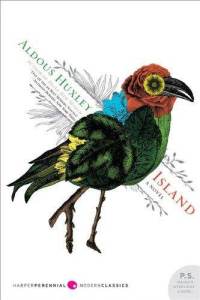
Aldous Huxley’s Island – 21st Century Themes In 1962!

The prolific English writer Aldous Huxley is most famous for his novel Brave New World, published in 1932.  Many comparisons have been drawn between the aforementioned and George Orwell’s 1984. In Huxley’s last novel, Island, published in 1962, the author creates a “better place.” While you may well have read Brave New World (required reading for many), the perspective in the pages of Island is well worthwhile.

Island is set in the nineteenth century. Unlike any other place on earth, the island of Pala and the Palanese people have created a utopian society, isolated and virtually free from the influences of the modern industrialized world, while at the same time selectively adapting to scientific development and worldly knowledge that will enhance their idyllic lifestyle.  In Island, Huxley examines whether the best of both worlds is possible.

 The author, whom some have referred to as a social scientist, delves head long into the great issues looming in the 1960s; overpopulation, drugs, money, ecology, religion, Buddhism and even obliquely advances ideas on raising teenagers!  Will Pala become part of Greater Rendang, the surrounding territory controlled by decades of greedy Sultans, now that Pala’s rich deposits of oil, gold and other minerals have become objects of desire?    Will the modernity of a new generation of Palanese leadership sell out to the temptations of vast wealth and the “  creature comforts” of the outside world?

In reading Island  you will be amazed at the  contemporary themes!  “ We don’t give ourselves coronaries by guzzling six times as  much saturated fat as we need. We don’t spend a quarter of the gross national product preparing for World War III. Our economic system doesn’t permit anyone to become more than four or five times as rich as the average.  Electricity minus heavy industry plus birth control equals democracy and plenty.  We never allowed ourselves to produce more children than we could feed, clothe and house. We have managed to resist the temptation to which the West has now succumbed , over consumption. ” 

Wonderful writing here. Huxley tells all, exposes his very soul through a protagonist that comes full-circle in the midst of a predictable downward spiral fueled by that all to common twenty-first-century destructive force, greed. “ If you’d been shown how to do things with the minimum of strain and the maximum of awareness, you’d enjoy even honest toil.”

In lieu of a Preface Huxley quotes Aristotle: In framing an ideal we may assume what we wish, but should avoid impossibilities.

You may wish to read Huxley’s Brave New World Revisited ( 1958) , abundant with many of the themes astutely developed in Island.

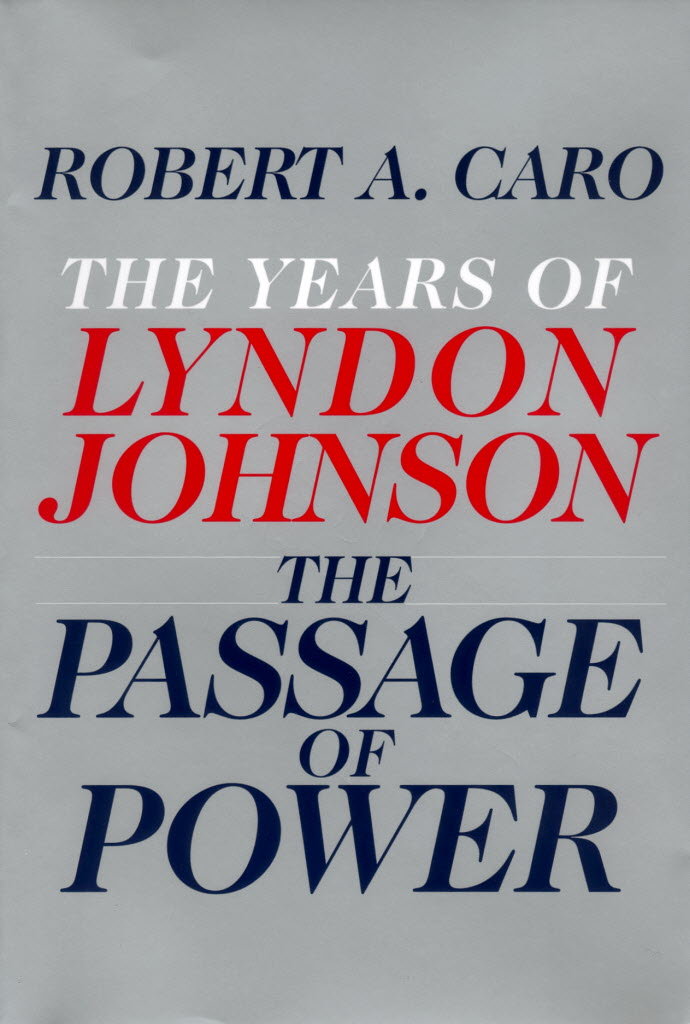
ROBERT CARO’S PASSAGE OF POWER-HISTORICALLY IMPECCABLE-RELEVANT TODAY

My immediate take-away after completing all 605 pages of Robert Caro’s The Years of  Lyndon Johnson The Passage of Power  is both awe and marvel at Lyndon Johnson’s  accidental presence at the pinnacle of power from November, 1963 through 1965.  If Lyndon Johnson was president or senate majority leader in today’s political environment, for better or worse, there would likely be no gridlock in Washington D.C.  Never in the modern presidency has more of significance been accomplished in such short period then what transpired in the year and a half  of the Lyndon Johnson  presidency following the assassination of President  John F. Kennedy.

This incomparable work by Caro illuminates, for both the student of history and the observer, that regardless of a like or dislike of his tactics or the man himself, Lyndon Johnson’s accomplishment in moving historic legislation through a gridlocked congress is beyond comparison.  The Civil Rights Act of 1964 and the Voting Rights Act of 1965 turned years of political rhetoric and decades of delay into law, and Lyndon Johnson made that happen during a most improbable time in  American history.  LBJ with all of his ruthlessness,  cajoling, bravado, insecurity, impatience and meanness did what no other president had done.  Deeply seeded in the memory of the poverty of his youth, LBJ’s empathy for the poor and underprivileged surfaced, often with a vengeance, to overcome the impossible obstacles standing before these two pieces of landmark legislation. For this reader, understanding how the  aforementioned was accomplished became the centerpiece of this Pulitzer destined work.  But, there is so much more.

The mutual hatred that existed between Lyndon Johnson and Robert Kennedy and the inordinate effect that it had upon a functioning government is made manifest throughout the book. Robert Kennedy’s unsuccessful multiple efforts to convince Johnson to withdraw from  his brother’s selection of Johnson as the vice-presidential candidate in 1960 depicts a near maniacal RFK. The relegation of LBJ’s vice-presidency to a meaningless and often humiliating position often punctuated by RFK’s ” corn pone vice-president” references are almost unimaginable and would normally be thought relegated to a school-yard bully.  While LBJ is often lionized in Caro’s pages, Robert Kennedy is given faint if any praise at all in this carefully researched book.

Caro details the brilliance with which Johnson handled the passage of power upon Kennedy’s assassination . How LBJ managed the emotional devastation of the Kennedy team  is a remarkable story in itself. He convinced the great majority of them to stay on because , ” I need you , the country needs you and John  Kennedy’s legacy needs you.”  The overnight transformation of the ruthless master of the senate and insignificant, irrelevant  vice-president to become the nation’s hope, healer and steady hand is so magnificently detailed by Caro, so real, that it places the reader in the midst of a current event, not a bygone era!

You will learn from Caro’s research sources that  it was widely speculated that Robert Kennedy’s inability to move beyond the grief over his brother’s death may have been tied to a feeling of self guilt; that he and the president’s pursuit of  the assassination of Fidel Castro ( Operation Moongose) and the Mafia  may have in  fact been  a direct retaliation that killed President Kennedy.  Caro, despite the Warren Commission report, raises that speculation to the level of plausibility.

The Passage of Power  at times elevates Johnson to the heroic level but the narrative is equally balanced with the reality of the often brutal, threatening and unforgiving methods by which LBJ accomplished his goals.  From Johnson’s euphoric highs and the compassion demonstrated for minorities and the downtrodden surrounding of the passage of the Civil Rights and Voting Rights Acts, Caro, concludes Passage of Power with bombs dropping upon helpless villagers in Vietnam.  That era is left for another telling.

This is the fourth in Caro’s  The Years of Lyndon Johnson. The Passage of Power will have even greater meaning if you have already consumed The Path to Power ( 1982), Means of Ascent ( 1990) and Master of the Senate ( 2002).  However, Caro does such a good job in placing The Passage of Power in the context of Johnson’s lifetime that it is easily stand-alone read.  Throughout the book, Caro makes numerous references to another great work on Lyndon Johnson which I wholeheartedly commend to you, Lyndon Johnson and the American Dream by Doris Kearns Goodwin. I also recommend This Time,This Place, by Johnson aid and confidant Jack Valenti, who later left government for a distinguished career as the president on the Motion Picture Association of America. ( Check Gordon’s Good Reads Archives).

A  Robert Caro book of equal substance and a Pulitzer honoree  is his The Power Broker, Robert Moses and the Fall of New York.   Use of power to accomplish common good or abuse of power for personal gain; both books in a different time and place tell a significantly similar story.

NO PULITZER FOR FICTION -DON’T DESPAIR-SONS AND LOVERS PREDATED THE HONOR

Surely there was great disappointment when no winner was chosen for this year’s Pulitzer for fiction. However, considered by many one of the greatest novels written in the 20th Century, D.H. Lawrence’s Sons and Lovers never received one either! Published in 1913, it pre-dated the establishment of the awards in 1917 by four years! It would be interesting if the Pulitzer Board created a retroactive category.  In a sense, the Modern Library has done just that by ranking Sons and Lovers the 9th greatest novel of the 20th century. Quite right, quite right indeed!

Though technically a novel, Sons and Lovers is without doubt auto-biographical. D.H. Lawrence  is clearly writing of the struggles of growing up in a dysfunctional family in a poor mining community in England. The mother had married below her class to a husband that turned out to be not much beyond the daily retreat to the local pub with his co-workers.  In the novel, the mother is left with only her son to whom to direct all of her affection and emotion.  She would not let go of  what she perceived as all that remained important in her life.

I opened my Modern Library paperback version of Sons and Lovers and by chance the following paragraph unfolded. You will understand quickly why this great novel, once read, may erase any disappointment over their being no 2012 Pulitzer for fiction.

“Paul and Miriam stood close together, silent and watched…Paul looked into Miriam’s eyes…She was pale and expectant with wonder, her lips were parted, and her dark eyes lay open to him…Lets go, he said…Something made him feel anxious and imprisoned…The two walked in silence…Till Sunday he said quietly and left her and she walked home slowly feeling her soul satisfied with the holiness of the night…Always when he went with Miriam his mother was fretting and getting angry with him…when he walked into the house his mother had been sitting thinking…She could feel Paul being drawn by this girl and she did not care for Miriam…That there was any love growing between him and Mariam, neither of them would have acknowledged…She is one of those who will want to suck a man’s soul out til he has none of his own left.”

This magnificent novel rises to new heights on each page. If you have not read Sons and Lovers I commend it to you now. At 99 years of age it is contemporary and worthy of every accolade and honor that has been bestowed upon the book and its author.  Lawrence’s other better known novels are The Rainbow, Women in Love and of course Lady Chatterley’s Lover.  His last novel was The Virgin and the Gypsy written in 1930.

A footnote. In 1920, the year that Women In Love was published no Pulitzer was given for fiction! Also published in that same year was F. Scott Fitzgerald’s This Side of Paradise and Sinclair Lewis’  Main Street.  Good company!

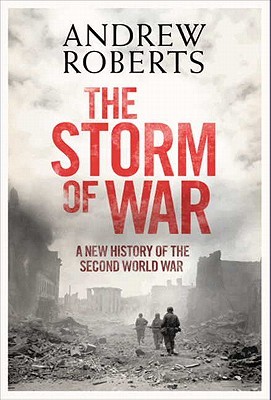
THE STORM OF WAR- PROFOUNDLY ACCOMPLISHED OVERVIEW OF WORLD WAR II

Andrew Roberts The Storm of War is without question the best and most complete overview of World War II that I have read. Extraordinary research, crammed with detail and revelations that  even well read students of the war will find enlightening.

Roberts, Britain’s  premiere military historian, writes with clarity and transforms this enormous subject into an understandable read that  links nearly every facet of the war to a logical conclusion. His penchant for detail and numbers easily falls into place making the narrative more exciting, eye-opening and impactful.  He clearly demonstrates that this two theater war,   based upon what he terms “false ideologies,”  is what led to the ultimate downfall of both Germany and Japan. Beginning with the rationale for Hitler’s failure to seize a victory at Dunkirk, the fall of France ( more French fought on the side of the Axis than the Allies,)  an explanation as to why Operation Sealion ( the invasion of Britain) was never carried out , the catastrophic blunder of Germany declaring War on the United States giving Roosevelt the green light to enter the war in  Europe, Roberts courses each twist and turn and his story is  often explosive and emotionally disturbing.  

Aficionados of military statistics are led through details of  comparison of  weapons, tanks, airplanes, submarines, troop strength.  In 1943, just over a year after Pearl Harbor the United States was building  98,000 war planes per year compared to Germany’s 40,000.  The Russians suffered 2-million casualties at Stalingrad and replaced the loses in a month. Germany lost 238,000 but had exhausted its reserves. His use of facts, rather than confuse, come together to strengthen the forcefulness of the book.

All of the major players are front and center, Churchill,  Roosevelt, Hitler, Hirohito, Eisenhower, Montgomery, Nimitz, Rommel, and the Nazi  cast of Field Marshalls, SS Officers plus  Goebbels, Goring, and Rundstedt. The author’s denunciation of the murder of millions of Jews is carefully calibrated and leaves absolutely no avenue for anyone involved to escape responsibility. 

Roberts brings insight into the Eastern front and Russia’s stalwart defence of Moscow, the  battle of Stalingrad and the siege of Leningrad.  The author outlines the impact of the failure of Hitler’s Operation Barbarossa ( the conquest of Russia based upon his ideological hatred of  Bolshevism.)  To highlight the fallacy of Hitler’s fanatical focus on Russia, the German’s lost 2.4 million men killed in Operation Barbarossa as compared to 202,000 fighting the Allies on the Western front. Despite these losses  on the Eastern front, Hitler maintained a “stand and die policy” nearly to the end. Ideology again!

The war in Pacific receives equal attention. From Pearl Harbor  through the dropping of the atomic bombs the reader learns why the great battles in the Pacific were won and lost in many cases  because the ideological leaders in Japan, like Germany, refused to listen to the generals on the ground. “The awakening of the sleeping giant.” ” The miracle at Midway.”

If I were asked to recommend just one volume as an overview of the Second World War my choice would be The Storm of War. However, this work will be appreciated even more  by those who have read extensively individual works by other renowned World War Two Historians such as Max Hastings , who is referenced throughout the volume by Roberts.

I met Andrew Roberts at a lecture in New York City. It became immediately clear that The Storm of War  would require reading every page, packed with facts and few wasted words. No quick read here and definitely not a historical novel. However, despite the immersion in detail, this epic story is profound and the conclusions logical because in the end Andrew Roberts seems to have missed nothing.

For W Roberts history on the World War II Western front, read Masters and Commanders: How Four Titans Won The War in the West ( 1941-1945)


THE ART OF FIELDING- A MOST WELCOME GUEST BLOG

The Art of Fielding by Chad Harbach
Adult Fiction

                I was honored a few months back when Gordon asked me if I would be a guest blogger on Gordon’s Good Reads. I am, however, a young adult school librarian by trade and as a result I spend most of my time reading young adult fiction and nonfiction. The Hunger Games? I’ve probably read the first book in the trilogy six times. I have always been an avid reader and I do read an adult book every third book or so―I just had to wait for the right book to come along in order to honor Gordon’s guest blogger request. Well, it has. The Art of Fielding by Chad Harbach is a stunning book. It’s got everything―phenomenal characters, a little Moby Dick and Melville lore, romance, and baseball. I don’t even particularly like baseball, but I longed to be a member of a baseball team while reading this amazing novel.

                It all starts with Mike Schwartz, aka Schwartzy. He’s a born leader, or more accurately a natural coach from a hard-knock background. He also happens to be a sophomore at Westish College, a small liberal arts college on the shores of  Wisconsin’s Lake Michigan, when he spots Henry Skrimshander playing baseball at a summer tournament. Henry is a shortstop, small and rather scrawny, but with an uncanny ability to field a baseball. Schwartz recruits the recent high school grad for the Westish Harpooner’s Division III baseball team. Henry is not much of a student, in fact the only book he has ever truly read is his dog-eared copy of The Art of Fielding by Aparicio Rodriguez, where Rodriguez, the greatest defensive shortstop who ever lived, manages to successfully equate the act of fielding a baseball with a Zen-like practice. Henry has committed to memory most of the numbered bits of advice, such as:

59. To field a ground ball must be considered a generous act and an act of comprehension. One moves not against the ball but with it. Bad fielders stab at the ball like an enemy. This is antagonism. The true fielder lets the path of the ball become his own path, thereby comprehending the ball and dissipating the self, which is the source of all suffering and poor defense.

When Henry arrives on campus and meets Owen, his beautiful, biracial, gay roommate,  we, as readers, are reassured that Henry will survive his new circumstances when he spots Owen’s own copy of The Art of Fielding on his meticulously kept bookshelves.
                It is on the Westish campus that we get to know Mike, Henry, Owen, President Affenlight and his daughter Pella(escaping a failed marriage), as well as the entire Westish baseball team. And lest you think that baseball is the only glue that holds the novel together, Harbach has had fun incorporating myriad literary references . Although Westish could be any struggling small liberal arts college, Harbach  created a singular, distinctive institution. The Westish Harpooners are a purposeful reference to Herman Melville’s Moby Dick. It was President Affenlight, as an undergraduate at the college, who discovered a ream of papers in the library which turned out to be a transcript of a speech given by Herman Melville when he visited the college in 1880. Westish College made the most of the Melville association, as did Afflenlight himself, who went on to become a renowned academic, the pinnacle of his career being the widely acclaimed scholarly book called The Sperm-Squeezers. His career come full circle, he is back as president of the college where he began his academic pursuits.
                The characters, both on and off the team, intersect and cross paths, with the meteoric rise of the Harpooners in the league standings serving as backdrop. Henry’s career is on the rise as well―scouts flock to game after game,  promising vast sums of money when he gets signed to the major leagues. But then Henry comes down with Steve Blass disease (named for the infamous Pirates pitcher who, all of a sudden, could no longer throw the ball accurately). Henry has fallen off his path, he has lost The Way. As he struggles, the other characters meander along their own paths, each trying to field their own game, so to speak. This is one baseball story that left me wishing there were a few more innings.

Wonder. Thanks RO. You are welecome at GGR anytime! Keep reading!

NEW FROM ROBERT CARO- GREAT NEW YORK TIMES PREVIEW PERSPECTIVE

I am an unabashed fan of Pulitzer Prize winning historian Robert Caro.  Ever since first reading The Path to Power, the beginning of his epic study of the life of Lyndon Johnson. My second and equally enlightening exposure to Caro’s work was The Power Broker his Pulitzer prize-winning biography of Robert Moses. Next month the fourth book in Caro’s study of Johnson , The Path to Power will be published, in a process that began in 1976. Caro’s other Johnson volumes are in order of publication are Means of Ascent and Master of the Senate.

I commend to all Robert Caro fans a marvelous article by Charles McGrath published in The New York Times on April 14 putting all of Caro’s works in an insightful perspective.  A most worthwhile article for those of us anticipating The Path to Power.

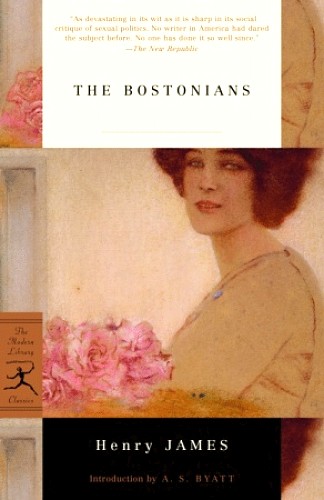
The Bostonians by Henry James

The Bostonians (1886) by Henry James is another extraordinary example of character development and story telling.  In that sense, The Bostonians is not unlike James’ The Wings of the Dove which he wrote in 1902. 

 A love triangle between two women and a southern gentleman set in Boston, New York and Cape Cod.  Olive Chancellor, a wealthy leading citizen of Boston, becomes fascinated with a young and ravishing Verena Tarrant, who was being promoted by her parents as a sort of mystic for hire to perform at fashionable Boston salons.  Olive, a leader in the early feminist movement in Boston, sees Verena’s talents and speaking skills better used as an advocate for women’s rights. She literally buys her from her parents! A bit of satire from James about Olive, the zealot reformer.

Arriving upon the scene is Basil Ransom, Olive’s distant cousin from Mississippi who outspokenly detests the feminist movement.  Instantly, Ransom falls in love with Verena. “My dear madam,” says Ransom to Olive, “does a woman consist of nothing but her opinions? I like Miss Tarrant’s lovely face better, to begin with.”  I need say no more about where the narrative for this epic conflict takes the reader, especially as Ransom discovers  that Olive’s love for the young evangelist is equal to his own.

Henry James has great ability to develop astonishing female characters in his novels. I first discovered that in The Wings of the Dove. The women in his books evolve in wonderful detail of personality and emotion.  Verena:  “She appeared to him as a creature of brightness, but now she lighted up the place, she irradiated, she made everything that surrounded her of no consequence, dropping upon the shabby sofa with an effect as charming as if she had been a nymph sinking on a leopard-skin, and with the native sweetness of her voice forcing him to listen till she spoke again.”

In writing The Bostonians, James is coming back to his roots in the United States but in retrospect, the novel may well have been set in the parlors of New York.  However, the venerable Miss Birdseye is definitely a Bostonian!

 Unlike his later novels,  The Wings of the Dove and The Ambassadors,  The Bostonians received little acclaim and was in fact scoffed upon by writers including Mark Twain. The Bostonians was made into a movie in 1984 starring Vanessa Redgrave and Christopher Reeve, which also received  modest notices. 

A footnote.  Henry James novels always seem to contain favorite words. In The Wings of the Dove  the word is  ” prodigious.” In The Bostonians time and again James uses the word “rejoinder,”  which  means to  answer a question. Henry James , writing the word   “answer” would be much too simple. ” Rejoinder” heightens the magnitude of simple prose. I believe Henry James accomplishes the same in every paragraph he wrote.

While reading The Bostonians I wondered if in 1926 Sinclair Lewis could possibly have developed the idea for his Elmer Gantry after discovering Verena Tarrant in The Bostonians?  Possible?

The Bostonians is one more reason why looking back for a “good read.” is so rewarding. Great novels are never dated.

SEYMOUR HERSH GOT IT RIGHT IN 1997! DARK SIDE OF CAMELOT

Pulitzer Prize winning journalist Seymour Hersh received heavy criticism for his 1997 book The Dark Side of Camelot ,which is filled with assertions regarding the sexual exploitations of JFK , both in and outside the White House. Some of his critics went so far as to say  Hersh “ made it up.”   Well, it appears not that he was right on!

Mimi Alford’s Once Upon a Secret: My Affair with President John F. Kennedy and its Aftermath largely substantiates  Hersh’ s reporting in The Dark Side of Camelot, including the pool parties and the interns.   Hersh’ s writing also includes much inside detail on more substantative political subjects including the Bay of Pigs Invasion and  Kennedy’s  relationships with mob boss Sam Giancana.  

Hersh may be best known when in 1969, he broke the story of the My Lai Massacre, in which hundreds of unarmed Vietnamese civilians were murdered by US soldiers in March 1968. The report prompted widespread condemnation around the world and reduced public support for the Vietnam War in the United States.  He received the Pulitzer Prize for International Reporting.

So if you have doubts about Mimi Alford’s account and want to establish a  base line reference add The Dark Side of Camelot to your reading. Truthfully, in The Dark Side of Camelot the sexual exploits are a side bar to a very well written inside look at the Kennedy Administration and all of the players in the cast.  A “ good read.”


TOM CLANCY/ LOCKED ON/HARD TO PUT DOWN!

Locked On by Tom Clancy  with Mark Greaney  jumps into the action  literally on page one!  There is no waiting to begin another Clancy journey and all of the familiar characters assume their roles as the saga continues!  What other spy novel gets you up at 4 A.M. to see if Sam Driscoll gets extracted from prison in  Waziristan?  John Kelly becomes an enemy of the state in a bitter dispute with President Kealty whom Ryan is about to unseat.  While the re-election of Jack Ryan Sr. as president is a given, nuclear war heads in the hands of Islamic Terrorists is a drama played out from beginning to end.  All of Clancy’s high-tech innovations and cleaver and pointed tie-ins to current political events and themes permeate this new Clancy novel.  The India-Pakistan conflict escalates and there is even a love interest for Jack, Jr and that too becomes a cliff hanger for the next edition.  Did Mary Pat Foley make a good choice at as match-maker?  we will have to wait for that answer.

I am happy to place Locked On  in my library next to my hard cover collection of his fifteen previous novels. If you are a Clancy fan I think you will feel them same way.