Occupy Wall Street? Two Insightful Books Morgenson and Rosner,Friedman and Mandelbaum

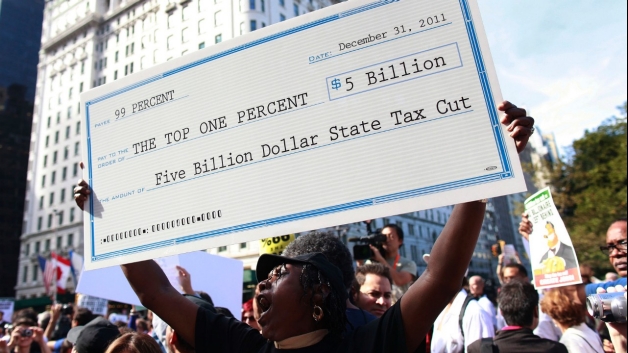
Anyone who questions the “why” in the Occupy Wall Street movement that is sweeping the nation and the world need only pick up a copy of Reckless Endangerment by Gretchen Morgenson and Joshua Rosner! ( See Gordon’s Good Reads July 16, 2011 blog post.)  The book did not predict that folks would be manning the barricades by October but I would assume the  Occupy Wall Street movement came as no surprise to these two  excellent reporters. Reckless Endangerment is a must read for all who are trying to put Occupy Wall Street in context.  The mantra ” We are the  Ninety-Nine Percent” will become abundantly clear after reading Morgenson’s and Rosner’s work.

Nor will the Occupy Wall Street movement come as any  surprise to readers of  Tom Friedman’s and Michael Mandelbaum’s That Used To Be Us, How America Fell Behind in the World We Invented and How we Can Come Back.  That Used To Be Us  places in focus the circumstances leading up to the economic and social turbulence in America.

Friedman and Mandelbaum cite four major challenges facing America: How to adapt to globalization, how to adjust to information technology, how to cope with large and soaring budget deficits and how to manage in a world of rising energy consumption and rising threats to the climate and environment.  Though That Used  To Be Us was written before Occupy Wall Street  it clearly enlightens the reader on the years of ignorance in all quarters leading up to the nations current economic straits.  Whereas Reckless Endangerment is an investigative chronology of  America’s financial meltdown, That Used To Be Us  meticulously peals back the covers of missed opportunities to right the ship by both government and business. The  How We Come Back  subtitle of the book brings forth big challenges and a hint of optimism but ironically it ties directly into the public protests of today.   Friedman and Mandelbaum call for an end to the political “gross irresponsibility” demonstrated during the budget crises. ” Anyone who proposes solutions that are not at the scale of the problem and don’t require immediate action is not serious. ” They call for  equipping the citizenry with the skills and tools essential for economic growth in a global economy, rebuilding America’s infrastructure,  and emphasize that ” cutting ”  is not the answer unless it is coupled with major tax increases to create hope for a future balanced budget. ” Anyone who says that we can restore order to our national finances today without raising taxes is not being serious.”

Global warming is a major subject in That Used to Be Us, and the twist is that the authors see global warming as a huge economic opportunity to get out in front of new technology with inventions and production that can lead America out of the Great Recession and place its future on a sound economic growth pattern. The authors  urge America to seize the green energy initiatives being undertaken in China and make them America’s own. Stop exporting our science and technology at our own expense, reference the authors.

Great books are timeless and many have been posted on Gordon’s Good Reads.  Reckless Endangerment and That Used To Be Us my not go down in the annals of literature  as timeless or iconic but in 2011 they are certainly timely and both add greatly to broadening ones understanding of this critical American crossroads.

My blog of last week on That Used To Be Us, promoted by last Sunday’s  New York Times Op-Ed by Tom Friedman was written with 100 pages of the book left to read. The finish line is an eye opener no matter what your politics.

Where Have You Gone Joe DiMAGGIO? ASKS TOM FRIEDMAN

I am 100 pages short of finishing Tom Friedman’s and Michael Mandelbaum’s new book That Used To Be Us. How America Fell Behind In The World It Invented and How We Can Come Back. However, after reading Tom’s opinion column in today’s ( October 9, 2011 New York Times) I feel compelled to get the word to you right away. 

 The column title Where Have You Gone Joe DiMaggio? poses the conundrum  that Friedman and Mandelbaum answer in their carefully crafted and researched book.  Anyone who is vested in figuring out what is wrong with America  ( aren’t we all?), and what we need to do to fix it, is encouraged to read this book now.  THAT USED TO BE US  is  about the important national dialogue being played out in print, over the air, in Washington DC  and now in the streets!  It will not go away. The book is not about philosophy but rather solutions! This quote from Friedman’s  New York Times Op-Ed  truly sets the agenda for That Used To Be Us.

“We cannot bail or tax-cut our way to prosperity. We can only, as  ( Steve) Jobs understood, invent our way there. That is why America needs to be for the world in the 21st century what Cape Canaveral was to American the 1960s: the place where everyone everywhere should want to come to start-up and make something — something that makes people’s lives more productive, healthy, comfortable, entertained, educated or secure. To do that, we need to reinvigorate our traditional formula for success — quality education and infrastructure, open immigration, the right rules to incentivize risk-taking and government-financed scientific research.”

That Used  To Be Us is worthy as a stand alone Tom Friedman read but it is even more compelling if you have read his The World is Flat (2005) and Hot Flat and Crowded. (2008)

All of Friedman’s work is a reasoned approach to identifying problems and pointing to proven and in many cases obvious solutions.  Michael Mandelbaum adds to the excellence in this new volume. Both authors  spare no individual, political party or company in bringing issues to the feet of those responsible for our problems and giving due credit  in recognition of wisdom.

When I have finished the last 100-pages I will be even more impressed  but having completed 256 and today reading Tom’s Op Ed  I am compelled to post this blog today!


RULES OF CIVILITY…OR… RULES OF NEW YORK?

Amor Towles  debut novel Rules of Civility captures the rules of New York and places George Washington’s  110 Rules of Civility in the Appendix  where they rightfully belong! This read is a love relationship with New York, a city that authors its own rules!

What could be more compelling?  The earnest daughter of hard-working Russian immigrants born and raised on the Lower East Side.  A near-do-well wanna-be who will do anything to be accepted and regain lost riches. A sweet and adventurous mid-western transplant.  The swells of the Upper East Side trust fund gang, a hard charging publisher and of course “ladies who lunch .”  The players are all there and their personalities explode in a wonderful page-turning story set in the post depression era of the late 1930s.  New York is  bouncing back, regaining its lost energy, wealth, world status and rebuilding with money, music, bricks, mortar and unlimited opportunity for those willing to dare a ride on a rainbow.

The  book’s intimacy with New York is reminicent of Pete Hamill’s Downtown and Tabloid City.   There is a hint of F. Scott Fitzgerald and even a flash of Hemingway. ” By nine o-clock the restaurant would feel like the center of the universe.”  The 21 Club, the village jazz clubs before red velvet rope lines, the big bands, the after swing parties and the glorious and transparent lives  of trust fund swells of the Upper East Side and Oyster Bay.  Towles builds characters  who are looking out, looking in and some who don’t give a damn about all the action swirling around them. Falling in and out of love with intimacy left to the imigination.

Rules of Civility  is a New Yorker’s book but just like  the city, it is there for the  enjoyment of anyone willing to seize the moment.  This is a very, very good first novel which may well  have a movie running through its veins.

Simply said, enjoy!

VENU MAGAZINE/SEPTEMBER-OCTOBER ISSUE

Gordon’s Good Reads appears in the just published September-October issue of  VENU Arts and Culture Magazine now available at locations throughout Fairfield and Westchester Counties. Gordon,s Good Reads  is proud to be associated with this wonderful publication.  Enjoy


EMPIRE OF THE SUMMER MOON

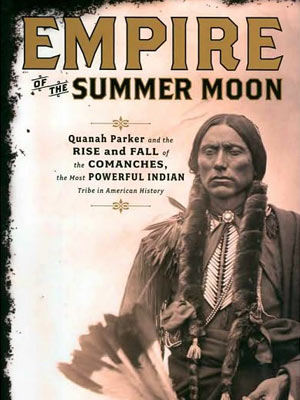
S.C. Gwynne’s Empire of the Summer Moon is a work of non-fiction deserving of its finalist status for a  2011 Pulitzer.  What is so haunting about this book is an un-avoidable love-hate relationship with the Comanche’s of West Texas and the High Plains in the period  1830-1875. 

You will come to respect the greatest mounted warriors  that ever lived in North America. Witness the absolute freedom of Comanche life on the high plains, totally in harmony with the soil, water, wind, buffalo, and of course the horse.   Then there is the depravity, ruthless killing of rival tribes and  later the slaughter of white settlers.  Men, women and children hacked to death or kidnapped, raped and mutilated without remorse. 

Within this barbaric tale evolves the portrait of Cynthia Ann Parker, captured at 9 years of age after watching her family slaughtered  by a Comanche raiding party.  Parker  embraces the Indian culture, marries a head man and bears two sons. Later, found by the U.S. Army among a wandering Comanche tribe, she is returned to ” civilization”  and put on display almost as a freak show.  Members of the Parker family hand her off from one to another as she tried desperately to return to Indian life and her sons.  She died broken-hearted never knowing what happened to her husband and two sons.  Son Quanah who saw his mother taken away by soldiers at age twelve grows to become the most brutal Comanche  worrier of his time.

Gwynne’s research  is worthy of the book’s sub-title. Quanah Parker the Rise and Fall of the Comanches, the Most Powerful Indian Tribe in American History.  Gwynne’s vivid detail and attention to the historical record forces the reader to try to reconcile the many faces of the Comanche, mounted nomads of the Great Plains.  It is all here, Spanish Colonialism in West Texas, The Civil War,  Manifest Destiny, the destruction of the great buffalo herds and of course the true story of Cynthia Ann Parker and her son Quanah.  Quanah from wild murdering Comanche orhpan to dinner with President Teddy Roosevelt.

Empire of the Summer Moon places this incredible tale in proper historical perspective. Don’t look for a historical novel here, this is a well researched narrative and wonderful story.

UNBROKEN-LAURA HILLENBRAND-ASTONISHING!

There is little wonder why Unbroken by Laura Hillenbrand has been atop the New York Times Best Seller List since its publication last year.

The epic story  of the survival, resilience and redemption of  Lieutenant Louis Zamperini is a triumphant accomplishment . It is a literary and historical work by Hillenbrand worthy of the highest accolades. Unbroken equals and in its research even surpasses the excellence of Hillenbrand’s wonderful  Seabiscuit . Warning, it is a disturbing read

Hillenbrand traces the life of Louis Zamperini from delinquent teen to local track hero and Olympian to a World War Two  B-24 bombardier shot down with his crew over the Pacific. Forty seven days in a raft first with three fellow crew members, then  only two. The horror of that ordeal is trumped by his capture and incarceration for two and a half years as a  Japanese POW under the most sadistic circumstances imaginable. Zamperini’s story of human survival defies belief. Hillenbrand’s  research and writing misses no detail, including the story of Louie’s Post Traumatic Syndrome long before anyone had diagnosed the tragedy of post combat emotional illness.

Unbroken’s historical perspective on the war in the Pacific ranks Hillenbrand’s writing in a league with  Stephen Ambrose (D-Day) and ( Citizen Soldiers), James Bradley ( Flyboys),  Jeff Shaara ( The Final Storm), and Doug Stanton ( In Harms Way-The Sinking of the USS Indianapolis).

It is not easy to  digest Hillenbrand’s  descriptions of the horror’s faced by Louie Zamperini and thousands of other POW’s but the outcome is triumphant for the author, the reader and Louie Zamperini! 

There are many months ahead for this great book on top of best seller lists, and it is most deserving of a place in your personal library.

Thank you Laura Hillendrand.

A HANDFUL OF DUST-EVELYN WAUGH-YOU CHOOSE THE ENDING!

Followers of this blog know that I enjoy delving  back among the best known authors and retrieving works that I have not read. Evelyn Waugh’s A Handful of Dust is one more example. Written in 1934, A Handful of Dust is listed as number 34 of the Modern Library’s 100 Best English Language Novels of the 20th Century. 

A Handful of Dust  is set in 1930s Victorian England, and focuses on the breakdown of the marriage of Tony and Brenda Last. The aristocratic Tony is preoccupied with the maintenance of his family country estate, Brenda is bored with her isolation there and also with Tony. Enter John Beaver, a self-interested and impoverished social climber who invites himself to Hetton ( Tony’s estate)  for the weekend. The affair with Brenda, who yearns for urban excitement, begins when she takes a flat in London and “goes back to school!”

In his introduction to the Everyman’s Library publication ,  William Boyd quotes from  Waugh’s Labels, a travel book Waugh wrote after his own broken marriage. “Fortune is the least capricious of deities, and arranges things on the just and rigid system that no one shall be very happy for very long.”  Are many great novels autobiographical? You bet!

And so the story of infidelity unfolds often reminiscent to me of  Idina Sackville in The Bolter although a littler less tawdry!  In an amazing twist, the reader of the Everyman’s Library publication of A Handful of Dust gets the option of the two endings!  When the book was to be serialized in an American magazine they determined Waugh’s original ending too dreary so he wrote a new one!  I like the latter the best which includes a sort of just rewards for Tony Last.   I think it made Waugh feel better.  Enjoy!

The best known of Waugh’s novels is Brideshead Revisited ( 1945)  and later Sword of Honor ( 1952-1961),  his World War II Trilogy. A Handful of Dust and Brideshead Revisited were made into motion pictures.

A KITCHEN CABINET OF HISTORIANS FOR BARAK OBAMA!

Recalling the importance and power of President Harry Truman’s Kitchen Cabinet, brought vividly to life in  David McCulloch’s Truman, the thought occurred to me that it might not be a bad idea for President Obama to appoint his own Kitchen Cabinet to help think through some of  overwhelming issues facing the president and the nation.  There is a wellspring of talent in the world of books and historians from which might come some unique and a-political  ideas and possibly answers. 

 Here we go Mr. President with a suggested list of invitees! My guess is they would all not only come but bring some well-educated perspective.

Jonathan Alter,  The Defining Moment: FDR’s Hundred Days and the Triumph of Hope

Henry William BrandsThe Reckless Decade, America in the 1890s. TR The Last Romantic, Traitor to his Class. ( FDR)

Robert Caro, The Years of Lyndon Johnson

Doris Kerns Goodwin, Lyndon Johnson and the American Dream, Team of Rivals: The Political Genius of Abraham Lincoln

David McCullough, Truman, John Adams

Edmund Morris,  The Rise of Theodore Roosevelt, Theodore Rex, Colonel Roosevelt, Dutch: A Memoir of Ronald Reagan

Gordon Wood,The Creation of the American Republic and Empire of Liberty

The body of work by the authors of these works of history is a national resource!  They could very well be the best  and most productive “committee ” in Washington , DC. Go for it Mr. President. You will be in great company!

I Would enjoy hearing  suggestions from my blog readers for the Great Historian Kitchen Cabinet at the White House!


THE HELP THE MOVIE MEETS ALL EXPECTATIONS!

It is always rewarding when a  screenplay created from a book you have enjoyed and recommended hits the mark.  The movie The Help does just that.  I loved every minute of the film!

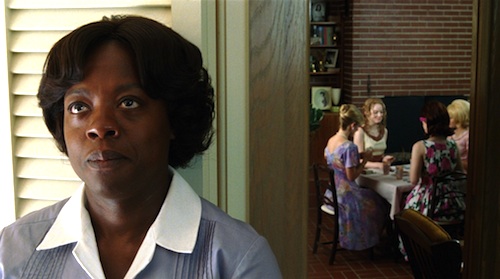
The Help,  is the story of  Aibileen, Minny and other maids in 1950s Jackson, Mississippi.  ( See my earlier post in the GGR Archives) Aibileen’s life is the centerpiece of the film. Often in the translation to a movie, the importance of individual characters are repositioned and the plot is changed. Thankfully that did not happen with The Help.  The book’s strong message remains in the film.  High praise goes to  Director Kate Stone who with equal creativity wrote the screenplay.  Congratulations to Viola Davis ( Aibileen), Emma Stone ( Skeeter), Octavia Spencer, ( Minny) and the entire cast. Their performances were extraordinary.  Not to be overlooked are the talents of  Jessica Chastain ( Celia) and Bryce Dallas Howard (Hilly).

I hold to my theory that you will enjoy this wonderful movie even more if you have read the book, even easier now that it is out in paperback.

Prodigious praise to  author Kathryn Stockett and Director Kate Stone!

INVISIBLE BRIDGE MAKES NY TIMES TOP 100 OF 2010

Happy to see that Julie Orringer’s Invisible Bridge has made the New York Times Top 100 Fiction For 2010. Well deserved recognition for a great young author. Check our my initial review in the Gordon’s Good Reads archives!  Congratulations!