FRANCONA-THE RED SOX YEARS-A MUST FOR FANS

Former Red Sox Manager Terry  “Tito” Francona’s book FRANCONA, The Red Sox Years written with Boston Globe columnist Dan Shaughnessy leaves little to the imagination with its insight into  the rise and fall of the Boston Red Sox under Francona’s leadership.

images-2

All of the glory and  drama of the 2004 and 2007 championship seasons and the collapse of 2011 are played out within the intrigue of the relationship between Francona, Theo Epstein and the Red Sox ownership trio of John Henry, Tom Werner and Larry Lucchino. Certainly this is a book for Red Sox fans but like  Moneyball  by Michael Lewis it provides wonderful insight into the inner workings of major league baseball. FRANCONA  also offers an inside look at Terry Francona’s personal life, his relationship with his Dad and his struggle with major health issues resulting from injuries during his career as a player.

Why did the downfall of the Red Sox occur after the incredible accomplishments of 04 and 07?  The narrative makes clear that winning the World Series in 2004 was all about the sport  but following the repeat victory in 2007 it became all about the money.  The Red Sox franchise at the behest of ownership became money machine in which everything Red Sox was for sale. When the performance on the field faltered in 2008 and 2009 and television ratings on the club owned cable channel began to plummet the financial concerns from the front office further impacted the play on the field. By 2010 fan and media pressure for another championship became so intense that the quick fix was to adopt the New Yankee strategy of throwing money at the problem. The result was the John Lackey, Carl Crawford  disaster and the ruination of Francona’s ability to control, the club house ethos.

FRANCONA is clearly a thinly veiled rout of the Red Sox top brass with Larry Lucchino receiving the bulk of the wrath. However, there is much in this book that reflects wonderfully on  the game and the Boston clubhouse culture established by Francona when he arrived from Philadelphia catapulting the Sox into  two World Championships.  Clearly, Tito and Dan Shaughnessy leave the impression that Terry Francona is a  “players manager”  and the perhaps best ever in the most difficult managers spot in all of baseball.  It was an impossible position for Bobby Valentine to fill in 2012 and Valentine quickly fell into the trap of making all of the wrong moves with Tito’s boys.  Will John Farrell have better luck?  As Francona’s former Red Sox pitching coach he has a better understanding of the culture,  ownership,  fans and the Boston media. What about Francona in Cleveland?  We will see how the “player’s manager” will perform. However, we can guarantee a hero’s reception when the  Tito and the Tribe arrive for their first game at Fenway this spring.

images-3

By the way for avid  Red Sox and all baseball fans read Glenn Stout’s FENWAY 1912, The Birth of a Ballpark.  Baseball in simpler times!  Refreshing!


BUSH 41 UPDATES ALL THE BEST-MY LIFE IN LETTERS AND OTHER WRITINGS

You may have caught the news that President George H.W Bush has updated the 1999 compendium All The Best, My Life in Letters and Other Writings. The new volume includes correspondence between father and son during the two terms of the George W. Bush presidency, including poignant comments regarding the war in Iraq and insight into Bush 41’s friendship with former President Clinton.

images-1

George H.W. Bush has been a life-long writer of letters.  I received a personally autographed copy of the original All The Best when the then former president visited his hometown of Greenwich at a breakfast conducted by Just Books,  a prominent book store at the time that has since closed.  During Bush’s comments it became quickly apparent how emotionally involved he is when referencing his children and grandchildren. He readily admits and it was in evidence that he finds it difficult to read his own personal letters without tears.

I became aware of this up-dated version of All The Best while reading Richard Ben Cramer’s  What it Takes a wonderful work of non-fiction regarding the 1988 presidential election and Bush’s victory over Bob Dole and then Michael Dukakis.   Cramer credits Bush’s great communications skills as a key ingredient in the Bush victory.  Never in the course of that campaign was an opportunity missed to write a personal letter to thank a donor, to accompany a photograph or recognize a favor or personal introduction. That same discipline served Bush during his presidency and over a fifty year career in public life.

Letter writing is of course a lost art, replaced by e-mail and text messaging. It seems to me however that neither of the aforementioned leave the indelible impact of a hand-written letter. Letter writing is as inspiring for the author and the recipient.   Each of my children, grandchildren, loved ones and personal friends have received a letter upon all of the important occasions, accomplishments and challenges in their lives.  I have discovered that despite all of the e-mails, telephone calls and texts, it is these letters  that remain in their possession and often rekindle the importance of love, milestones and friendships. They become a landmark in an otherwise sea of words.  No surprise that All The Best strikes a chord with me!

Thoughts penned by one’s own hand are permanent fingerprints of the mind, ethos and soul. All The Best  may  define George H.W. Bush better than the  thousands of words written about him by others.

February, 10, 1997: Former President George H.W. Bush writing to a young girl whose Dad was killed while serving in the United states Army in Panama: All The Best, pp: 597 excerpts)

Dear Britnay,” You never knew your Dad. I didn’t know him either. I had to make the call that sent him into battle.— Your father was one of the ones that made the ultimate sacrifice. He gave his life. I think  your Dad felt he might die for he wrote a most beautiful letter to your grandmother, a letter that said among other things, ‘I am frightened by what lays beyond the fog, and yet do not mourn for me. Revel in the life that I have died to give you.’ — I shared this letter with our entire nation during my State of the Union Address on January 31, 1990. As I did I choked up because I knew your entire family was hurting.— I wish I had known your Dad personally. I think I would be a better man if I had known him, for his kind of courage lifts men up and inspires them. May God bless you in your life ahead.

George Bush.

WHAT IT TAKES-RICHARD BEN CRAMER -DOES MUCH CHANGE IN AMERICAN POLITICS ?

Pulitzer Prize winning author and journalist Richard Ben Cramer died in January of this year. Cramer is considered by many insiders to have been the best student of American presidential politics. His death brought to my attention the 1992 book What It Takes, The Way To The White House.  I can only express regrets for not having devoured this magnificent work sooner.

images

What it Takes, the detailed narrative of the 1988 presidential primary and election,  is not for the casual reader. Its 1000-plus pages has been quoted as ” The ultimate insiders book on presidential politics.” Richard Ben Cramer places under a microscope the inner thinking and personalities of those who would place themselves into the 1988 race to become President of the United States. What makes the work even more provocative  is the relevancy of the 1988 election, including a bitter Democratic Primary that resembled in great part the divisive Republican Primary of 2012.

Cramer details with precision the backgrounds, personalities and political aspirations of George H.W. Bush, Bob Dole, Michael Dukakis, Gary Hart, Richard Gephardt, Joe Biden, Jesse Jackson and the lesser players as well.  Of particular contemporary interest is the insight into the mind and ambitions of Joe Biden that may well play out again in the 2016 campaign for the White House. Cramer’s research into the Biden personality is so complete that these pages of What It Takes could well qualify as a Biden biography!  More on that to follow.

The 1988 Republican primary election is a match up between  Vice-President George H.W. Bush and Senator Bob Dole which results in an ultimate  November face-off between Bush and Democrat Michael Dukakis.  While we think we know Bush better his having had What It Takes to win the presidency in 1988,  Cramer’s insight into how the Bush personality and family background made certain that victory is remarkable.  Bush had spent a lifetime building friendships, communicating and never burning a bridge.  He maintained a big picture view of the oval office.   The comparison with Dukakis is stark.  The Massachusetts Governor prided himself on being a micro manager and believed right up until election night that the job of the president what that of a manager with the words “leader and vision” rarely in his campaign vocabulary.

In many ways What it Takes is a series of biographies. While the book is commendable for this reason alone, don’t look for neat compartmentalized chapters on each personality. Cramer’s prose and story telling is much more sophisticated.  The reader will learn why Bob Dole, the “Bobster” became the “Hatchet Man,” why Gary Hart’s personality demanded that even after withdrawing over the Donna Rice scandal, he re-entered the race in denial that he had no chance. Joe Biden withdrew over a plagiarism scandal and re-entered the campaign only to be sidelined a second time by a nearly fatal aneurism.  Richard Gephardt worked harder than any Democratic candidate but failed to find a message. There is Kitty Dukakis, Barbara Bush, Jill Biden, Lee Hart, Lee Gephardt and of course Elizabeth Dole.

Along with all of the candidates the “press” and of course the  handlers, consultants and political advisors  have a constant presence in the narrative bringing out the often shameless  positions that candidates take to win elections.  Paraphrasing Cramer, the presidential election process ” cheapens the issues or ignores them,  reduces the dialogue to noise, is spendthrift, exhausting and hurtful.” Cramer leaves no doubt the attaining the presidency is a brutal obsession and leaving little left of individuality. Winning the presidency and moving into the bubble changes very little.

A most memorable reference from What it Takes concerns  the first Gulf War, Desert Storm.  How  did President Bush manage to put together the coalition to force Saddam Hussein out of Kuwait?  “He was the only man alive who had  personal  friends as the heads of states in 30 countries. ” He called in the favors.

My takeaway is that George H.W. Bush was the only candidate in 1988 who understood in totality what was required to be elected president and  who was willing to make the sacrifices to attain the goal. He had learned that from a life-time in public service and from his family’s heritage.  Ironically, four years later Bush 41 may not have had the willingness to repeat the same sacrifices necessary to defeat Bill Clinton in 1992. Yet,  after the fray, they became good friends.

What it Takes is a big commitment of time but if you love the American political system and wish to gain a rare biographical insight into the minds of the players in 1988 your investment will be rewarding. Like all good historical research and writing the knowledge gained is relevent in the present.   Listen to what Bob Dole said at a convention  of Young Republicans in Seattle in 1988. ” Conservative does not mean callous. I’d like to see fifty wheelchairs in this audience, fifty black faces, fifty Hispanics, fifty Asian Americans. We have a responsibility to open up the doors of this party.”  Did anyone in the 2012 GOP inner circle hear the Bobster or were his words simply lost in the cacophony of just another campaign?

Other books by  Richard Ben Cramer: Ted Williams: The Seasons of the Kid (1991), Bob Dole (1994), Joe DiMaggio: The Hero’s Life (2000), What Do You Think of Ted Williams Now? A Remembrance (2002), How Israel Lost: The Four Questions (2004)


A FALSE DAWN FOR FREE MARKETS- LAISSEZ-FAIRE?

John Gray is among Britain’s  ” former ” conservative  thinkers who had major influence on Margaret Thatcher during her tenure as British Prime Minister.

imgres

Gray, a long-standing  unfettered free enterprise advocate , had an epiphany regarding his economic views and in 1998 published False Dawn, a highly academic discussion and prediction as to why a laissez-faire global economic system was unworkable and forecast the economic calamity that fell upon the U.S. and the world in 2008. Gray’s thesis in  False Dawn is that  the American-style unregulated free market system was the major contributor leading up to the world economic implosion of 2008!

False Dawn is a heavy reading assignment!  However, the perspective Gray brings to the discussion of  government’s role in the free enterprise system is both provocative and startling.  Of particular note is his reasoned analysis of why he now conversely believes that only government involvement in the framework of free-enterprise can prevent the income disparity that exists in both the U.S. and  international economic system.  Gray makes the case that income disparity, now seen in largely un-regulated world-wide free-enterprise economies, has led to economic perdition.  He  warns of the danger of the IMF for trying to impose the US economic model on the world.

So what is the take-away?  Has Gray gone from a Thatcher conservative to socialist?  I think not, but he is a strong advocate for the necessity of some government role in fostering growth and regulating free enterprise. The growth side of the Gray proposition comes from his advocacy of government  investment in infrastructure, scientific research and new technologies, all of which is  part of the contemporary economic and political dialogue!

Ironically, as I was finishing False Dawn  the January 12, 2012 issue of The Economist arrived with a cover story The Great Innovation Debate. While the article does not focus upon income disparity, it makes a strong case for government spending on infrastructure and basic research. As might be expected, the government investment advocacy does not come without The Economist warning of too much regulation “getting in the way of the 21st century’s innovative juices.” Many sides to a complex issue.

False Dawn is a great companion read to those fans of Tom Friedman, in particular Hot-Flat and Crowded and Robert Wright’s Non Zero. In all three cases you may wish to take notes!

LINCOLN-NARROW FOCUS-TIMELY MESSAGE

Gordon’s Good Reads does not make a practice of reviewing movies but when a film is based upon a book that I have enjoyed, written by an author in whom I have the highest regard, I broaden my license. Doris Kerns Goodwin is among the country’s most respected presidential historians. Goodwin’s book Team of Rivals, upon which the movie Lincoln is loosely based, falls into the category of an intimate study not only of Lincoln but also of those with whom he surrounded himself in his cabinet.

images

I read the Goodwin book and also the early reviews of the movie Lincoln so I had some idea of what to expect before seeing the picture. I understand that the movie was about Lincoln’s political genius but I left the theater wondering what impression anyone who had not read Team of Rivals would have come away with. They certainly saw an excellent performance by Daniel-Day Lewis and learned how the Thirteenth Amendment was passed, but was this the Lincoln they expected to see? Did the movie leave too narrow an impression for such a broad title? I think so.

Lincoln is depicted as a brilliant politician pursuing whatever tactics necessary to pass the Thirteenth Amendment, abolishing slavery. Missing from Lincoln was the remarkable story of the end of the Whig Party and the evolution of the anti-slavery Republican Party. Goodwin’s book fills in the important detail that positioned Lincoln for the 1860 presidential nomination including the Lincoln-Douglas debates of the 1858 senatorial campaign and Lincoln’s Cooper Union address in New York  in 1860. Equal to Lincoln’s brilliant political strategy in getting the Thirteenth Amendment passed was the fact that he won the Republican nomination by defeating the heir apparent, William Seward, which laid the basis for Lincoln bringing all of his challengers for the presidential nomination into his cabinet. The Goodwin book details how the interaction of this disparate group influenced Lincoln’s conduct of the Civil War. The film’s short clips of Lincoln viewing battlefields and Lee’s surrender did little to place the enormity of the Lincoln presidency and his team of rivals in context.

images-1

There is no doubt that Daniel Day-Lewis is on track for a Best Actor nomination and that the film will be among the nominees for Best Picture but the title Lincoln was a huge reach and likely a disappointment for many. Would you title a movie The Civil War and only tell the story of Gettysburg?  On the other hand, if Spielberg had instead titled the movie The Passing of the Thirteenth Amendment, would anyone have come? I get it. It will take a five-part Ken Burns PBS Series titled Lincoln to fill this history buff’s canvas.

One thing for sure, the film has provoked a great deal of talk from the pundits about a president’s need to be very much a politician in order to attain lofty goals.  As the nation again approaches the edge of the partisan fiscal cliff the timing of the release of the film and renewed interest in Team of Rivals could not be better! Maybe the narrow focus of the movie is a good thing after all!  Required congressional viewing?


THE MAN WHO SAVED THE UNION-ULYSSES GRANT IN WAR AND PEACE

In the excitement of  the release of  the Steven Spielberg  movie Lincoln, I have coincidentally just completed H.W. Brands’ The Man Who Saved The Union , Ulysses Grant in War and Peace.  Grant, not Lincoln, the man who saved the union?  On the surface, the book’s title is a dichotomy of  enormous proportion. In reality, Grant accomplished much of Lincoln’s vision and the movie Lincoln  should encourage renewed interest in the presidency of Ulysses Grant.

Historian Brands takes nothing away from the great emancipator. To the contrary, he highlights Lincoln’s wisdom in plucking Grant from the western theater of the Civil War and rapidly promoting him to command all Union forces.  Brands forcefully makes the case for Lincoln’s stubborn confidence in General Grant amid repeated periods of doubt, chaos and defeat. Following the war, Lincoln relied on General Grant to carry out the challenge of reconstruction it’s the South including its return to civil order.

Spielberg’s  Lincoln, is based in part of Doris Kerns Goodwin’s book Team of Rivals.  Brands’ biography of Grant portrays how together, two of the greatest figures in American history, Lincoln and Grant, crafted an outcome that did indeed preserve the union. Ironically, through an act of fate, it was the hand-picked military general who carried out the brilliant politicians foresight. The movie Lincoln, and the books Team of Rivals and The Man Who Saved The Union embrace the same cast of historical figures.  Following a biographical review of Grant’s early and then wartime years, Brands continues his narrative after Lincoln’s assassination and the debacle of Andrew Johnson’s ascension to the presidency, leading to Grant’s election as president.

Brands leaves no doubt that General Grant, as the overseer of reconstruction while Johnson was president, used every tool within his power as commanding general, to carry out Lincoln’s philosophy toward bringing the rebel states back into the union. Grant’s zeal was equal to Lincoln’s regarding equality and the rights of full-citizenship for the recently emancipated slaves, while at the same time finding the way to keep the Southern States in The Union.   Lincoln ‘s death and the Johnson presidency made the task nearly impossible.  It was during this period that Grant came to fully understand and embrace Lincoln’s intellect which laid the foundation  for a Grant presidency that would bring into fruition Lincoln’s dream.

General Ulysses Grant, the man who disavowed politics and  as General in Chief refused an office in Washington, casts aside his disdain for public office and accepts the nomination of the Republican Party for President of the United States. It is Grant who carries forth the Lincoln legacy by navigating  passage of the, Fourteenth and Fifteenth Amendments to the Constitution through a bitterly divided congress.  In order, these amendments granted equal citizenship under the U.S. Constitution and created the voting rights act.  Brands details Grant’s deft handling of reconstruction during his two terms in the White House utilizing diplomacy and the military to neutralize the Klu Klux Clan and other White Citizens Organizations.  You see in Grant’s ability do deal with the disparate forces in congress much of the same political savvy wielded  by Lyndon Johnson over a half century later!

I caution readers not to look here for a battlefield  history of the Civil War although there is substantial detail on the capture by Grant of Fort Donelson and Fort Henry in the west and the epic battle at Spotsylvania in Virginia.  While the military overview of the war is complete, this book is mainly about Grant, the man, the general and the president.  You will find many of Lincoln’s Team of Rivals still in play while Grant begins his ascendency and assumes the presidency.

Team of Rivals by Doris Kerns Goodwin is an obvious read before seeing Lincoln.  The Man Who Saved The Union by H.W. Brands is a must sequel.  Brands is also the author of the great FDR biography Traitor to his Class.

BAILOUT- WHERE DID THE TARP MONEY GO? EYE-OPENING, FRIGHTENINGLY PERSUASIVE

Neil Barofsky’s book  BAILOUT An Inside Account of How Washington Abandoned Main Street while rescuing Wall Street, leaves no doubt that in his mind the American taxpayers have struck out and the big banks continue their winning streak. He also casts a large vote of no-confidence in Treasury Secretary Tim Geithner.


From December 2008 until March of 2011 Barofsky served as the Special Inspector General in charge of the oversight of TARP ( SIG-TRAP).  The primary purpose of  SIG-TARP, created by an act of Congress, was to monitor the flow of TARP funds to prevent fraud and misuse of the appropriations.  Barofsky,  appointed by President Bush was later re-appointed by President Obama. His three years of overseeing and reporting to Congress on the administration of TARP played out in an almost daily adversarial relationship with Treasury Secretary Geithner.

In a book, the first chapter of which is titled  Fraud 101! , Barofsky’s conclusions come as no surprise to the reader.  In a prescient view on the day that he accepted the assignment he writes, ” I had no idea what I was in for and what I’d learn. I hadn’t yet understood the degree to which the entire crisis was unleashed by the greed of a small handful of executives who exploited a financial system that guaranteed that no matter what risks they took, they’d be able to keep the profits and lavish pay those risks generated with the assurance that if their outsized bets went wrong, the U.S. taxpayer would cover their loses. ” 

BAILOUT  is well written, to the point and Barofsky  successfully reduces complex issues in layman’s terms.  The book is also a lesson in how Washington insiders operate and why the system is broken. It is a disturbing read, not only because of  enlightenment about what went wrong with TARP, but moreover, Barofsky makes a case that nothing has changed and that the banking system is heading back down the same disastrous road. It is important to remember that the author resigned from his position and was not fired, which adds objectivity to the writing

Barofsky holds out little hope that the watered down Dodd- Frank legislation will make a difference. “As recent history has repeatedly shown, through massive campaign contributions, relentless lobbying, and multi-million dollar payouts awaiting government officials who join Wall Street firms, no legislation can confer the necessary fortitude upon the regulators. ”

Not an optimistic outlook for the nation’s ability to deal with financial institutions that are “Too Big To Fail,” particularly when some used TARP money to purchase additional banks!

BAILOUT is an important read, particularly during this election cycle.   Ironically TARP is not a campaign issue but Barofsky leaves little doubt that ” To Big To Fail” remains a looming disaster for the U.S. economy and American taxpayers.

Another important book on this general subject is Reckless Endangerment by Gretchen Morgenson and Joshua Rosner. See gordonsgoodreads October 19, 2011.


COMING TO GGR

Two new books on subjects frequently followed by GGR. Jeff Shaara’s A Blaze of Glory, a novel of the Battle of Shiloh and BAILOUT  by Neil Barofsky an inside account of the Wall Street bailout.

IN THE GARDEN OF BEASTS. A DIPLOMAT AND HIS DAUGHTER DURING THE RISE OF NAZI GERMANY. ECHOES OF CABARET!

 This work of non-fiction  by Erik Larson is a remarkable  historical perspective  of  William E. Dodd, U.S. Ambassador to Germany during Hitler’s rise to power.

With the ear of FDR,  Dodd is given the posting to Berlin over the objections of Secretary of State Hull and the insiders of the ” Pretty Good Club,” who ruled the bureaucracy at the U.S. State Department prior to WW II.   Dodd further distanced himself from “ the club” with his frugality, conservative approach and his unwillingness to bend the truth in his actions in Germany and resulting communications with his superiors.  Dodd was a Diplomat by accident. He was a scholar, a Jeffersonian Democrat, a farmer who loved the history of old Germany where he had studied as a young man. He was shocked by the changes taking place  as Hitler rose to power.

Dodd and his family arrived in Germany in 1933.  His daughter Martha, abandoning a husband in New York,  joins her father,  brother Bill, Jr. and Dodd’s wife as the family establishes residency in Berlin. While Dodd is hard at work trying to understand Hitler and the Nazi Party, Martha joins the social whirl and conducts affairs with what became dozens of lovers of all rank in the diplomatic circle. On the contrary, Bill, Jr. and Dodd’s wife maintain a low profile, while Ambassador Dodd tries to fathom the complexities of a sea change in the German government.

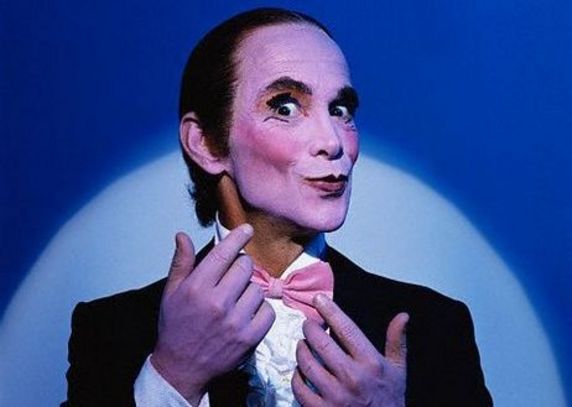
Erik Larson’s work is engrossing from the first page. Beginning with the faint echoes of  jack-boots, through Ambassador Dodd’s perception, you envision the steps of the evolution of  the coming blood and terror of Nazism.  Meanwhile, Martha adopts the party line of a “New Germany!”  At the turn of every page, I could faintly hear Joel Grey in clown make-up singing from Cabaret, Wilkomen, I am Cabaret. Do you feel good? Leave your troubles outside, in here, life is beautiful!

Life was not beautiful and Dodd knew it. Germany was living an orchestrated lie.  He stood firm against the rising abuse, publicly chided the Third Reich and enraged his detractors in Washington, D.C.  Said Secretary Hull, “Why can’t you just get along!” Dodd would have no part of the establishment in D.C. or the Third Reich. His was a voice crying in the wilderness of  Nazi propaganda and U.S. isolationism.

 Then came the “ Night of the Long Knives.”  Hundreds of Hitler’s adversaries were murdered, in their homes, hanged in prisons,  guillotined, while others were shot and left to die only to be discovered by their children.  Hitler deemed his victims enemies of the state, justifying cold blooded murder.The persecution of Jews had already begun. Kristallnacht was on the horizon. The policy of appeasement toward Hitler, which Dodd fought so hard against, continued. No government recalled its ambassador or filed a protest. This was the beginning of Hitler’s rise to total power. To no avail, Dodd warned of a march toward war. Ironically, Roosevelt shared his view but most Americans had no stomach for involvement in European conflicts. In the end, FDR acquiesced to Dodd’s detractors and a member of the “Pretty Good Club” replaced him.

In The Garden of Beasts reads like a novel.  The multiple themes are intriguing.  It is no surprise that it rose to the number one ranking on the New York Times Bestseller List. Martha wrote her own memoir of her life in Germany titled Through Embassy Eyes. Marthaand Bill, Jr. edited and published Ambassador Dodd’s Diary.

 How could the world stand by and watch this all happen?  Read In The Garden of Beasts and you will discover the book is aptly titled. Contrary to the Cabaret lyric, life was not good, it was merely an illusion, clown face and all. 

Erik LArson also wrote The Devil in the White City.


EISENHOWER IN WAR AND PEACE-ANOTHER GREAT VICTORY FOR JEAN EDWARD SMITH!

The passage of time is the greatest gift to the biographer possessing the brilliance  and patience to seize upon that window to bring to readers a modern-day perspective of iconic historical figures and events. 

Jean Edward Smith has accomplished in EISENHOWER IN WAR AND PEACE, exactly what he offered his readers in his remarkable works Grant and FDR. Historian and biographer Jean Edward Smith is rightfully in the company of  historians Robert Caro, Edmund Morris, David McCullough and Max HastingsEISENHOWER IN WAR AND PEACE, places Eisenhower in  an objective perspective within his military career, the presidency and his personal life.  Don’t look for an in-depth history of D-Day.  While there is plenty of  detail of  the European Theater in WW II, this book steps back to place the  enormity of the impact of Eisenhower’s  approach to leadership  in a sweeping overview of the war in Europe .

Smith takes a similar approach to the eight years of Eisenhower’s presidency and the manner in which he organized and staffed the White House, dealt with both political supporters and opponents and world affairs.  There is vivid detail on decisions, relevant today, (The building of the Interstate Highway System as a stimulus to help reverse a post Korean War recession), school desegregation in Little Rock, Vietnam, Formosa, China and the Cold War. 

Readers of EISENHOWER IN WAR AND PEACE will be left with no doubt about Ike’s  intimate relationship with Kay Summersby and the impact on his marriage to Mamie. Smith writes this narrative in a most factual manner and details the openness with which Eisenhower and Summersby were together publicly and privately throughout the war. Smith also details Eisenhower’s  changing relationship with his wife Mamie over the course of four decades.

The book clearly reveals that Eisenhower’s brilliance as Supreme Commander of the Allied Expeditionary Forces was in his political dexterity in contrast to his grasp of battlefield strategy. With the exception of marginal success ( that may be a generous assessment) in the North Africa Campaign, Eisenhower had no battlefield command experience prior to D-Day!  However, his ability to bring discordant bigger than life individuals together and promote cooperation ( Churchill, FDR, Montgomery, Patton,  Bradley, de Gaulle)  was exactly why FDR chose Eisenhower over Marshall to lead the European Campaign.

I have previously read considerably about Eisenhower, but just as in Smith’s  biography Grant, I now have a  view through a twenty-first-century lens of the two famous generals who became two-term presidents.  Many popular conceptions and mis-conceptions are clarified.  Smith peels away the Eisenhower myths and reveals his brilliant mind and the thought processes by which as a leader, not a battlefield commander, Eisenhower established his legacy.

Some interesting insight from EISENHOWER IN WAR AND PEACE:

Ike was not the first president to embrace golf.  Actually Woodrow Wilson secretly played more rounds during his president than Eisenhower!  However, Eisenhower made no secret of his love of golf and is credited with the explosion of the national popularity of the game.

In his first term in office, Eisenhower increased the budget of the National Institute of Health ten-fold.

Eisenhower may have prevented World War III by forcing Britain and France to withdraw from its invasion of Egypt over the closing of the Suez Canal.

A coalition of Democrats led by Senate Majority Leader Lyndon Johnson was responsible for the passage of most of Eisenhower’s domestic programs.  Ike was considered “too liberal ”  by the old guard right-wing of the Republican Party.

It was Eisenhower who  carried out Harry Truman’s earlier attempts to desegregate all branches of the U.S. Armed Forces.

At the end of the war Ike wrote in a letter to his boss General Marshall that he planned to return to the U.S., divorce Mamie and marry Kay Summersby. Marshall in the strongest terms admonished him not to destroy his reputation and career! Eisenhower took the advice. Later, out of respect for Eisenhower and fearful that if the letter became public it would become a campaign issue in 1952,  President Truman, who was at that time at  political and personal odds with Ike, ordered the letter destroyed!

There is much, much more! Look for many literary honors for EISENHOWER IN WAR AND PEACE